- Main
- News
- Contribution of the Faculty of Biology and Biotechnology to the Implementation of SDG 6 (Clean Water and Sanitation) through Research and Development (R&D) Activities
Contribution of the Faculty of Biology and Biotechnology to the Implementation of SDG 6 (Clean Water and Sanitation) through Research and Development (R&D) Activities
21 december, 2025
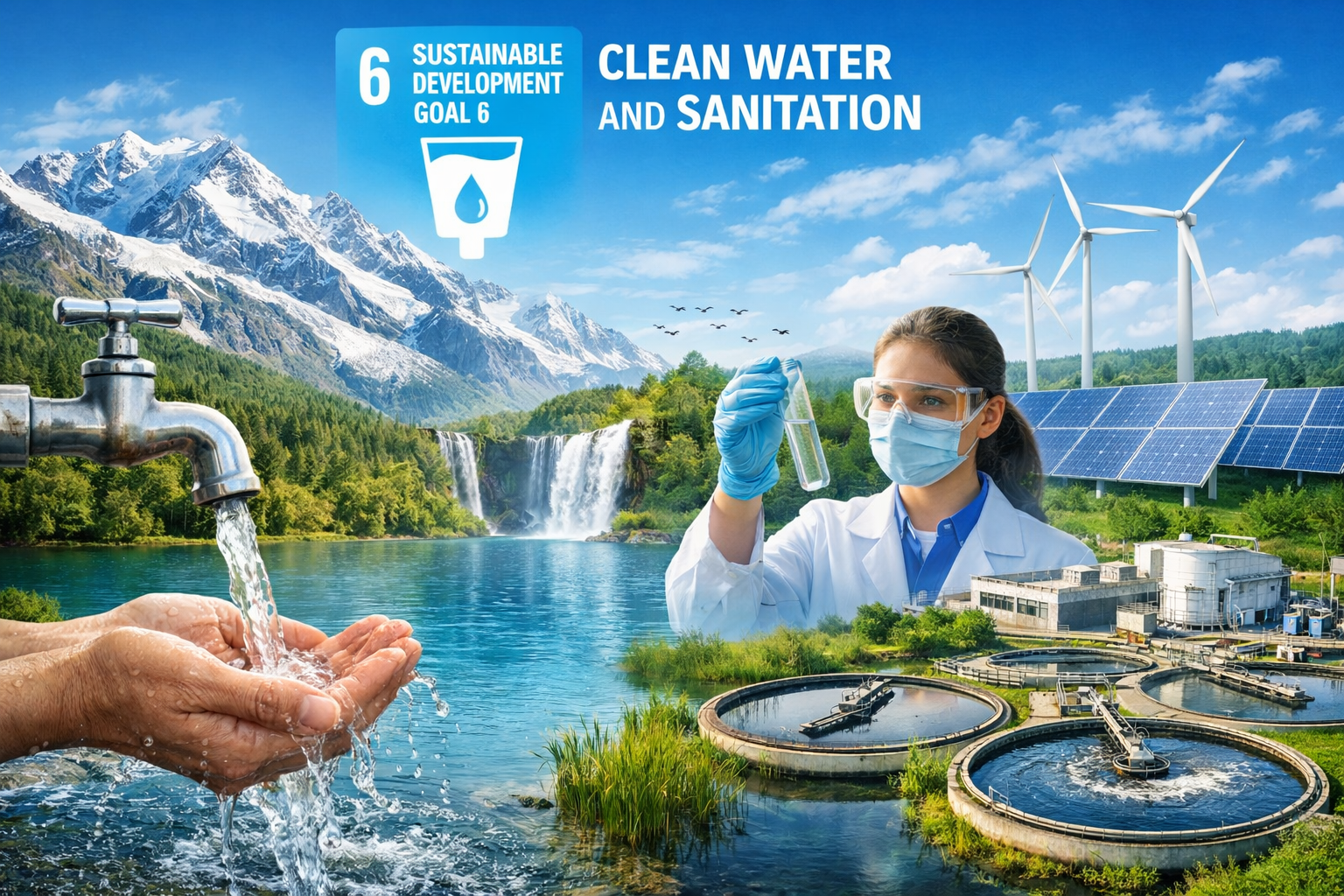
The Faculty of Biology and Biotechnology of Al-Farabi Kazakh National University makes a systematic contribution to the achievement of Sustainable Development Goal 6 (SDG 6 – Clean Water and Sanitation) through the implementation of a portfolio of fundamental and applied research and development (R&D) projects funded under state grant programmes of the Ministry of Science and Higher Education of the Republic of Kazakhstan.
These projects are aimed at addressing key SDG 6 objectives, including improving water quality, reducing chemical and technogenic pollution, assessing risks to aquatic ecosystems, and developing scientifically grounded biotechnological and ecotoxicological approaches to water protection.
Key Research Areas Relevant to SDG 6
R&D activities of the Faculty of Biology and Biotechnology within the framework of SDG 6 focus on the following priority areas:
- comprehensive ecotoxicological assessment of aquatic ecosystems and catchment basins;
- analysis of the impacts of microplastics, pesticides, and heavy metals on water quality and biological systems;
- development of biotechnological solutions aimed at pollution reduction and prevention of secondary contamination of water resources;
- conservation of freshwater biodiversity as an indicator of ecological status of water bodies;
- generation of a scientific evidence base for sustainable water resources management.
Key Projects Contributing to SDG 6
1. Integrated Assessment of Water Resources and Catchment Basins
AP23486019 – “Comprehensive Ecotoxicological Assessment of High-Mountain and Glacier Catchment Basins of Major Rivers of the Northern Tien Shan”
Principal Investigator: Marina A. Suvorova
Project Duration: 2024–2026
This project is focused on an integrated assessment of the ecological status of high-mountain and glacier-fed catchment basins, which represent strategically important sources of freshwater for southeastern Kazakhstan. The research addresses ecotoxicological risks, anthropogenic pressures, and the vulnerability of water systems under climate change conditions.
The project outcomes are directly relevant to the protection and restoration of water-related ecosystems, sustainable water resource management, and the implementation of SDG targets 6.3 and 6.6.
2. Assessment of Emerging Water Pollutants and Their Biological Effects
AP26100125 – “Study of the Potential Genotoxicity and Mutagenicity of Microplastics in In Vivo Test Systems”
Principal Investigator: Anna V. Lovinskaya, Acting Associate Professor, Department of Molecular Biology and Genetics
This project investigates microplastics as an emerging class of global water pollutants, including their potential presence in freshwater ecosystems. The findings provide a scientific basis for risk assessment related to drinking and environmental water quality and directly support SDG target 6.3.
3. Environmental Toxicology of Agrochemicals and Protection of Water Systems
AP26101681 – “Investigation of the Toxicogenetic Effects of Widely Used Pesticides in Kazakhstan on Biological Objects”
Principal Investigator: Tamara M. Shalakhmetova, Professor, Department of Biodiversity and Bioresources
The project evaluates the effects of pesticides, which constitute a major source of diffuse pollution of surface and groundwater through agricultural runoff. The research supports the development of preventive measures to reduce chemical pressure on aquatic ecosystems and contributes to SDG targets 6.3 and 6.6.
4. Biotechnological Approaches to Reducing Water Pollution Risks
AP26104459 – “Development of Biosurfactant- and Biopolymer-Producing Microbial Consortia for Enhanced Oil Recovery”
Principal Investigator: Gulzhan K. Kaiyrmanova, Associate Professor, Department of Biotechnology
Although industrially oriented, this project contributes to SDG 6 by developing environmentally safer microbial technologies that reduce the need for chemically aggressive agents, thereby lowering the risk of groundwater contamination in oil-producing regions.
5. Heavy Metal Contamination and Water–Agroecosystem Interactions
AP26196039 – “Cadmium Toxicity in Rice Plants and the Use of Physicochemical Methods to Enhance Resistance”
Principal Investigator: Saule D. Atabaeva, Professor, Department of Biotechnology
Cadmium contamination poses a serious threat to irrigation water quality and food safety. This project develops integrated approaches to managing the water–soil–plant system, aiming to reduce risks of secondary water pollution and supporting SDG target 6.3.
6. Conservation of Freshwater Ecosystem Biodiversity
AP26100721 – “Study of the Taxonomic and Functional Diversity of the Ichthyofauna of the Alatau Region”
Principal Investigator: Sayat E. Sharakhmetov, Senior Lecturer, Department of Biodiversity and Bioresources
This project contributes to SDG target 6.6 through monitoring and assessment of freshwater ecosystems. Fish community diversity serves as a key biological indicator of water quality and ecosystem health.
Contribution to the Achievement of SDG 6 Targets
The implementation of these R&D projects ensures the Faculty’s contribution to the following SDG 6 targets:
- SDG 6.3 — improving water quality by reducing pollution, minimizing the release of hazardous chemicals, and mitigating emerging contaminants;
- SDG 6.6 — protecting and restoring water-related ecosystems, including high-mountain and glacier-fed catchments;
- strengthening the scientific and evidence-based foundation for sustainable water governance and environmental policy.
Conclusion
The research portfolio of the Faculty of Biology and Biotechnology of Al-Farabi Kazakh National University demonstrates a comprehensive and scientifically grounded contribution to the implementation of SDG 6, integrating ecotoxicological, biotechnological, and ecosystem-based research. These R&D activities support the development of sustainable solutions for water protection and ecological resilience, thereby reinforcing the University’s contribution to the United Nations 2030 Agenda for Sustainable Development.
Faculty of Biology and Biotechnology of al-Farabi Kazakh National University