Al-Farabi KazNU Held an Open Session on SDG–13: “Climate Action”
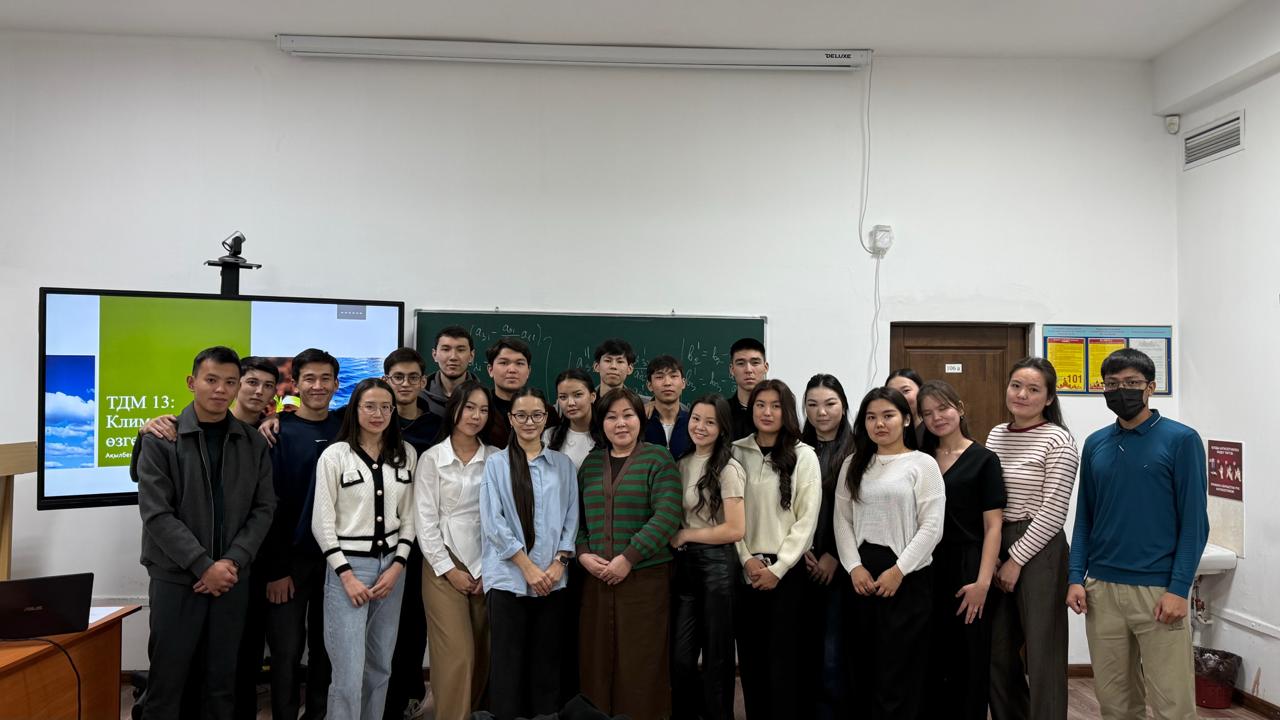
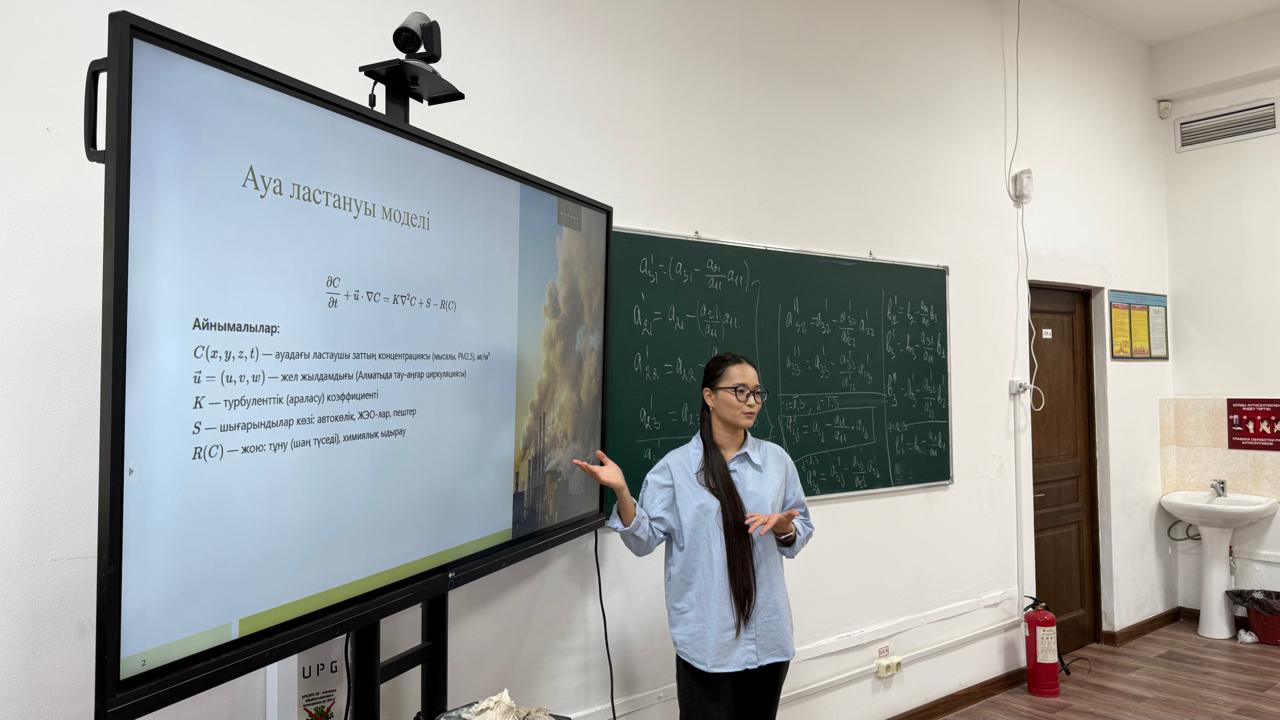
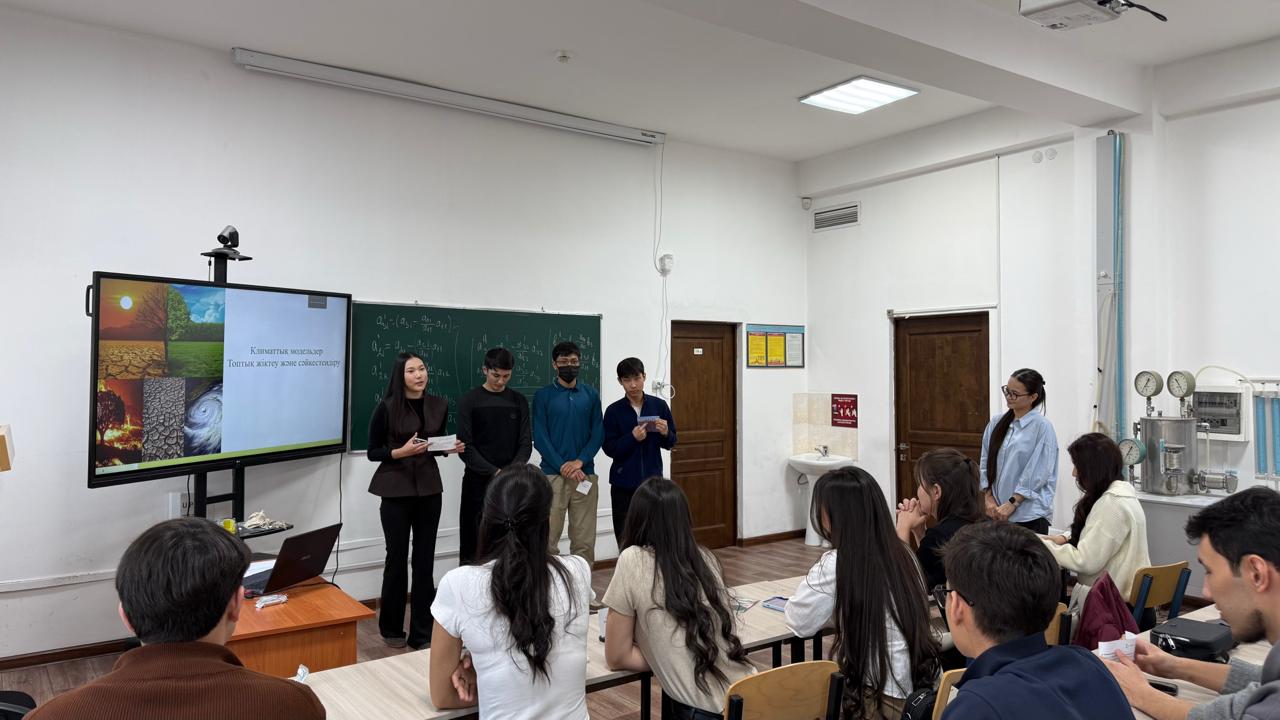
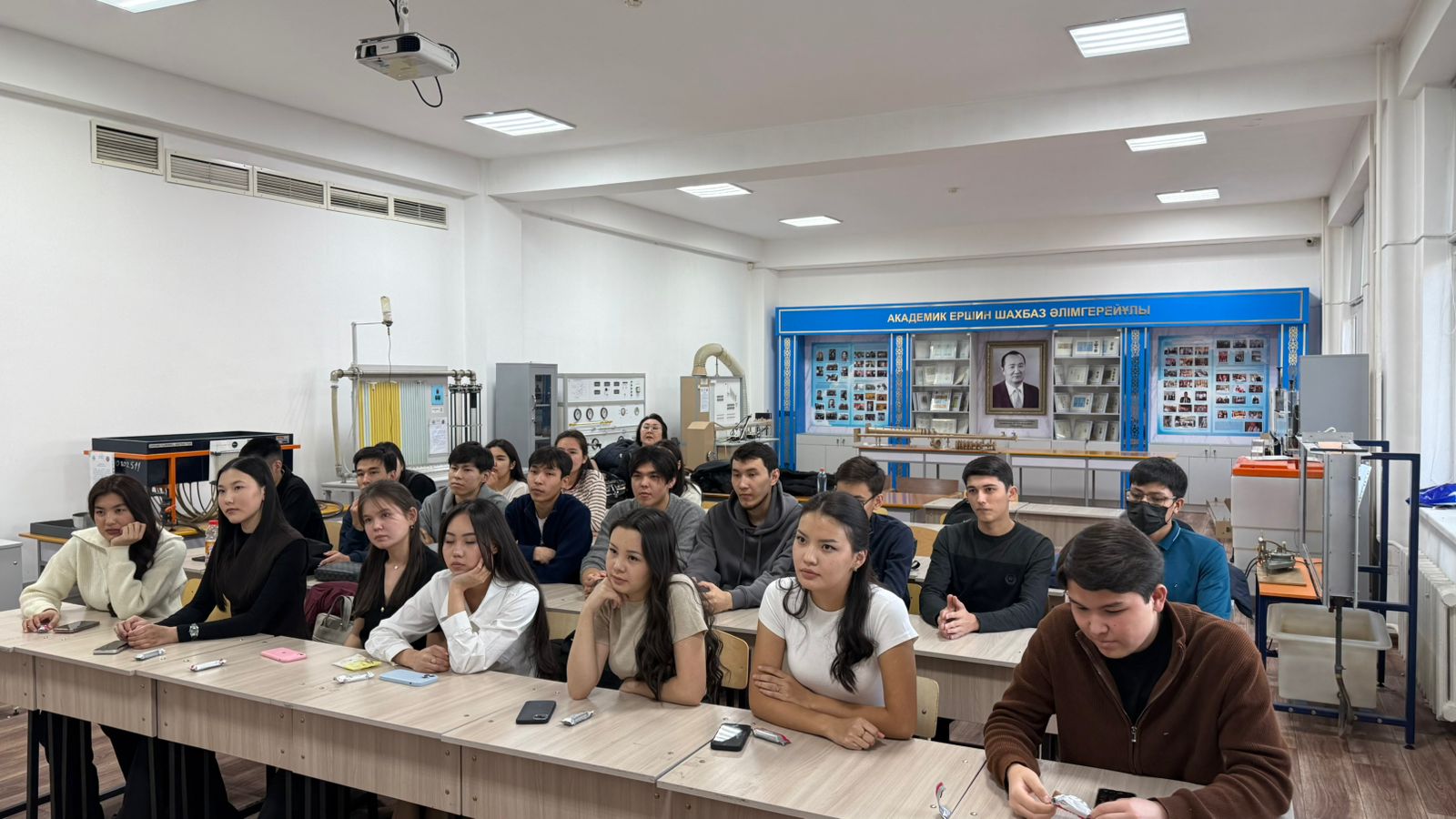
On November 20, 2025, the Faculty of Mechanics and Mathematics of Al-Farabi Kazakh National University hosted an open educational session dedicated to Sustainable Development Goal 13 – “Climate Action.” The event was organized within the teaching practice of the Department of Mathematical and Computer Modeling and was conducted by first-year master’s student of the “Applied and Computational Mathematics” program, Aktolkyn Akylbekkyzy, for the PM–23–1 group.
The event was attended by the Deputy Head of the Department for Academic, Methodological and Educational Affairs, Lida Absyltanqyzy Sagimbayeva, as well as pedagogy instructor Sarash Konyrbayeva.
The main purpose of the session was to introduce students to the scientific foundations of climate modeling and demonstrate the role of mathematical models in analyzing and predicting climate change. During the lecture, students were presented with several key models: air pollution dispersion modeling, Earth’s energy balance, sea-level rise dynamics, and models describing the dependence of forest fires on climatic factors.
In the practical part, students worked in groups, analyzed assigned models, and presented their findings. This interactive approach enhanced their analytical thinking, research skills, and teamwork abilities.
Alignment with the Academic Curriculum of 3rd-Year Students
The session was closely aligned with core subjects studied by 3rd-year bachelor students, such as:
- differential equations,
- mathematical physics equations,
- numerical methods,
- computational mathematics,
- modeling of natural processes.
These courses involve solving equations that describe real climate and environmental processes. Students noted that the theoretical concepts they study in class are directly applied in climate modeling. They engaged actively in open discussion, analyzing examples and connecting mathematical models with real-world environmental phenomena.
Scientific and Educational Significance
The open session demonstrated the importance of applied and computational mathematics in addressing global climate challenges. The event strengthened students’ scientific competencies, environmental awareness, and understanding of sustainable development issues.
In conclusion, department representative Lida Sagimbayeva emphasized the educational and scientific significance of the session and highlighted the importance of applying mathematical knowledge to climate-related problem solving.
Deputy Head of the Department of Mathematical
and Computer Modeling for Academic,
Methodological and Educational Affairs
L.A. Sagimbayeva