“Non-obvious Types of Violence”
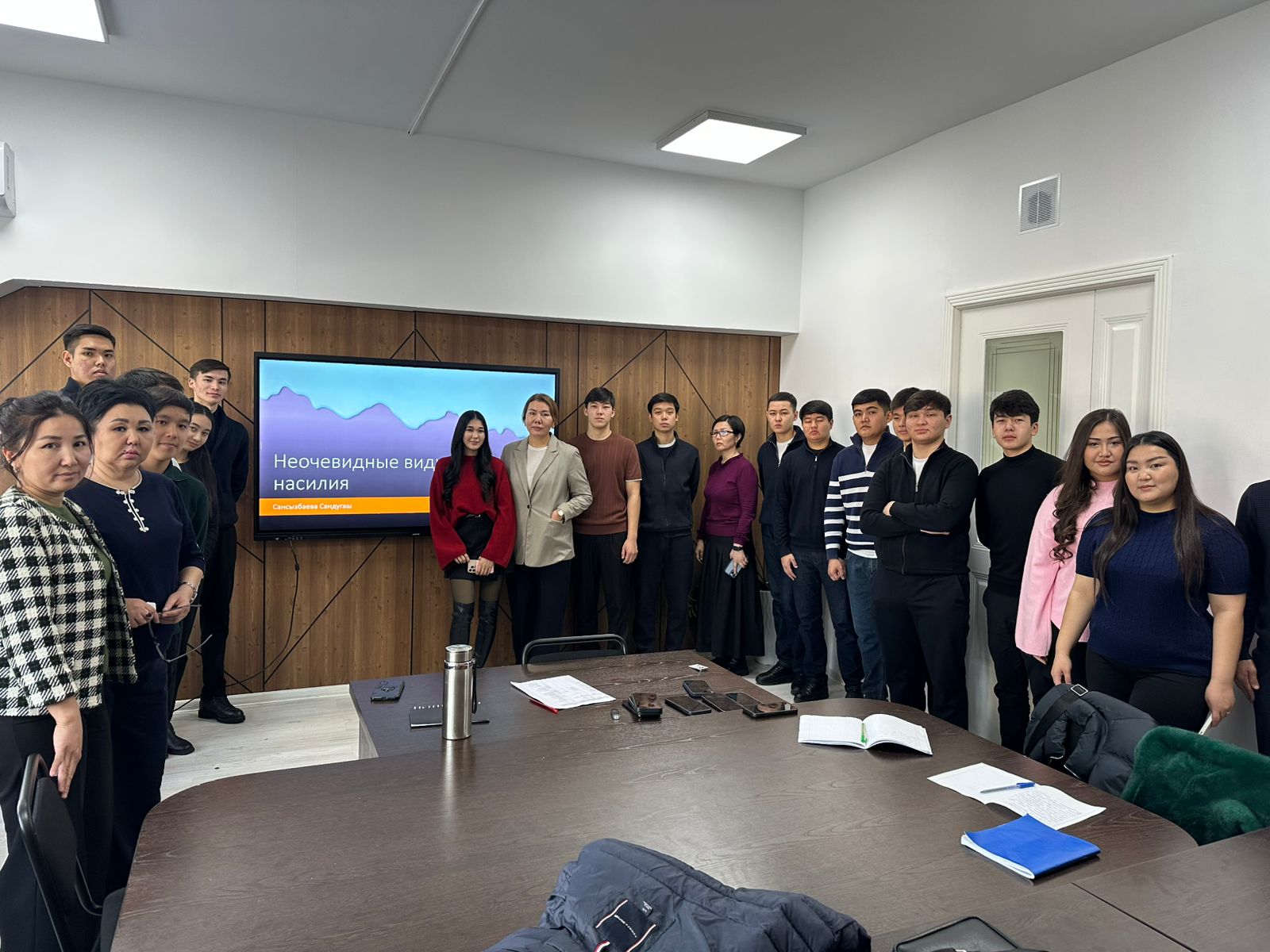
On December 11, 2025, teachers Sansyzbaeva S. K., Sagatova S. S., Akhmetzhanova A. I., and Ibraeva D. S. organized and conducted an event on the topic of “Non-obvious Types of Violence” as part of SDG 5 “Gender Equality.”
The connection between the topic of “non-obvious forms of violence” and gender equality is direct and profound. Many psychological forms of pressure—victim blaming, victim shaming, catcalling, gaslighting—arise and take root precisely where gender stereotypes and unequal behavior patterns exist.
For example, catcalling is fueled by the idea that women can be evaluated and “commented on” in public spaces as if they were objects. This demonstrates inequality in the right to personal boundaries and safety.
Victim blaming and victim shaming are often directed at women who are accused of “inappropriate” behavior, appearance, or emotions. Such reactions from society reinforce gender roles and prevent people from talking openly about problems.
Gaslighting often occurs in relationships where one partner considers themselves “superior” and uses psychological pressure to maintain control.
Discussing these topics within the framework of SDG 5, “Gender Equality,” is important because achieving gender equality is impossible without eliminating all forms of violence, including psychological violence, which has long been underestimated and normalized. When we learn to recognize such mechanisms, we:
• support respectful communication between people regardless of gender;
• we create a safe environment where everyone has a voice, personal boundaries, and self-respect.
• we promote a culture of zero tolerance for violence.
Thus, understanding “non-obvious” forms of violence is one of the key steps towards true gender equality and socially responsible legal practice.
Such knowledge is especially important for young people, including future lawyers. It helps them to work effectively with victims, recognize hidden pressure in different areas of life, and foster a culture of respect and safety. Awareness of such “invisible” forms of influence is an important step towards a more just and secure society.
Other news