- Main
- News
- Project "Aralap": Young scientists of KazNU Together with partners from research institutes, engage civil society in achieving the SDGs
Project "Aralap": Young scientists of KazNU Together with partners from research institutes, engage civil society in achieving the SDGs
30 december, 2025
Citizen Science for Biodiversity Conservation
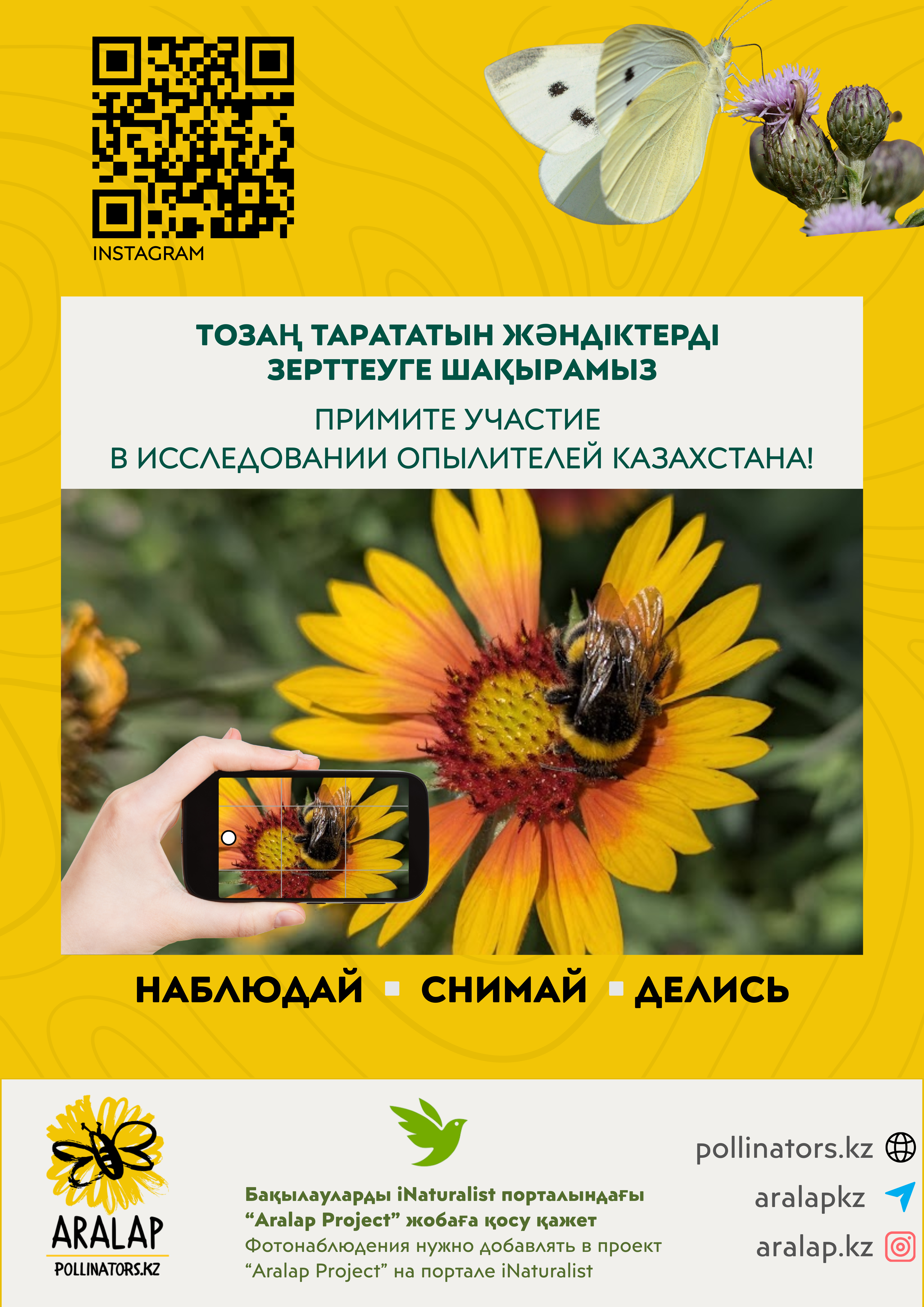
Early-career researchers from the Department of Botany and Agroecology at Al-Farabi Kazakh National University, together with colleagues from research institutes, have launched the innovative “Aralap” initiative ( Pollinators.kz ) - a by applying internationally recognized citizen science approaches. The project combines scientific research and education to study and conserve pollinators in Kazakhstan.
Project Aralap , which launched in 2025, is a shining example of how a young generation of scientists is actively engaging civil society in addressing global sustainability challenges. Using Citizen's methodology Science , widely used by foreign scientists in Global projects Pollinator Watch ( Earthwatch ), European Through LIFE 4 Pollinators and other international initiatives, Kazakhstani researchers have adapted best global practices to the realities of domestic science.
Project Coordinating Team
The project brought together talented young specialists from various scientific organizations:
Islam Galymzhanov , co-director, entomologist, doctoral candidate at Al-Farabi Kazakh National University, and coordinator of the Young Scientists' Club, studies wild bees, pollinators, and their role in Kazakhstan's ecosystems.
Elmira Mustafina - co-director, leading specialist of the Association for the Conservation of Biodiversity of Kazakhstan (ACBK), editor-in-chief of Tabigat Media . Provides planning, media support, and promotion of the project.
Kalima Tursymbay is a botanist and junior researcher at the Ile-Alatau State National Park. She specializes in the study of flowering plants and their interactions with pollinators, as well as the promotion and management of protected areas.
Ruslan Nurkhanov is a geobotanist, a master's student at KazNU , a science popularizer, and a researcher at the Institute of Botany and Phytointroduction . He studies plant diversity and ecology and is actively involved in educational activities and engaging a wider audience in scientific research.
Symbat Zhanbasbayeva is a biology student at Al-Farabi Kazakh National University and a staff member at the Institute of Botany and Phytointroduction . She actively collaborates with scientific volunteers.
Bekzat Aitzhan is a translator and editor at Tabigat. Media . Ensures the correctness of terminology and the accessibility of scientific information in Kazakh and Russian.
The scale of citizen engagement
The Aralap project calls on all residents of Kazakhstan—naturalists, teachers, schoolchildren, students, protected area staff, photographers, tourists, and simply nature lovers—to become scientific volunteers. Participants observe and photograph pollinating insects as they work on flowering plants, submitting their data through the iNaturalist platform or a special project form.
Project coordinators conduct educational lectures and seminars and actively work with local communities in various regions of Kazakhstan, organizing meetings in both large cities and rural communities. Observations from hard-to-reach natural areas are particularly valuable, helping scientists gain a complete picture of pollinator distribution across the country.
The project's contribution to achieving the UN Sustainable Development Goals
Aralap initiative directly contributes to the implementation of several SDGs:
SDG 1 (No Poverty): Understanding the role of pollinators in agricultural productivity contributes to increased crop yields and food security, which directly impacts the livelihoods of rural populations. Conserving wild pollinators ensures the sustainability of the agricultural sector and the stability of farmers' incomes.
SDG 2 (Zero Hunger): Pollinators play a critical role in the production of approximately 75% of the world's food crops. Studying and conserving pollinator populations in Kazakhstan directly impacts food security for the country and the region.
SDG 4 (Quality Education): The project engages schoolchildren, students, and teachers in real-world scientific activities, developing scientific literacy and research skills. The project's educational activities enhance environmental awareness among young people.
SDG 7 (Affordable and clean energy): Conserving natural ecosystems and biodiversity helps maintain ecological balance and natural processes, which is important for sustainable development and reducing dependence on fossil fuels.
SDG 8 (Decent Work and Economic Growth): Developing citizen science creates new opportunities for young scientists and fosters a green economy and ecotourism. The project demonstrates a model for innovative employment in the scientific field.
SDG 9 (Industry, Innovation and Infrastructure): The use of modern digital platforms ( iNaturalist ), the creation of online communities and the application of artificial intelligence technologies for species identification represent an innovative approach to scientific research in Kazakhstan.
SDG 10 (Reduce Inequalities): Opening the project to everyone, regardless of education, profession, place of residence, or social status, ensures equal access to participation in scientific activities. Residents of remote regions have the opportunity to contribute to science on an equal basis with professional researchers.
SDG 11 (Sustainable Cities and Communities): The project promotes the greening of urban areas with native flowering plants, improves the urban environment, and creates conditions for pollinators in megacities. The initiative counters the practice of over-mowing lawns and promotes the development of a sustainable urban landscape.
SDG 13 (Climate Action): Monitoring pollinators helps track the impact of climate change on ecosystems and develop adaptation strategies. Healthy pollinator populations and preserved natural ecosystems increase resilience to climate change.
SDG 15 (Life on Land): The project directly aims to conserve the biodiversity of Kazakhstan, home to over a thousand species of flowering plants. Studying the interactions between plants and pollinators helps develop effective measures to protect natural ecosystems—steppes, deserts, mountains, and protected areas.
SDG 17 (Partnerships for Sustainable Development): The project demonstrates a successful partnership between a university, research institutes, national parks, media, and civil society. Applying Citizen's international experience Science and integration with global platforms ( iNaturalist ) demonstrate the effectiveness of international scientific collaboration.
Development prospects
The Aralap team is actively expanding the project's geography, seeking curators in Kazakhstan's regions to conduct lectures and organize events. The project continues to collect data on pollinator species diversity across the country, creating a unique knowledge base about Kazakhstan's pollinating insect fauna and their relationships with plants.
The young scientists' initiative demonstrates that modern science can be open, accessible, and understandable to everyone, and that engaging civil society in scientific research is becoming a powerful tool for achieving the Sustainable Development Goals.
Project Contacts:
- Website: https://pollinators.kz
- Instagram: @aralap.kz
- Telegram: @aralapkz
- Email: pollinators.kz@gmail.com
Join the "Aralap" project – help science, help nature!


Department of Botany and Agroecology
##SDG
# #SustainableDevelopment
# #THEImpact
# #KazNU
# #SDG_KazNU
# #SustainableKazNU
# #Aralap
# #PollinatorsKZ
# #CitizenScience
# #SDG1
# #NoPoverty
# #SDG2
# #ZeroHunger
# #SDG4
# #QualityEducation
# #SDG7
# #CleanEnergy
# #SDG8
# #DecentWork
# #SDG9
# #IndustryInnovation
# #SDG10
# #ReducedInequalities
# #SDG11
# #SustainableCities
# #SDG13
# #ClimateAction
# #SDG15
# #LifeOnLand
# #SDG17
# #PartnershipsForGoals
# #ГражданскаяНаука
# #ОпылителиКазахстана
# #БиоразнообразиеКазахстана