- Main
- News
- The Contribution of KazNU's Faculty of Biology and Biotechnology to SDG 2 (Zero Hunger) through Research and Development
The Contribution of KazNU's Faculty of Biology and Biotechnology to SDG 2 (Zero Hunger) through Research and Development
29 december, 2025
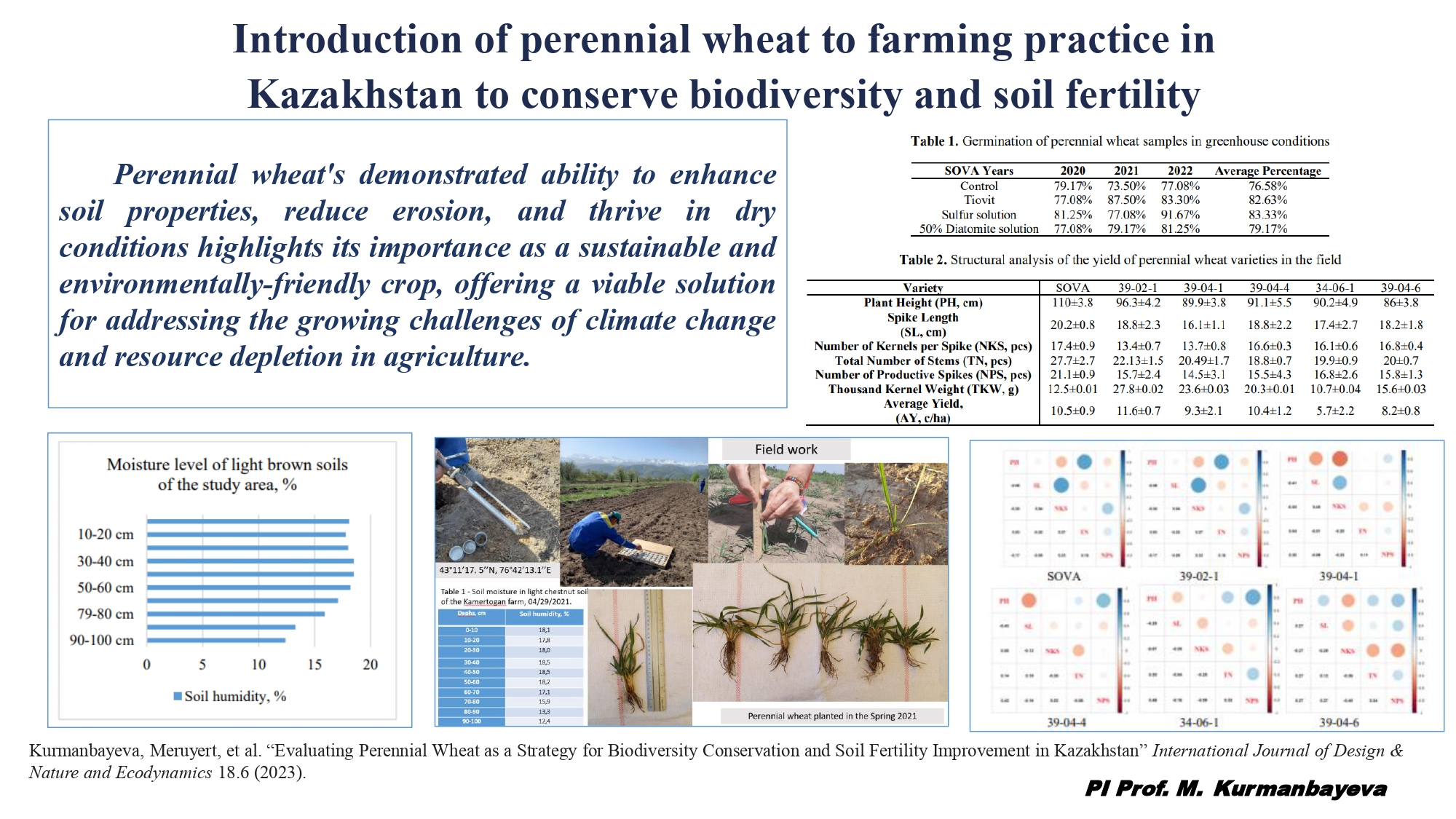
The Faculty of Biology and Biotechnology of Al-Farabi Kazakh National University actively contributes to achieving SDG 2 (Zero Hunger, ensuring food security and improved nutrition) through comprehensive research projects funded by the Ministry of Science and Higher Education of the Republic of Kazakhstan.
Key Research Projects Contributing to SDG 2
Improving Agricultural Crop Productivity
Project AP23488781 "Development of agrobiological foundations for perennial rice cultivation to increase arable land productivity in Almaty and Kyzylorda regions" led by Professor M.S. Kurmanbayeva aims to create sustainable farming systems and increase yields of staple food crops. The new study is a continuation of the project AP09259457 “Introduction of perennial wheat into agricultural culture to preserve biodiversity and soil fertility in the south and southeast of Kazakhstan.”
Project AP26196039 "Cadmium toxicity for rice plants and the use of physicochemical methods to increase resistance" led by Professor S.D. Atabayeva investigates methods to protect this crucial food crop from heavy metal contamination.
Biological Plant Protection and Biopreparations
Project AP26198317 "Development of biotechnology for protecting agricultural crops from phytopathogens based on the use of microbial antagonists and their metabolites" led by E.V. Brazhnikova creates environmentally safe alternatives to chemical pesticides for agricultural plant protection.
Research project AP14871628 "Isolation, genomic analysis and study of nematophagous activity of predatory fungi of Southern Kazakhstan for identification and selection of promising strains for creating bionematicides" led by Professor K.K. Boguspayev develops biological pest control agents for agricultural crops.
Biofertilizers and Plant Growth Stimulants
Project AP26101745 "Application of cyanobacterial strains for obtaining organic fertilizers and plant biostimulants in agriculture" led by Associate Professor F.K. Sarsekeyeva creates environmentally friendly alternatives to chemical fertilizers.
Research project AP13068051 "Development of technology for obtaining biopreparations based on microalgae and cyanobacteria strains to increase the yield of agricultural plants" led by F.K. Sarsekeyeva aims to create innovative biotechnological solutions for increasing crop productivity.
Project AP19679444 "Development of a prolonged-action biopreparation based on a polymer matrix with effective microorganisms for stimulating the growth of agricultural crops" led by Associate Professor L.V. Ignatova creates long-lasting biopreparations for sustainable agriculture.
Soil Quality Improvement
Project AP14869934 "Development of new composite compost technology using cattle manure and low-grade coal for sustainable soil fertility" led by A.A. Zhubanova promotes soil fertility enhancement and sustainable agriculture.
Research project AP23488028 "Development of technology for obtaining and testing algobacterial biopreparations that ensure resilience and increased productivity of agricultural plants" led by Sadvakassova creates comprehensive solutions for yield improvement.
Integration of Modern Technologies
Project AP23488711 "Integration of selective molecular marking and plant inoculation with nitrogen fixers for forming an optimal sainfoin gene pool in Southeastern Kazakhstan" led by Altybayeva combines molecular genetic approaches and biotechnologies to improve forage crops.
Project AP15473383 "Study of possible synergism in the combined use of mycorrhizal and predatory fungi to ensure tomato resilience under stress" investigates innovative approaches to vegetable crop protection.
Sustainable Use of Bioresources
Project AP14972916 "Creation and study of an active consortium of microalgae and PGP-bacteria as an alternative to chemical fertilizers" led by M.O. Bauyenova develops biological systems to replace synthetic fertilizers.
Research project AP22788030 "Obtaining and studying algocyanobacterial biofilms for restoration of saline and contaminated soils" led by Bauyenova aims to restore degraded agricultural lands.
Agricultural Waste Processing
Project AP19676645 "Biotechnology for obtaining biologically active peptides from mare milk whey proteins" led by Candidate of Biological Sciences, Associate Professor M.Kh. Narmuratova contributes to increasing the added value of agricultural raw materials.
Research project AP14871683 "Biotechnology for processing keratin by-products using immobilized thermophilic bacteria" led by A.S. Kistaubayeva creates technologies for livestock waste utilization.
Research Impact
The faculty's projects in the SDG 2 area represent a total funding volume of over 400 million tenge for the period 2024-2027. The research covers all aspects of sustainable agriculture: from creating biopreparations and biofertilizers to plant protection, soil quality improvement, and increasing agricultural crop productivity.
Through these R&D initiatives, the Faculty of Biology and Biotechnology directly contributes to achieving SDG 2 goals, including ensuring food security, improving nutrition, promoting sustainable agriculture, doubling agricultural productivity and incomes of small-scale food producers, and maintaining the genetic diversity of seeds and cultivated plants.
Faculty of Biology and Biotechnology of al-Farabi Kazakh National University