Interview with 1st year international students at Higher School of Economy and Business
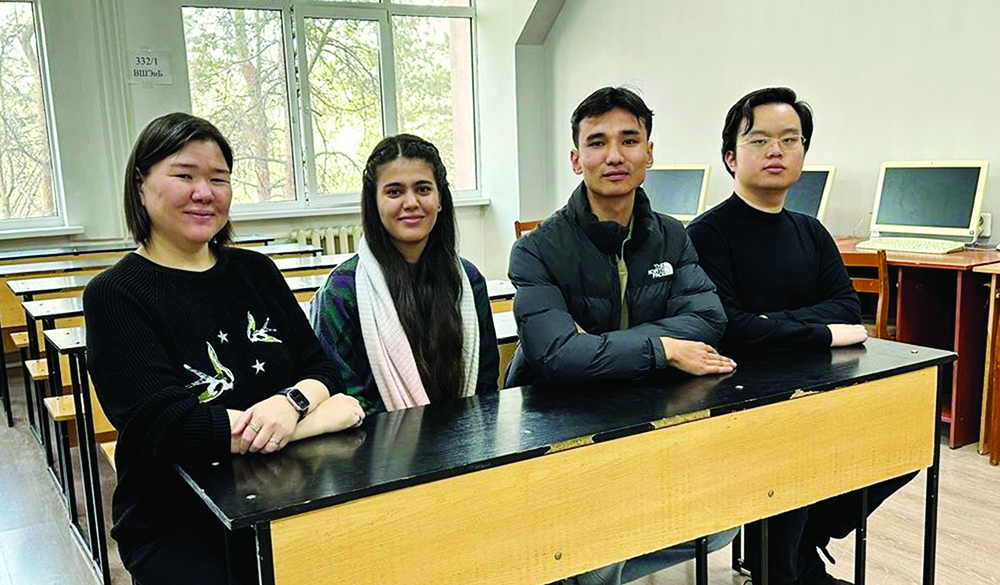
This is the continuation of the interview with Bahara Alam, SHI Runyan, and Muhammad Yasin Ahmadi international students from Afghanistan and China to KazNU student community, who joined our university to pursue a degree in Management (6B04102) and Finance (6B04106). In this interview, they share their experience of applying to KazNU, moving to Kazakhstan, and adapting to academic and campus life.
– How was your transition to student life at KazNU?
Bahara: The transition to student life at KazNU felt like entering a well organized and supportive academic environment.. Interacting with classmates from diverse backgrounds enriched my experience from the very beginning..
Runyan: Student life here hasn't been as challenging as I imagined. Both fellow students and university staff are very warm and helpful..
Muhammad Yasin: Staff from the International Office and the Business School guided us through each step efficiently. Additionally, living in the international dormitory has been a great way to instantly connect with a diverse community of students, which enriches daily life.
– How would you describe the academic environment at KazNU?
Bahara: KazNU’s academic environment is both demanding and inspiring. Professors teach with depth, encouraging students not just to memorize, but to think critically and independently. Assignments here are designed to challenge analytical thinking, and assessments push you to apply concepts rather than simply repeat them.
Runyan: The academic atmosphere at the university is far from dull. On the contrary, professors place great emphasis on classroom interaction with students. Independent student work is often required to be presented in the form of presentations, not just impersonal written reports.
Muhammad Yasin: It’s rigorous and practical. Professors combine theory with real-world economic contexts, which is crucial for finance. They are experts in their fields and encourage critical thinking. They respect students who show initiative, much like the drive needed to run an educational initiative.
– What challenges have you faced during your studies, and how did you overcome them?
Bahara: Every major transition comes with challenges, and mine were meaningful learning experiences. Adapting to a multilingual environment was difficult at first, but daily interaction and continuous practice helped me to overcome it. Understanding local customs took time, yet it ultimately deepened my respect for Kazakhstan’s unique traditions.
Runyan: I've noticed that many things operate quite differently here compared to China, which often led me to misunderstandings or missing important matters. However, with the help of teachers and classmates, resolving these issues hasn't been difficult.
Muhammad Yasin: My main challenges were the language barrier, cultural adaptation, and the academic workload. I tackled the language issue by using apps, practicing with local friends, and taking basic Russian courses. For cultural adaptation, I embraced curiosity and resilience – trying new foods and participating in local traditions. To manage the demanding finance curriculum, I formed study groups, used university support services, and improved my time management skills.
– How has living in Almaty influenced your overall experience?
Bahara: The city is energetic, modern, and full of cultural diversity, there is always something new to explore. From local cuisine to traditional celebrations, Almaty constantly introduces you to the richness of Kazakh heritage. The city feels safe and welcoming, allowing international students to settle in quickly and comfortably.
Runyan: Almaty is not a lifeless city, but due to my personal preferences, I usually enjoy staying indoors and rarely go out to participate in activities.
Muhammad Yasin: Almaty is a major business and financial center in Central Asia. Observing its economy firsthand provides a living case study for my finance courses. The city’s safety and modern amenities provide a stable environment where I can focus entirely on my demanding studies.
– What are your academic or career plans after graduating from KazNU?
Bahara: After graduating, I plan to continue my academic path in research and eventually contribute to international development work. My goal is to use the knowledge and multicultural experience gained at KazNU to work in institutions where cross border cooperation and global perspectives are essential.
Runyan: I might go to another country to pursue a master's degree to further broaden my perspective and accumulate academic achievements. After that, I will return to my homeland to receive training from my father and gradually become involved in the business.
Muhammad Yasin: I plan to become a financial analyst or consultant specializing in emerging markets, particularly in regions like Central and South Asia. I aim to apply what I learn to build sustainable solutions, perhaps by focusing on financial literacy and access for underserved communities, merging my finance expertise with my passion for empowerment of my home country Afghanistan.
– What advice would you give to prospective international students considering KazNU?
Bahara: I would tell them to come with an open mind and a willingness to grow. KazNU offers much more than academic knowledge it gives you a chance to experience a new culture, challenge your worldview, and develop both personally and professionally.
Runyan: The way some things work here might be different from what you're used to back home, but there's no need to worry too much. Just be prepared to embrace new experiences.
Muhammad Yasin: Be clear about your goals and resilience in your application. Start the scholarship and visa process extremely early. Once here, actively network with peers and professors, the diverse environment is a major asset. See this not just as a degree, but as a strategic investment in your future and a tool to make a lasting impact. Be proactive, just as you would in managing any valuable portfolio.
Diana D. Tektibayeva,
Department of Foreign Languages