- Main
- News
- Kazakhstan's Transition to a Unicameral Parliament as a Factor in Accelerating the Legislative Process
Kazakhstan's Transition to a Unicameral Parliament as a Factor in Accelerating the Legislative Process
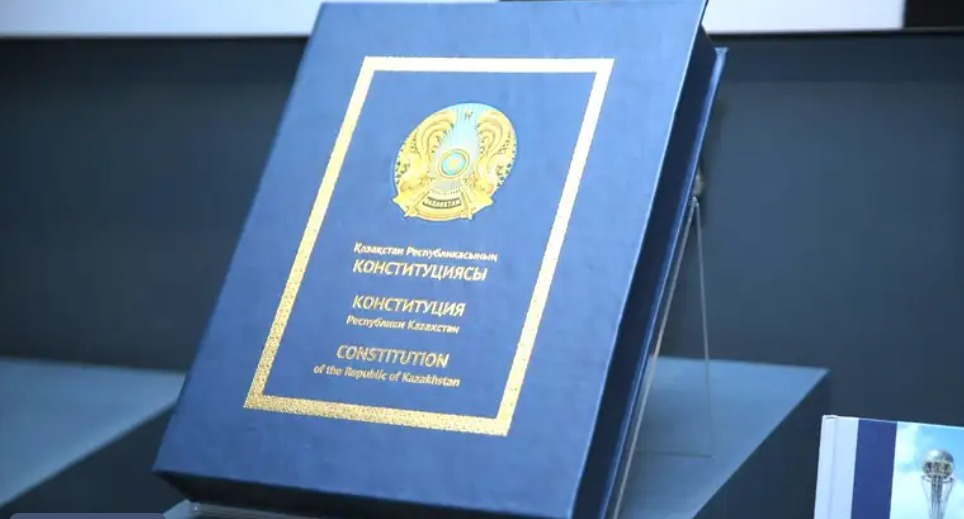
The draft New Constitution of the Republic of Kazakhstan proposes a transition to a unicameral parliament, which, in my opinion, is the most appropriate approach, as it expedites the approval of important and necessary documents that need to be implemented in economic practice.
A unicameral parliament (a parliament with one chamber) is typical for countries with a unitary structure, small or ethnically homogeneous states striving for efficiency and economy, including China, Portugal, Sweden, Finland, Hungary, Israel, New Zealand, and many CIS countries (Armenia, Azerbaijan, Kyrgyzstan).
Kazakhstan, according to the draft Constitution, is also a unitary state, where religion does not participate in public administration and the state does not participate in religious governance.
The new parliamentary structure has changed its name and will be called "Kurultai" (Council) and will have only one chamber with 145 members. However, only party organizations have been proposed to elect members of the Kurultai parliament, which, in my opinion, violates the rights of Kazakhstani citizens. It should be noted that citizens must be members of a political party. Otherwise, they cannot be elected as members of the Kurultai.
Overall, I support the constitutional amendments to a unicameral parliament, as it speeds up the legislative process.
I also want to note that strengthening presidential power by including the position of Vice President is a requirement of the times, as it is essential to prevent chaos in society. It is conceivable that the Vice President will be entrusted, among other responsibilities, with the training of personnel and the improvement of scientific activity.
There is hope that the Vice President will be appointed from among academics who have extensive scientific and practical experience, which will allow for significant advancement of scientific and pedagogical activity and increased funding in this area, as in China, Singapore, and South Korea.
Today, we note that universities are underfunded and remain marginal, just like medicine.
Our Faculty of Economics needs to establish connections with major industrial enterprises and associations in Kazakhstan, such as Kazakmys, KazMunayGas, KazPhosphorus, Karmet, and others. Strengthening presidential authority will allow us to force these large companies to establish connections with the country's major universities. Currently, we are not allowed in or listened to, but with a strong Vice President, we believe this could become possible. Therefore, this reform could improve the connection between science and production.
Zhankubaev Bakhytbek Aubakirovich
Department: Economics
Faculty: Higher School of Economics and Business
Al-Farabi Kazakh National University