- Main
- AL-FARABI NEWS LETTERS
- Research on the Pharmaceutical Potential of Kazakhstan’s Flora: Development of Medicinal Substances Based on Cirsium arvense and Cirsium vulgare
Research on the Pharmaceutical Potential of Kazakhstan’s Flora: Development of Medicinal Substances Based on Cirsium arvense and Cirsium vulgare
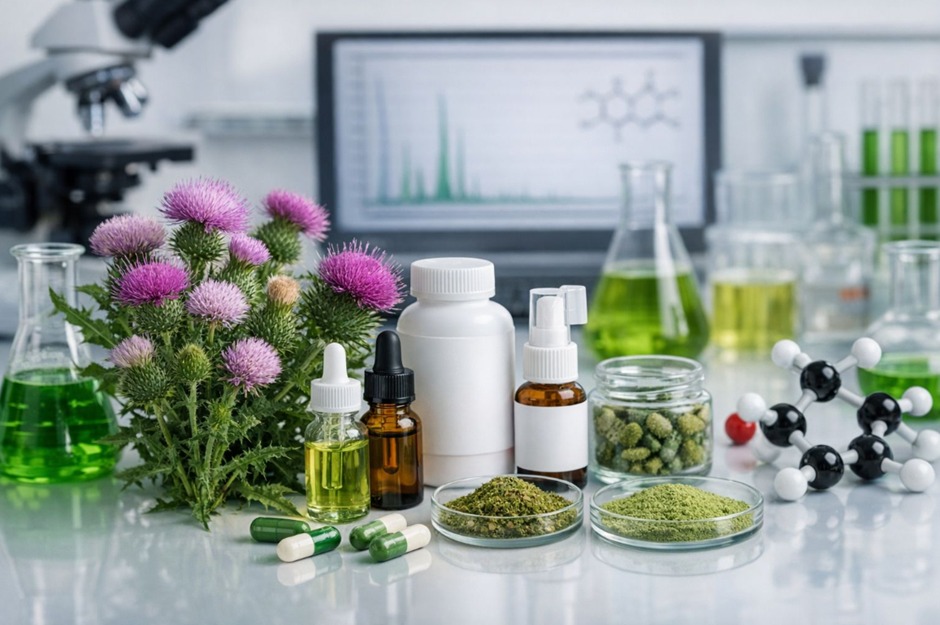
At present, there is growing scientific and practical interest in the development of new plant-based medicinal products. Kazakhstan is rich in medicinal plant diversity; however, the chemical composition and pharmacological properties of many plant species remain insufficiently studied. Comprehensive research on local medicinal plant resources contributes to the expansion of pharmaceutical knowledge and supports the development of the national healthcare system.
The project focuses on studying the pharmaceutical potential of field thistle (Cirsium arvense) and common thistle (Cirsium vulgare), which are widely distributed across Kazakhstan. The main research direction includes chemical composition analysis, development of bioactive substance extraction technologies, and standardization of quality parameters for future pharmaceutical products.
The project is particularly relevant due to the increasing demand for plant-based drugs with anti-inflammatory and antioxidant properties. Although many pharmaceutical products with similar therapeutic functions already exist, their effectiveness is sometimes limited. Therefore, the development of innovative pharmaceutical formulations based on natural components represents an important scientific challenge.
The study employs an integrated approach combining pharmacognostic, phytochemical, pharmaceutical technological, and microbiological methods. In the first stage, plant raw materials are collected and prepared in accordance with international standards of Good Agricultural and Collection Practices (GACP) for medicinal plants.
Subsequently, macro- and microscopic analyses of the raw material are conducted, and key pharmacopoeial quality parameters are determined. Phytochemical screening is performed to identify biologically active compounds present in the plant extracts.
A significant component of the research is the optimization of extraction technologies for bioactive substances. During the experiment, several extraction parameters are varied, including temperature, solvent type, raw material-to-solvent ratio, and extraction duration. This approach increases the yield of useful bioactive compounds and ensures stability in the obtained pharmaceutical substances.
Modern analytical techniques are applied to determine the chemical composition of extracts. Infrared spectroscopy, ultraviolet spectroscopy, nuclear magnetic resonance spectroscopy, high-performance liquid chromatography, and gas chromatography are used for qualitative and quantitative analysis of bioactive compounds.
Another important research direction is the evaluation of stability characteristics of the developed medicinal substances. Stability studies are conducted in accordance with ICH Q1 guidelines and regulatory requirements of the Republic of Kazakhstan. The physicochemical properties of the pharmaceutical products, storage conditions, and shelf life are thoroughly investigated.
Preclinical studies include safety assessment, anti-inflammatory activity evaluation, antioxidant capacity testing, and antimicrobial effectiveness analysis. Biological activity is studied using both in vitro and in vivo experimental methods.
Antimicrobial activity is evaluated against five microbial strains, and minimum inhibitory concentration values are determined following international laboratory research standards.
The scientific novelty of this project lies in the comprehensive study of the pharmacological properties of Cirsium arvense and Cirsium vulgare. For the first time, full-scale pharmacognostic investigations of these plants will be conducted, including morphological, microscopic, and phytochemical analyses.
The research aims to develop optimized extraction technologies and establish quality specifications for pharmaceutical substances derived from Kazakhstan’s flora.
The expected outcomes will contribute to the development of the domestic pharmaceutical industry and reduce dependence on imported medicinal products. The use of local renewable plant resources will enable the production of affordable and competitive drugs for the population.
The social significance of the project is associated with strengthening the national healthcare system and promoting environmentally sustainable pharmaceutical production technologies. Rational use of natural resources supports biodiversity conservation and ecological balance.
The research is carried out at Al-Farabi Kazakh National University with the participation of young scientists, doctoral candidates, master’s students, and undergraduate researchers. The project contributes to the development of scientific capacity and the formation of a modern pharmaceutical research school in Kazakhstan.
Strict adherence to research ethics principles is maintained throughout the project. Data falsification, plagiarism, and intellectual property violations are strictly prohibited. Research results will be published in peer-reviewed scientific journals.
Intellectual property rights will be distributed according to agreements between the university and project developers. Final scientific outputs will be registered in accordance with national legislation.
Overall, the project represents an important scientific initiative aimed at developing innovative pharmaceutical products based on Kazakhstan’s native flora, strengthening national scientific potential, and improving public health through advanced natural medicine research.
Other news