- Main
- AL-FARABI NEWS LETTERS
- Scientists of Al-Farabi Kazakh National University Optimize Combustion Processes Using 3D Modeling
Scientists of Al-Farabi Kazakh National University Optimize Combustion Processes Using 3D Modeling
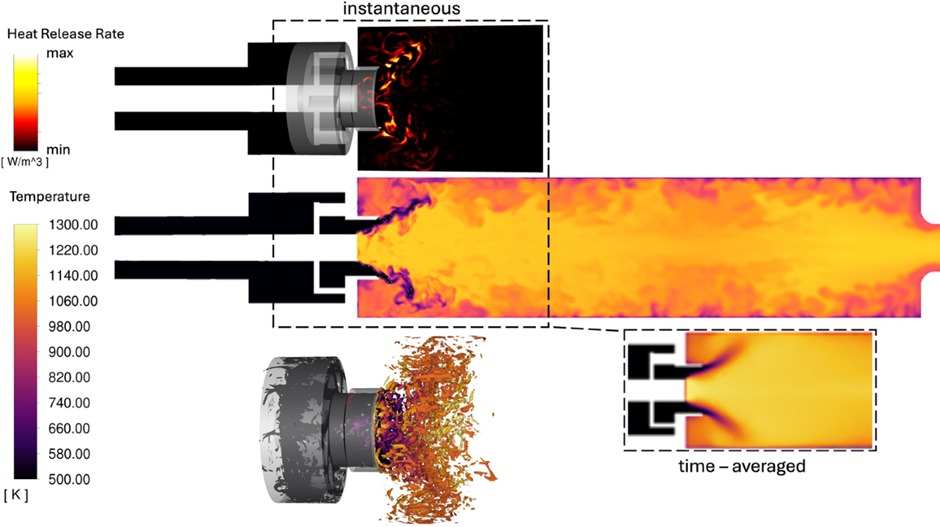
At Al-Farabi Kazakh National University, a large-scale scientific project aimed at optimizing the combustion processes of liquid hydrocarbon fuels is being implemented. The research is based on modern 3D computer modeling and physical methods and is intended for deep analysis of thermo-physical processes occurring in combustion chambers. The project is carried out within the priority scientific direction of enhancing intellectual potential and is focused on improving energy efficiency while reducing environmental impact.
Today, liquid hydrocarbon fuels — including gasoline, diesel, and other petroleum products — remain the primary energy source for transportation, industry, and thermal power systems. Although the global transition toward renewable energy sources is ongoing, the importance of hydrocarbon fuels remains high. Therefore, achieving more efficient and environmentally safe combustion of these fuels has become an urgent scientific challenge.
The main goal of the project is to investigate the physical processes of liquid fuel injection, fragmentation, dispersion, and evaporation under high turbulence conditions inside combustion chambers and to determine optimal combustion regimes through computer modeling. For this purpose, scientists are developing an integrated 3D model based on physicomathematical, geometric, and global chemical kinetics principles. The model comprehensively describes the motion, interaction, ignition, and reaction product formation of fuel droplets.
The research employs modern computational technologies, where a calculation mesh is constructed based on the real geometry of the combustion chamber. Computer experiments are conducted by varying fuel droplet size, temperature, mass, and injection methods. As a result, temperature fields inside the chamber, two-phase flow dynamics, concentration distribution of combustion products (carbon oxides, nitrogen oxides, and other compounds), heat flux density, and velocity vector fields are determined. The obtained data are visually presented using three-dimensional visualization tools.
The scientific novelty of the project lies in the development of a statistical model of liquid fuel injection behavior in highly turbulent environments. This model describes droplet fragmentation, coalescence, condensation, and evaporation mechanisms, allowing prediction of system behavior under different operating conditions. The model results are also compared with available laboratory experimental data to verify accuracy and reliability. Such a comprehensive approach ensures model robustness and reproducibility.
The project has significant practical importance. Optimization of combustion processes helps reduce fuel consumption and increase the efficiency of thermal devices. At the same time, it contributes to improving air quality by lowering harmful emissions such as carbon dioxide, nitrogen oxides, and soot particles. This is particularly important in the modern era of strengthened environmental standards.
For Kazakhstan, such research has strategic value. Since hydrocarbon resources play a key role in the national economy, their efficient and environmentally responsible use is one of the main conditions of energy security. The scientific solutions proposed in this project can serve as a basis for improving thermal and injection systems and developing new fuel combustion technologies.
Research results are planned to be published in internationally recognized scientific journals indexed in global databases. This will promote the integration of university researchers into the international scientific community and enhance the reputation of the national scientific school. Additionally, young researchers, master’s students, and PhD candidates are actively involved in the project. They participate in developing computational models, improving software systems, and analyzing research results, contributing to high-quality scientific training and strengthening the country’s intellectual potential.
The project also has clear social and economic impacts. Efficient control of combustion processes reduces energy costs for industrial enterprises and increases their competitiveness. The reduction of environmental load positively affects public health and supports sustainable development. Furthermore, new technological solutions can stimulate innovation in the industrial sector and contribute to job creation.
In conclusion, the initiative of scientists at Al-Farabi Kazakh National University is aimed at forming a new scientific level in the field of liquid hydrocarbon fuel combustion. By combining 3D computer modeling and physical methods, the research team provides a solid scientific basis for understanding combustion processes, optimizing their control, and reducing environmental impact. This project represents an important step toward adapting traditional energy technologies to modern requirements while combining ecological responsibility with technological innovation.
Other news