- Main
- News
- KazNU Discusses Scientific Cooperation with Tsinghua University and CNNC within the Framework of SDG 4 and SDG 17
KazNU Discusses Scientific Cooperation with Tsinghua University and CNNC within the Framework of SDG 4 and SDG 17
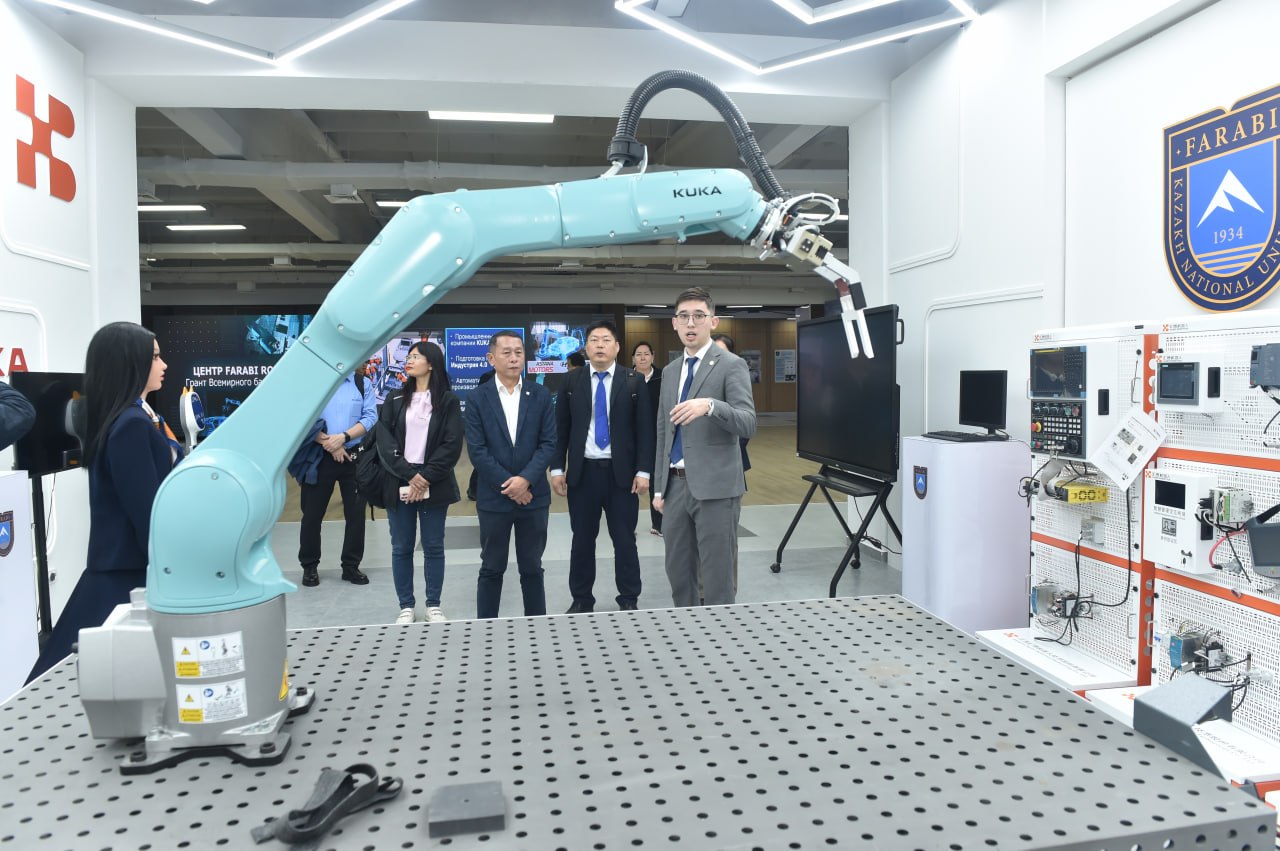
A significant meeting was held at Al-Farabi Kazakh National University with a delegation from one of the world’s leading academic institutions — Tsinghua University — as well as representatives of China National Nuclear Corporation (CNNC). The meeting focused on strengthening cooperation between Kazakhstan and China in the fields of science, education, and high technologies.
During the meeting, Vice Chairman of the Management Board – First Vice-Rector of KazNU Yerkin Duissenov emphasized that the strategic partnership between Kazakhstan and China has entered a new stage of development. According to him, cooperation in science, education, and technology is becoming not only a bridge between the two countries but also an important mechanism for building a sustainable and peaceful future.
He highlighted that Al-Farabi Kazakh National University is increasingly serving as a major platform for scientific diplomacy. The university brings together researchers, engineers, and students from Kazakhstan, China, and across Central Asia, fostering collaboration and promoting international research initiatives.
The participants discussed a wide range of issues related to joint research projects, academic mobility for students and faculty members, the development of international educational programs, and the promotion of innovation in fields such as nuclear physics, energy, and advanced technologies. It was noted that combining the scientific potential of universities and research organizations from both countries opens new opportunities for training highly qualified specialists and developing cutting-edge research.
This cooperation is closely linked with the implementation of the Sustainable Development Goals. In particular, the initiatives discussed during the meeting contribute to SDG 4 — Quality Education. Through international collaboration, universities can improve educational standards, exchange knowledge, and create opportunities for students and young researchers to gain access to modern laboratories, global expertise, and advanced scientific infrastructure.
At the same time, the partnership reflects the principles of SDG 17 — Partnerships for the Goals. Strengthening collaboration between universities, research institutions, and technological corporations plays a crucial role in addressing global challenges and promoting sustainable development. International academic partnerships help combine resources, share scientific knowledge, and accelerate innovation.
The participants also emphasized that cooperation between universities and major scientific and technological organizations is essential for the development of modern science. Collaboration with Chinese research institutions and industrial partners may contribute to new breakthroughs in nuclear science, energy research, and emerging technologies.
At the conclusion of the meeting, both sides expressed their readiness to further expand cooperation, launch joint research initiatives, and develop long-term academic programs. Such initiatives strengthen mutual understanding between the scientific communities of Kazakhstan and China and create new opportunities for international collaboration.
Today, Al-Farabi Kazakh National University continues to actively expand its global partnerships, reinforcing its role as one of the leading academic and research centers in the region. Meetings of this kind demonstrate the importance of science diplomacy and highlight the growing role of universities in addressing global challenges and supporting sustainable development.