- Main
- AL-FARABI NEWS LETTERS
- Sustainable Water Resource Management in Central Asia: Scientific Foundations of Regional Cooperation
Sustainable Water Resource Management in Central Asia: Scientific Foundations of Regional Cooperation
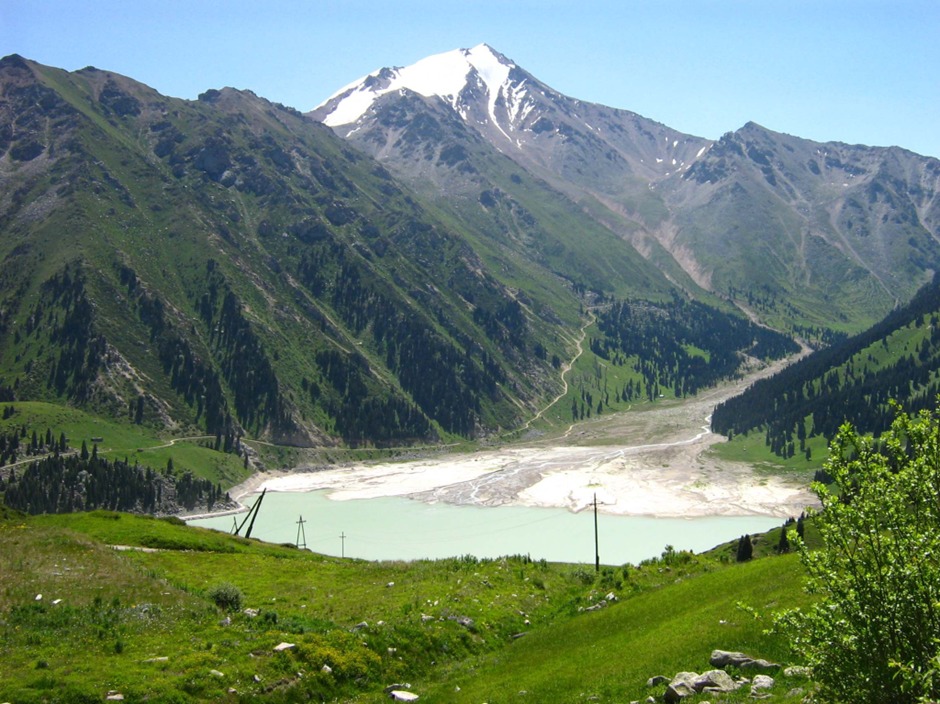
Sustainable water resource management in Central Asia is one of the most important and strategic directions of contemporary international scientific research. The ecological, economic, and social development of the region directly depends on the efficient and responsible use of water resources. Part of the research in this field is being conducted with the participation of scholars from Al-Farabi Kazakh National University, where the research team works on the comprehensive study of water resource management, regional diplomacy, and sustainable development in accordance with international academic standards.
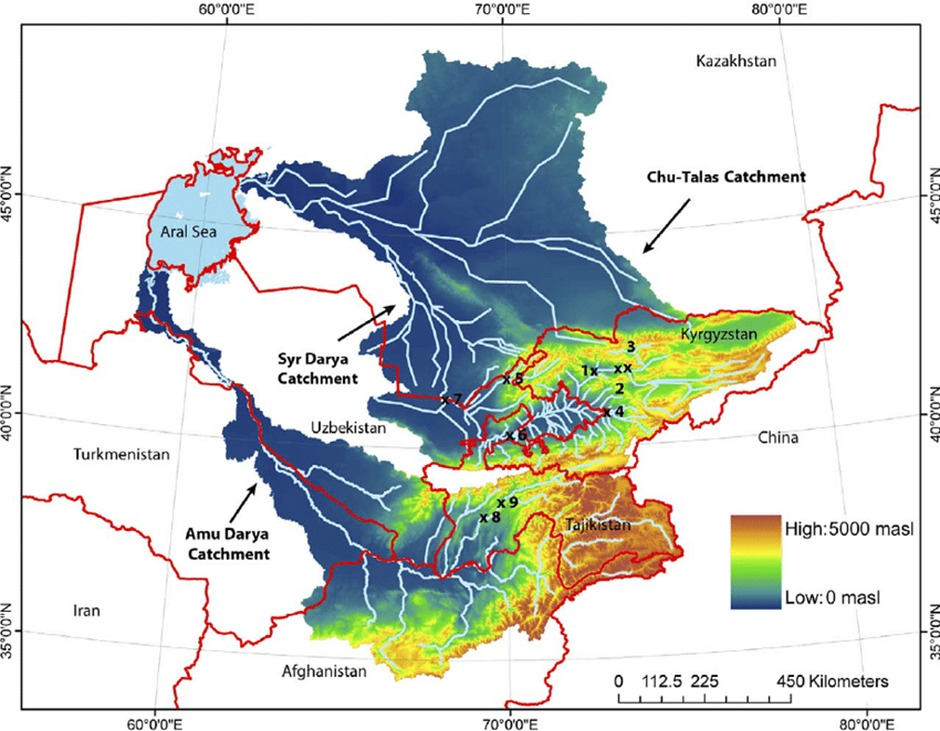
Central Asia is a region of great geopolitical and economic importance in terms of water resources. Transboundary river systems play a crucial role in interstate relations within the region. Water is considered not only a natural resource but also a key element of social stability, agricultural production, and energy security. Therefore, water resource governance has become an essential component of international politics and modern scientific discourse.
In recent decades, global climate change has significantly affected natural water systems. In Central Asia, rising average temperatures accelerate glacier melting processes. The reduction of glaciers changes the seasonal structure of river flow, creating additional challenges for agriculture and the water sector. Furthermore, changes in the spatial and temporal distribution of precipitation increase the need to improve water resource forecasting systems.
Population growth in the region increases water demand. Rapid urbanization, industrial development, and expanded agricultural water use intensify the risks of water scarcity. Historically, irrigated agriculture has played a vital role in the Central Asian economy, but aging water infrastructure contributes to significant water losses during transportation and distribution.
Geopolitical factors also exert complex influences on transboundary water governance. Water allocation issues between regional states sometimes become a source of political and economic tension. In this context, the development of water diplomacy has gained significant scientific and practical importance. Water diplomacy aims to strengthen trust between countries, identify mutual interests, and establish a stable system of cooperative agreements.
This research project proposes new scientific approaches to developing water cooperation among Central Asian countries. The use of an interdisciplinary methodology enables the analysis of water-related problems from the perspectives of political science, international relations, economics, ecology, and law. Such integrated analysis helps better understand the complex systemic nature of water resource governance.
The problem of water scarcity in the region is shaped by several structural factors. First, demographic growth leads to increased water consumption. Second, water use efficiency in the agricultural sector remains insufficient. In Central Asian countries, irrigated agriculture is the primary water consumer, and water losses during transportation remain relatively high in some cases.
Climate change creates additional threats to water resource stability. Scientific forecasts suggest that the frequency of extreme natural events may increase. Droughts, floods, and temperature anomalies have a serious impact on water management systems. Therefore, improving long-term water resource planning has become an important scientific task.
The study pays special attention to international experiences in water resource management. Many developed regions of the world have established successful water governance models. Adapting these models to Central Asian conditions may help strengthen interstate trust and achieve sustainable development goals.
Institutional structures in the region are also analyzed. The activities of the Interstate Commission for Water Coordination and the International Fund for Saving the Aral Sea are examined. Evaluating the strengths and weaknesses of these organizations will help develop scientifically grounded recommendations for improving water policy.
The research methodology includes case study analysis, system analysis, bibliometric analysis, the DPSIR model, and the Delphi expert method. These methods allow comprehensive evaluation of social, economic, and environmental factors influencing water resource governance.
Bibliometric analysis focuses on scientific publications indexed in international databases. Research materials from Web of Science and Scopus are analyzed to identify trends in water resource management studies. Visualization software such as VOSviewer is used to map scientific collaboration networks.
The DPSIR model is applied to analyze factors influencing water systems. This model allows assessment of socio-economic driving forces, environmental pressures, ecosystem state, impacts, and policy responses. The research results will serve as a basis for developing effective water governance strategies.
The project strictly follows scientific ethical principles. Data fabrication, plagiarism, false authorship, or manipulation of scientific results are not permitted. Intellectual property rights are protected in accordance with the legislation of the Republic of Kazakhstan.
Research results will be published in the form of scientific articles, analytical reports, and practical recommendations in international journals. The study conducted by researchers of KazNU aims to strengthen Kazakhstan’s scientific capacity and develop new directions in water diplomacy research.
The project has high social and scientific significance. Efficient water resource management contributes to improving living standards, protecting ecosystems, and ensuring regional stability. The obtained results may be used by government institutions, international organizations, and the scientific community to develop practical solutions.
Thus, sustainable water resource management remains a strategically important scientific direction for the future development of Central Asia. This research is aimed at advancing regional water cooperation, strengthening international partnership, and promoting sustainable development principles.
Other news