
- Main
- AL-FARABI NEWS LETTERS
- Medical Information System for Remote Monitoring of Patients with Metabolic Syndrome
Medical Information System for Remote Monitoring of Patients with Metabolic Syndrome
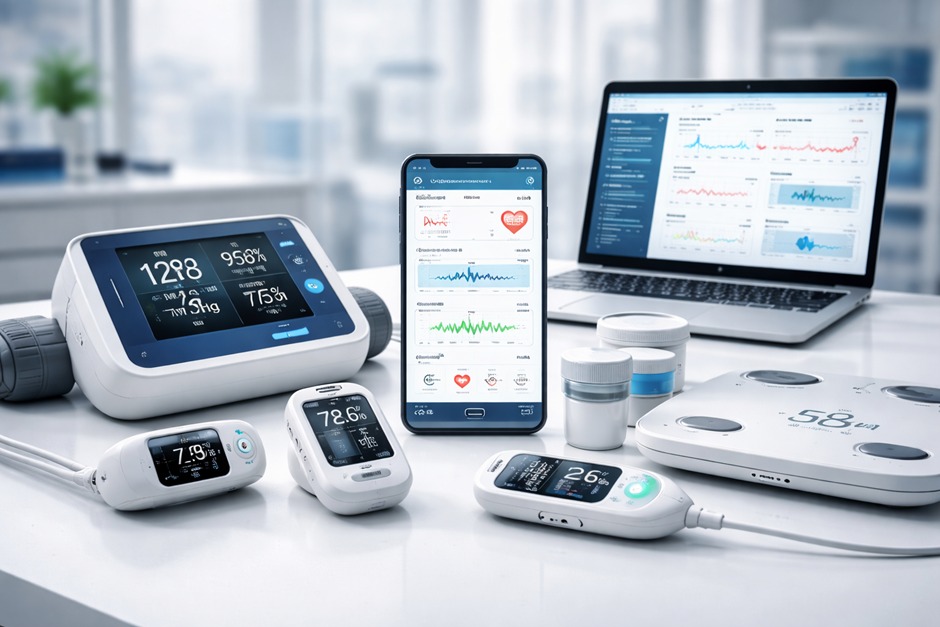
In recent years, digital technologies have been increasingly integrated into various spheres of life, and healthcare is no exception. The development of information technology provides new opportunities to improve the quality of medical care, accelerate disease diagnosis, and enhance interaction between doctors and patients. Modern medical information systems allow for the processing of large volumes of data, systematization of medical information, and its use for more accurate assessment of a patient’s condition. One of the most promising areas in digital healthcare is the creation of systems for remote patient monitoring. Currently, this research is being conducted by scientists at Kazakh National University named after al-Farabi (KazNU), who are developing a medical information system for the remote monitoring of patients with metabolic syndrome.
Making a medical diagnosis is a complex process that requires analyzing a substantial amount of information. Physicians must consider patient complaints, laboratory test results, clinical observations, individual physiological characteristics, hereditary factors, allergic reactions, and many other variables. Managing such a volume of data demands significant intellectual effort and high levels of concentration. Information overload can sometimes lead to prolonged diagnostic processes or increased risk of errors, which in turn may negatively affect a patient’s health. This challenge is further compounded for patients living in remote areas, where access to comprehensive medical examinations and professional consultations is often limited. Traveling to major cities for care can involve waiting for appointments or quotas, which delays timely treatment.
To address these challenges, there is an increasing demand for medical information systems (MIS) that support remote patient monitoring (RPM). Unfortunately, most existing systems are highly specialized and require technical experts to maintain complex knowledge bases, limiting their accessibility and widespread adoption. Therefore, there is a pressing need to develop an easy-to-use system that enhances diagnostic accuracy and speed while being accessible to both patients and medical professionals.
The primary objective of the KazNU project is to develop a medical information system for remote monitoring, collection, and processing of patient data related to metabolic syndrome. This system will assist healthcare professionals in efficiently compiling patient statistics, managing medical records, and making preliminary diagnoses. The project involves several key tasks: collecting and classifying patient data from clinics in Almaty, designing a mathematical model and algorithm for clinical diagnostic protocols, integrating and testing IoT devices for patient monitoring, designing a database and mobile application, developing a user-friendly interface for both doctors and patients, and conducting clinical trials at the National Scientific Medical Center in Astana.
The developed system will enable secure, reliable, and centralized data management. The integration of SD-WAN networks ensures safe transmission of patient data from IoT devices, while libraries for data protection implemented on microcontrollers provide encryption and access control, guaranteeing that only authorized personnel can access sensitive medical information. IoT devices such as glucose monitors, blood pressure sensors, and ECG equipment will collect and transmit real-time data, allowing doctors to monitor patients remotely, adjust treatment protocols, and provide timely recommendations.
Metabolic syndrome, characterized by factors such as abdominal obesity, hypertension, dyslipidemia, and insulin resistance, significantly increases the risk of cardiovascular diseases, myocardial infarction, stroke, and other serious complications. This syndrome often involves multiple organ systems, including the heart, endocrine system, liver, and kidneys, making early diagnosis and intervention crucial. According to the World Health Organization (WHO), the global prevalence of obesity and type 2 diabetes has been rising steadily, highlighting the urgent need for innovative diagnostic tools and remote patient management solutions.
The KazNU research team builds upon previous scientific achievements, including mathematical models for glycemic control in insulin-dependent diabetes, secure IoT device communication using homomorphic encryption, and safe data transmission via SD-WAN technology. By combining these innovations with advanced regression analysis and predictive modeling, the system will identify risk markers for metabolic syndrome and provide preliminary diagnostic assessments with a certain level of probability, allowing physicians to initiate timely interventions and prevent disease progression.
In addition to clinical utility, the system emphasizes convenience and accessibility. The mobile application allows patients, even in remote areas, to transmit health data and receive feedback from their doctors without visiting medical facilities. This approach aligns with global trends in digital health and IoT-based medical technologies, which increasingly support preventive care, chronic disease management, and elderly patient monitoring.
International examples, such as the Inspiren “iN” platform and Dusun’s IoT gateway solutions, demonstrate the transformative potential of IoT in healthcare. These systems integrate multiple sensors, provide real-time data analysis, and enable predictive diagnostics, reducing medical errors and optimizing patient care. However, the KazNU system is specifically tailored for metabolic syndrome, providing detailed analysis and evaluation of patient indicators to determine disease stages according to clinical protocols.
The research conducted at KazNU represents a significant step toward integrating advanced IT solutions into Kazakhstani healthcare. The developed medical information system has the potential to improve patient outcomes, optimize clinical workflows, and provide a socially and economically beneficial model for remote health monitoring. By combining IoT technology, SD-WAN networks, secure data handling, and predictive modeling, this project exemplifies how academic research can directly contribute to modernizing healthcare and expanding access to high-quality medical services across the country.
In conclusion, the KazNU initiative demonstrates the critical role of digital innovation in addressing complex medical challenges. By providing doctors with tools to process large volumes of clinical data efficiently and offering patients a means to engage in remote monitoring, the project establishes a model for future healthcare solutions that are secure, effective, and widely accessible. The outcomes of this research are expected to serve as a foundation for further advancements in medical information systems, promoting early diagnosis, personalized care, and improved public health outcomes.
Keywords: IoT devices, medical information systems (MIS), remote patient monitoring (RPM), microcontrollers, mobile application, metabolic syndrome, SD-WAN networks.
Other news