Information Meeting on the Topic “Prevention of Radical Movements”
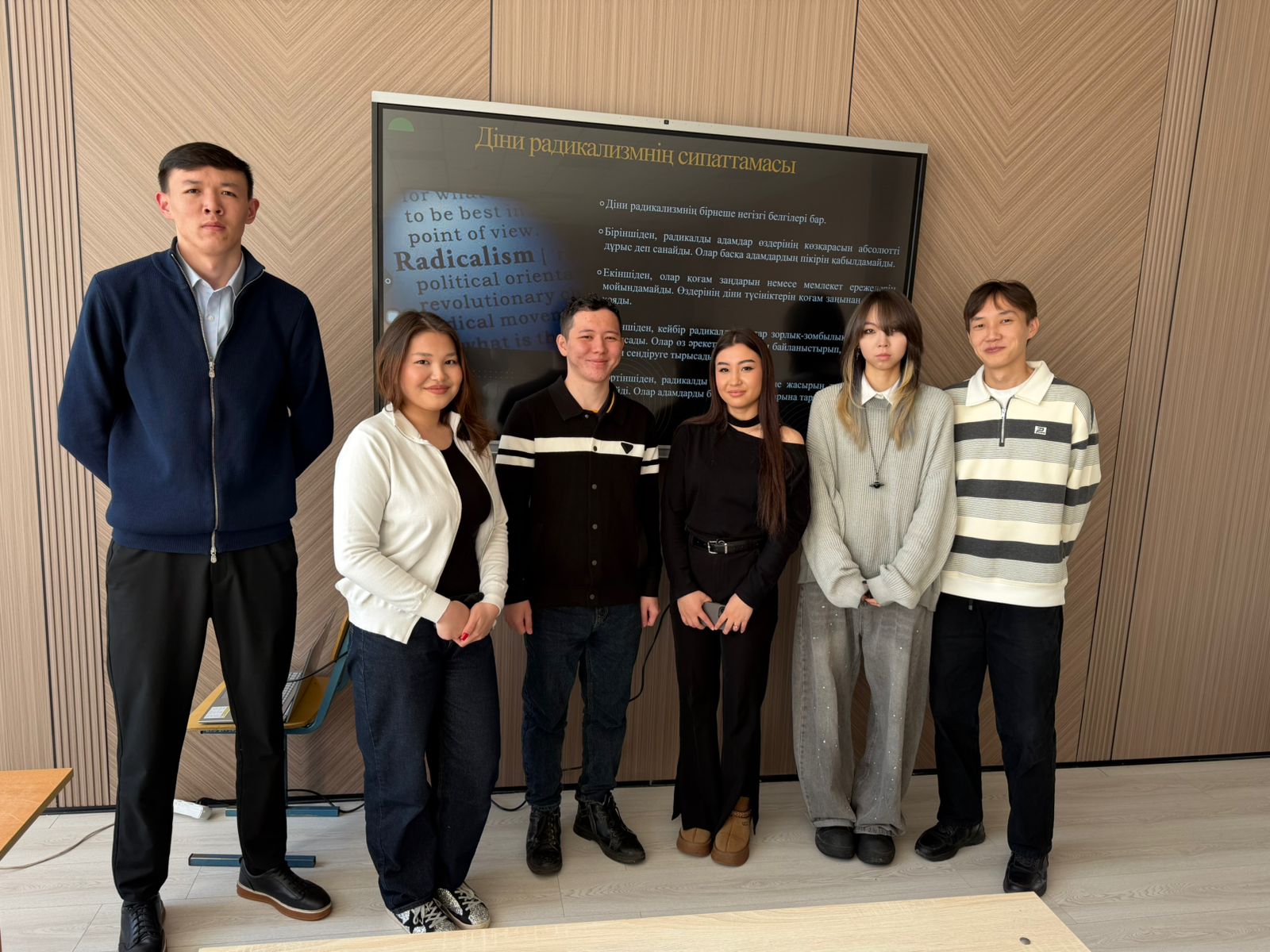
An informational and educational meeting titled “Prevention of Radical Movements” was organized at the Department of Solid State Physics and Technology of New Materials of the Faculty of Physics and Technology at Al-Farabi Kazakh National University. The event was attended by third-year students of the educational program “Materials Science and Technology of New Materials.” The primary objective of the meeting was to raise awareness among young people about the dangers of religious radicalism, prevent the spread of extremist ideologies, and enhance students’ legal and informational literacy.
Such initiatives constitute an important component of the university’s educational and mentoring activities aimed at developing students’ critical thinking, strengthening civic responsibility, and fostering resilience against destructive ideologies. In the context of globalization and the rapid expansion of information exchange, it is particularly important to equip young people with the ability to critically evaluate information, recognize potential risks, and make well-informed decisions based on legal and ethical principles.
During the meeting, students were provided with comprehensive information about the nature of religious radicalism, its defining characteristics, and its impact on society. Radicalism was described as an ideological orientation that rejects traditional social values, legal norms, and principles of peaceful coexistence, often seeking to achieve its goals through extreme and sometimes violent methods. Particular attention was given to the social and legal risks associated with the spread of extremist ideas in contemporary society.
Within the framework of the event, participants also examined various forms of radicalism, including ideological, social, extremist, and sectarian radicalism. It was emphasized that such phenomena can negatively affect social stability, intercultural dialogue, and public security. The discussion also addressed the mechanisms through which radical groups disseminate their ideology and attract new supporters in order to expand their influence.
Special emphasis was placed on the methods used to recruit individuals—especially young people—into radical organizations. It was noted that such groups often operate gradually by establishing trust-based relationships and disseminating ideological content through various communication channels. In modern conditions, the internet and social media platforms are frequently used to spread manipulative or misleading information targeting young audiences. Therefore, the importance of developing critical thinking skills, media literacy, and the ability to analyze information sources was strongly emphasized.
The meeting also explored the psychological, social, and economic consequences of radicalism. Participants noted that radical ideologies pose a serious threat not only to social stability and security but also to the future development of young people by limiting their opportunities for personal, academic, and professional growth. In this regard, the importance of educational initiatives, legal awareness programs, psychological support, and effective information campaigns aimed at preventing radicalization was highlighted.
Students actively participated in the discussion, expressing their views and asking questions. The open dialogue format created a constructive environment for meaningful discussion and allowed participants to gain a deeper understanding of the issues addressed.
Such informational and educational activities play a significant role in strengthening the legal culture of young people, promoting responsible citizenship, and preventing the spread of extremist ideologies. The meeting became an important element of the faculty’s educational work aimed at fostering civic responsibility among students and contributing to the maintenance of peace, stability, and social harmony in society.