- Main
- News
- An educational session titled “Neuroscience and UN Sustainable Development Goal No. 3” was held at KazNU as part of SDG 3.
An educational session titled “Neuroscience and UN Sustainable Development Goal No. 3” was held at KazNU as part of SDG 3.
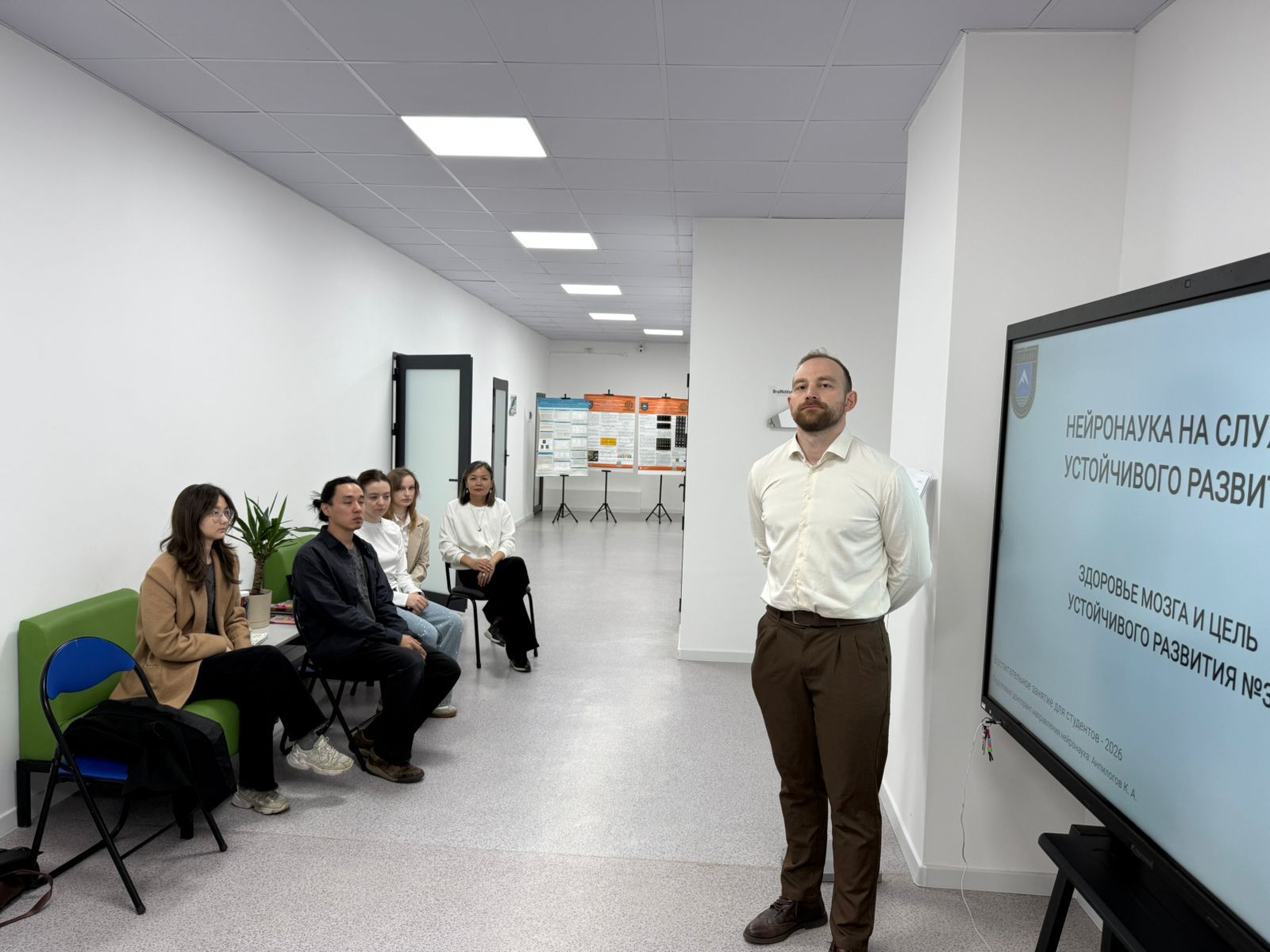
As part of teaching practice and in accordance with the United Nations Sustainable Development Goal No. 3 “Good Health and Well-Being”, an educational session for students on the topic “Neuroscience and UN Sustainable Development Goal No. 3” was conducted on March 25, 2026, from 9:00 to 10:00 AM at the Brain Institute of the Faculty of Biology of al-Farabi Kazakh National University. The session was led by PhD student in Neuroscience of the Department of Biophysics, Biomedicine and Neuroscience, K.A. Anpilogov.
The event aimed to promote the ideas of sustainable development in the context of brain health, to shape students’ understanding of the role of neuroscience in achieving SDG 3, and to develop their research-oriented thinking. At the beginning of the session, participants were introduced to the 2030 Agenda for Sustainable Development and the 17 Sustainable Development Goals, after which special attention was given to Goal 3, which focuses on ensuring healthy lives and promoting well-being for all at all ages.
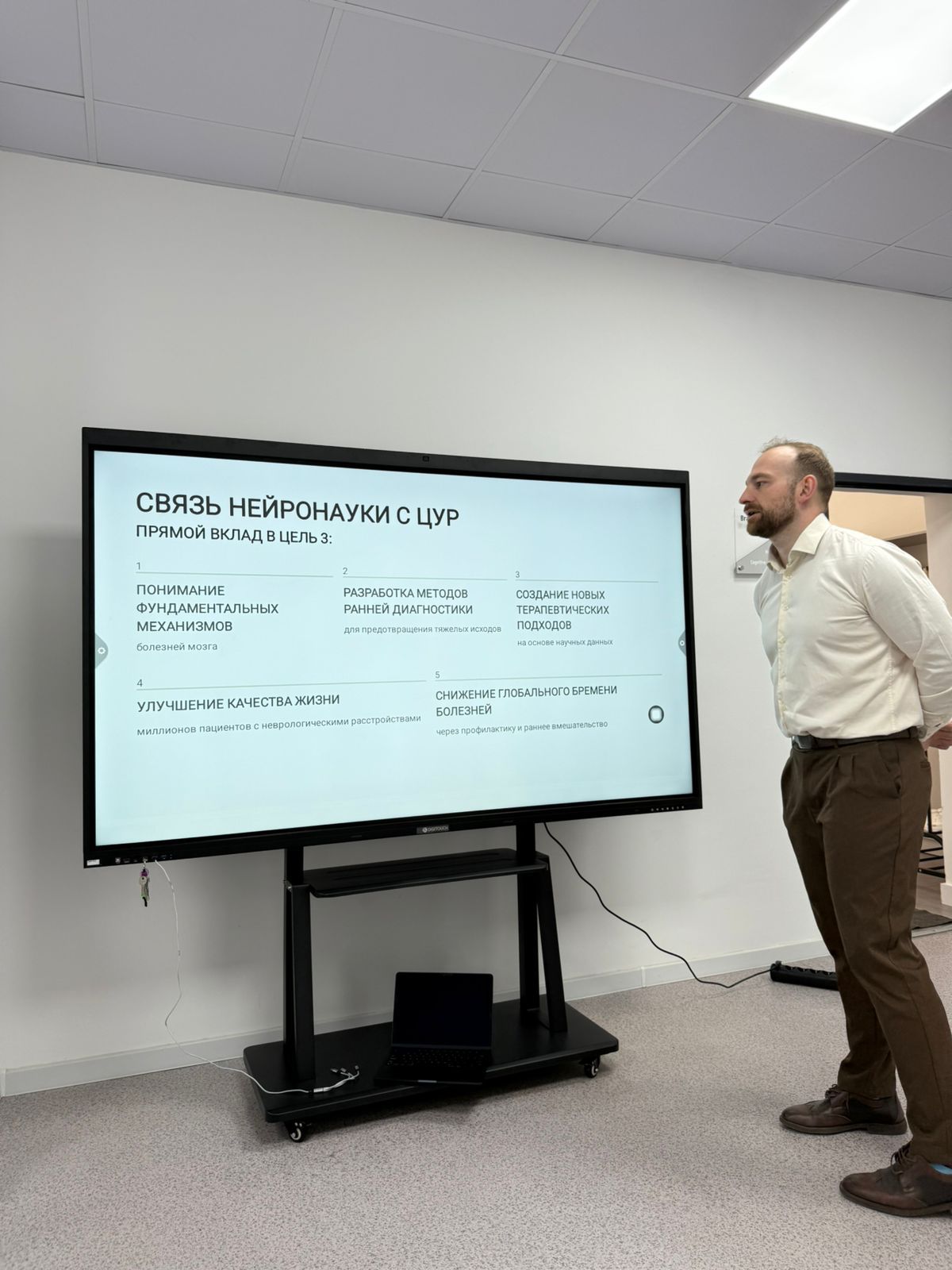
During the lecture part, modern challenges to brain health, the global burden of neurological disorders, as well as key mechanisms of brain functioning – including neurovascular coupling and cerebral hemodynamics – were discussed. A separate section was devoted to how fundamental research in neuroscience, including the PhD student’s work on neurovascular coupling under simulated microgravity and hypoxia, relates to the targets of SDG 3 and may, in the long term, contribute to the development of methods for prevention and monitoring of brain health impairments.
After the main part, a discussion took place in which students examined the ethical and social aspects of applying neurotechnologies, the importance of protecting mental and cognitive health for the sustainable development of society, and possible ways for their own involvement in scientific and educational initiatives related to the achievement of the Sustainable Development Goals. According to the participants, the event increased their interest in the topic of sustainable development and strengthened their awareness of the importance of neuroscience’s contribution to ensuring population health and well-being.