Arman Isagaliev: A diplomat must selflessly love his Homeland
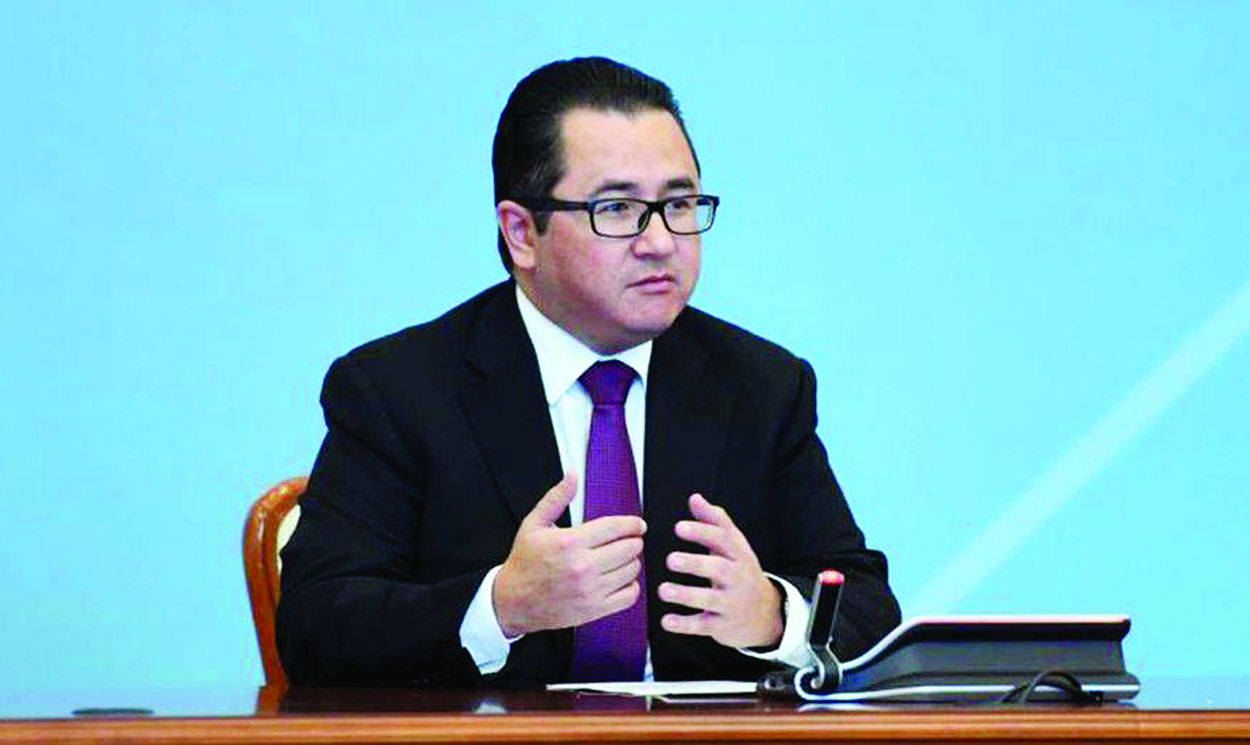
Arman Isagaliev Isagaliev is a Kazakhstani statesman, Extraordinary and Plenipotentiary Ambassador of the Republic of Kazakhstan to the State of Qatar. Arman Isagaliev is a graduate of the Faculty of Oriental Studies of our university. In this interview, Arman Kairatovich talks about the subtleties of the diplomat’s profession and shares his experience accumulated over many years in diplomatic service.
– Arman Isagaliev, please tell us, how did you come to the Arabic language? Among all languages, why did you choose exactly Arabic?
– To become an Arabist, apparently, it was predestined for me by fate. As you know, my father, Isagaliev Kairat Isagalievich, is a career diplomat, one of the founders of the Ministry of Foreign Affairs of independent Kazakhstan, and worked in the foreign policy system even during the USSR times. From early childhood, he accustomed me to reading political newspapers and watching news programs, especially the program "Время". Due to my young age, I was 5-6 years old, I did not understand much, since in Soviet times news programs were heavily infused with communist ideology. But the part concerning international cooperation attracted my attention. Bright video reports from abroad made a special impression on me. And one day, while watching a report by the outstanding political scientist and journalist Farid Seyfulmulukov from one Arab country, I said to my father: "I also want to speak Arabic and travel to Arab countries". They say that sometimes the Almighty puts important messages into a child’s mouth. And it is the parents’ task to hear them. My father succeeded. Moreover, near our house there was a boarding school with an Arabic focus. At that time, there were only two schools in our city where Arabic was taught. And one of them was located right across the street. What is this, if not providence! So, I started studying Arabic from the first grade. In the year I graduated from high school, at the flagship of our domestic education – our beloved alma mater, Kazakh State University, the Faculty of Oriental Studies opened. This was another gift from above, and of course I entered there and completed the full course in the specialty historian-orientalist with knowledge of Arabic and English. In addition, in 1993-1994, I was fortunate to undertake a language internship at the University of Fes in the Kingdom of Morocco, which helped me improve my language level.
– Were there any difficulties in learning Arabic? How did you overcome them?
– Of course, Arabic, like all Oriental languages, is very difficult. Arabic script and the heavy guttural sounds were not easy for me. In terms of vocabulary, there were also many difficulties. Just imagine, the single word "camel" in Arabic has more than 1000 names! I think that to truly know this language, one must fall in love with it completely and spend a lifetime appreciating its beauty. I perceived Arabic through its similarity to mathematics, to which I was also very close. The main secret of Arabic speech is that in Arabic all words are formed and changed according to specific patterns and templates. For example, to say a word or sentence, you just need to know these "formulas" and understand where and how to place them. Knowledge of these formulas helped me quickly master this one of the most difficult languages in the world.
– Could you tell us about your student years?
– I can say that student years are the brightest and most memorable time in my life. Communicating with peers who passionately studied the mysteries of the East and Eastern languages, the extracurricular life of an ordinary student, participating in various events organized by the university… Warm memories of that time still warm my soul. I especially want to mention my teachers, true professionals of their field, Bagdat Kultaevich Amreev, Gulnara Ermuratovna Nadirova, Fatima Mameko. Our brilliant teachers immersed us in all the subtleties of Arab studies, revealing all the secrets of this amazing language, spoken in 22 states with a population of almost half a billion people. I am grateful to all our teachers for fostering in us love and respect for the Arabic language and giving us the necessary knowledge for further professional development.
– Arman Isagaliev, please tell us a little about your diplomatic career, how do you think it developed?
– Since childhood, I dreamed of becoming a diplomat, because the example of my great father, who devoted his entire life to foreign policy and international life, was always before my eyes. Dad prepared me for this career from early childhood, revealing to me all the subtleties of diplomacy, protocol, and etiquette. Of course, my alma mater, the Faculty of Oriental Studies, also made a significant contribution to my development as a diplomat. I even dare say that the Faculty of Oriental Studies became a real forge of diplomatic personnel for our state. Many graduates, after finishing university, started working in the Ministry of Foreign Affairs and later represented our country in the countries of the Near, Middle East, and Southeast Asia. From our course alone, 5 graduates reached the highest diplomatic post – extraordinary and plenipotentiary ambassadors. When I say this, I truly feel pride for my classmates, for my alma mater!
– Please tell us, what can diplomatic work be compared to? Who is a modern diplomat today, what knowledge and personal qualities should he possess?
– There is a common opinion about diplomats that they constantly attend lavish receptions and high society events with a glass of champagne in hand. In reality, this part takes one hundredth of our daily work. Conducting daily negotiations, organizing visits of delegations of various levels, searching for potential investors and new areas for bilateral cooperation, protecting the interests of our citizens abroad – these are our everyday tasks. Politeness, tact, the ability to seek compromises – that’s all about diplomats.
– More than 30 years have passed since diplomatic relations between Kazakhstan and many Arab countries were established. During this time, many ambassadors have changed. Could you share whether there are professional or personal qualities you adopted from them? Do you have role models in this field?
– I have been working in the Arab world for 20 years. During this time, I was fortunate to work with true professionals in their field. My main teacher and mentor was and remains the outstanding diplomat and international official Bagdat Kultaevich Amreev, who has trained many ambassadors. Among my mentors and teachers, I can also name Askar Akhmetovich Musinov, who, unfortunately, passed away last year, Kairat Kairbekovich Lama Sharif, under whose guidance I worked during previous assignments in Saudi Arabia and the United Arab Emirates. All these people influenced my professional development and growth. They are my role models. The main lessons of diplomacy I received from my teachers: love your homeland unconditionally. Respect and value the host country, its culture and traditions. Do not avoid problems. Of course, facing problems is unpleasant, but moving along the path of least resistance can make you miss many excellent opportunities. Also, always remember that big victories and achievements consist of small and sometimes even invisible steps. It is important to value these steps.
– Not long ago, our alma mater celebrated its 90th anniversary, and the Faculty of Oriental Studies marked 35 years since its foundation. What would you wish for your alma mater and faculty? What advice would you give to our students, as the first “swallow” of the faculty?
– I sincerely congratulate our beloved alma mater on its anniversary! 90 years of being a flagship of our country and a symbol of high-quality education, entering the ranks of the best universities in the world – this is a remarkable event, symbolizing years of hard work, striving for knowledge, and respect for science. Our university has come a long way, becoming a place where new stars are ignited, ideas are born, and friendly ties between different cultures are strengthened. Special congratulations to our Faculty, which is already 35 years old! Over these years, the faculty has become a real center of Oriental studies, bringing together passionate teachers, students, and researchers. Its contribution to the development of our country is invaluable. Thanks to your efforts and pursuit of knowledge, the faculty grows and flourishes, revealing to students the richness and beauty of Eastern languages and countries of the East, instilling respect for cultural diversity. To current students and future professionals, I want to say: you are the future of our country, the keepers of traditions, and creators of new ideas. I would also like to wish that youth be curious and possess resilience of spirit on the path to achieving their goals. May each step toward knowledge be joy and discovery for you! I wish that each of you climb the heights of science with confidence that you are part of a great tradition we create and support together. Good luck, success, and brilliant results on this path!
Interviewed by
Fatimabibi DAULET,
Associate Professor of the Department of Sinology, Faculty of Oriental Studies