Climate and modeling laboratory develops new methods
HOW WILL THE CLIMATE CHANGE?
According to scientists, climate change is a long – term change in temperature and weather that leads to droughts, hurricanes, floods, water shortages, mass fires, rising sea levels, melting glaciers and loss of biodiversity. These changes are associated with both natural conditions (fluctuations in solar activity) and human activity. Burning fossil fuels such as coal, oil and gas causes greenhouse gas emissions. This, in turn, is harmful to the sun and increases its temperature. These changes can be caused by changes in solar activity or by large volcanic eruptions and anthropogenic impacts. Research studies have shown the cyclical nature of 120,000 years of climate change, and the share of anthropogenic impact is 0.17 percent.
WHAT ARE GREENHOUSE GASES?
Greenhouse gases are gases with a predominance of transparency in the visible range and a high absorption capacity in the medium, far infrared ranges. The presence of such gases in the atmosphere of planets leads to a greenhouse effect, that is, an increase in temperature on earth. The main greenhouse gases of the earth are carbon dioxide (CO2), methane (CH4), ozone (O3), etc. Since 2000, global carbon dioxide (CO2) emissions have increased by about 50 percent.
HOW DOES CLIMATE CHANGE AFFECT US?
Climate change affects people's health, food security and hunger, and overall security. Due to climate change, some people are forced to migrate. The consequences of climate change are damage to human health through air pollution, disease, extreme weather conditions, forced migration, food security, and mental stress.
HOW DO WE DEAL WITH CLIMATE CHANGE?
- Take any measures to reduce emissions or eliminate or reduce the threat of climate change to human life or property;
- development and implementation of measures to adapt to the consequences of climate change.
ADAPTATION TO CLIMATE CHANGE
These are measures that protect residents ' homes, businesses, livelihoods, infrastructure, and natural ecosystems. It is important to plan such measures in advance so as not to create trouble. When developing such measures, special attention should be paid to vulnerable segments of the population in order to counteract climate threats. One of the first directions is to create a high-quality system of preliminary reporting of natural disasters, which will help preserve human life and property. Also, the use of new varieties of crops contributes to a decrease in yield.
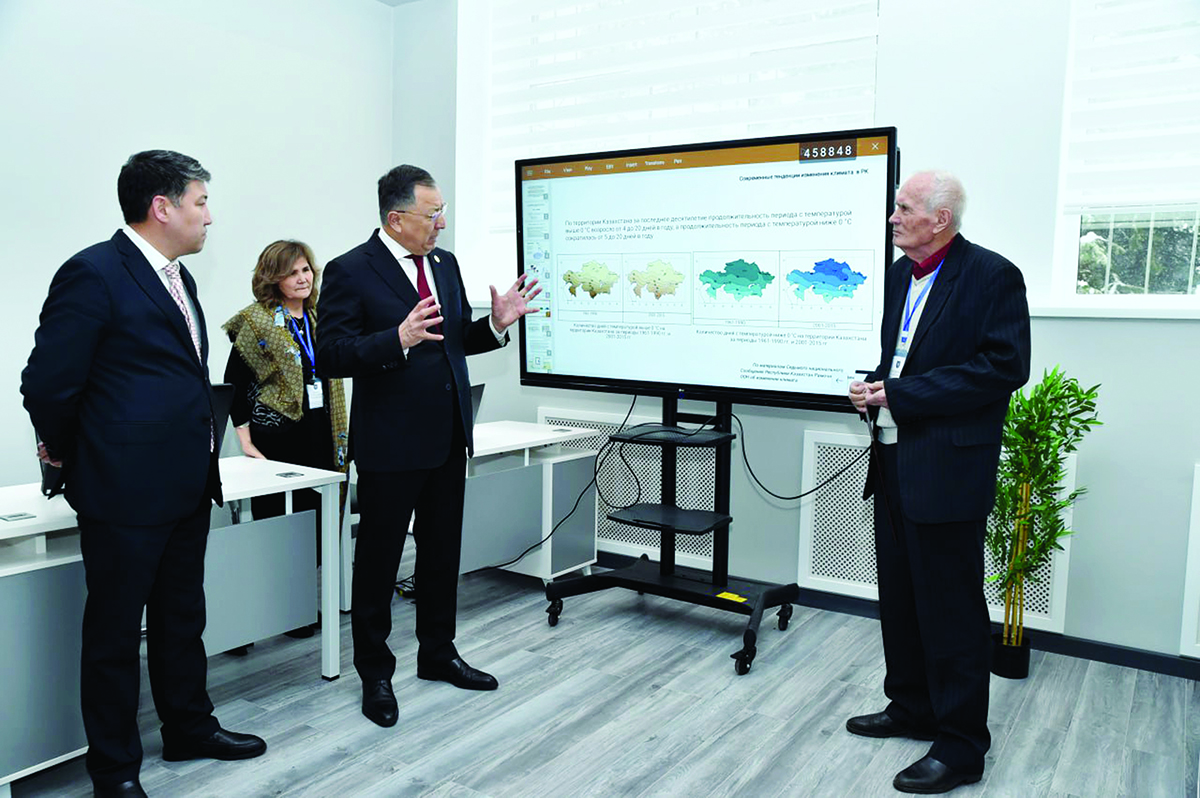
THE LABORATORY INTENDS TO DEVELOP A DIFFERENT APPROACH
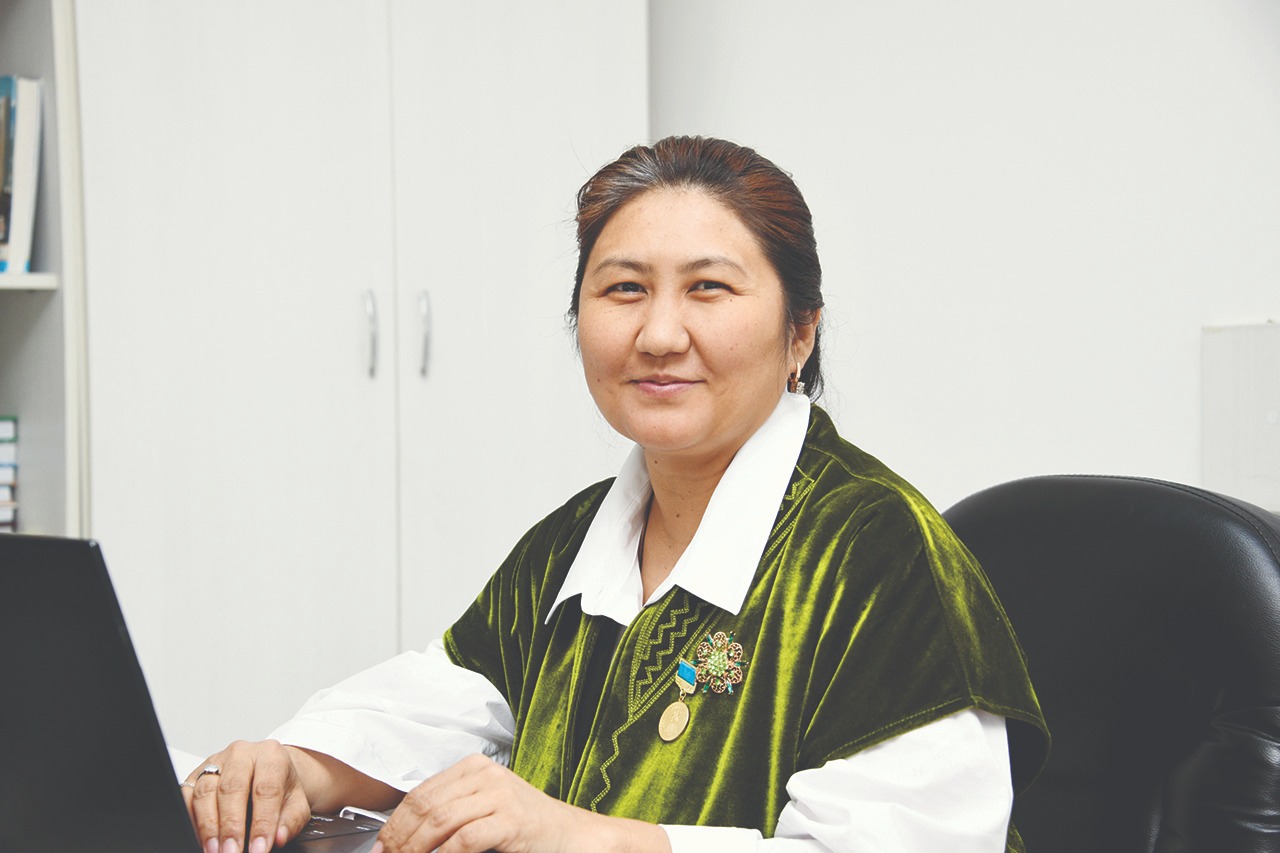
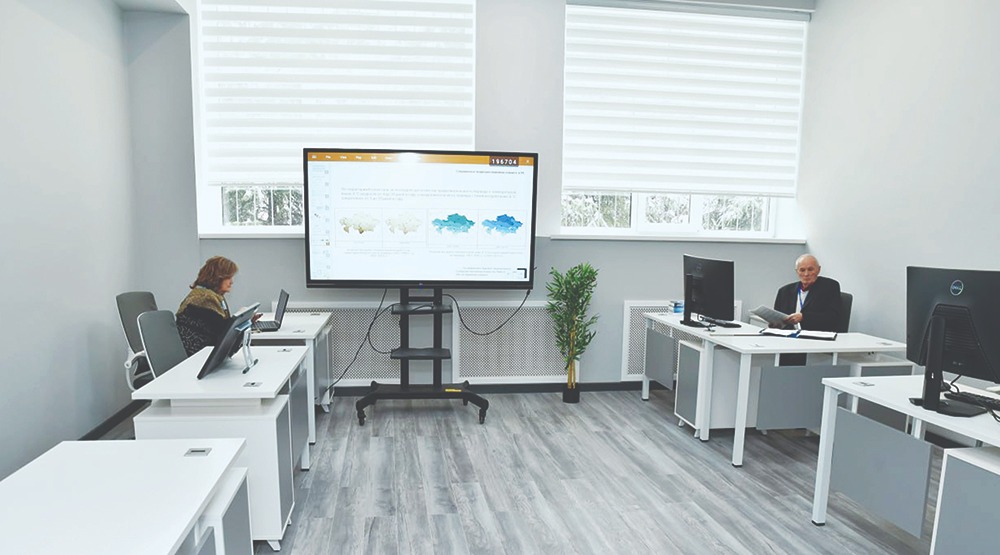
According to the head of the laboratory, doctor of Geographical Sciences, Professor Vladimir Cherednichenko, the CMIP5 model is used here as the main modeling tool. Its basic assumption is RCP 4.5 (if time permits, the RCP 8.5 script is added). For colleagues working on a parallel topic, there is a projection of seasonal changes in temperature and precipitation until 2050. Convenient cards with 10-year discreteness are also offered.
The laboratory was created on the basis of the Department of Meteorology and Hydrology. The department is the largest training base in the Republic for the training of highly qualified specialists of meteorologists. The uniqueness of the department lies in the fact that it retains a fundamental scientific school. They are in constant contact with such Russian universities as the Russian State Hydrometeorological University, Moscow State University. Laboratory scientists are engaged in the development of new methods for solving such a complex problem as modeling of climate systems. This problem is currently solved by digital analysis of complex systems of equations, such as models of the total circulation of the atmosphere and the ocean. "This approach, first of all, does not take into account all the existing factors, which, as a result, leads to significant difficulties",- says V. Cherednichenko.
According to the scientist, the laboratory scientists intend to develop a fundamentally different approach: the forecast is carried out on the basis of empirical models obtained from a direct analysis of the spatial-temporal dependencies of certain parameters of the climate system. The solution of the tasks will allow predicting extreme phenomena such as hurricanes, droughts, heavy rains, forest fires, etc.and assessing and comparing the degree of impact of natural and anthropogenic factors on global warming.
The results of the work and their novelty contribute to the accelerated development of improved climate forecasts and climate services in the country. Now laboratory scientists are working in this direction.
Gulzat NURMOLDAKYZY