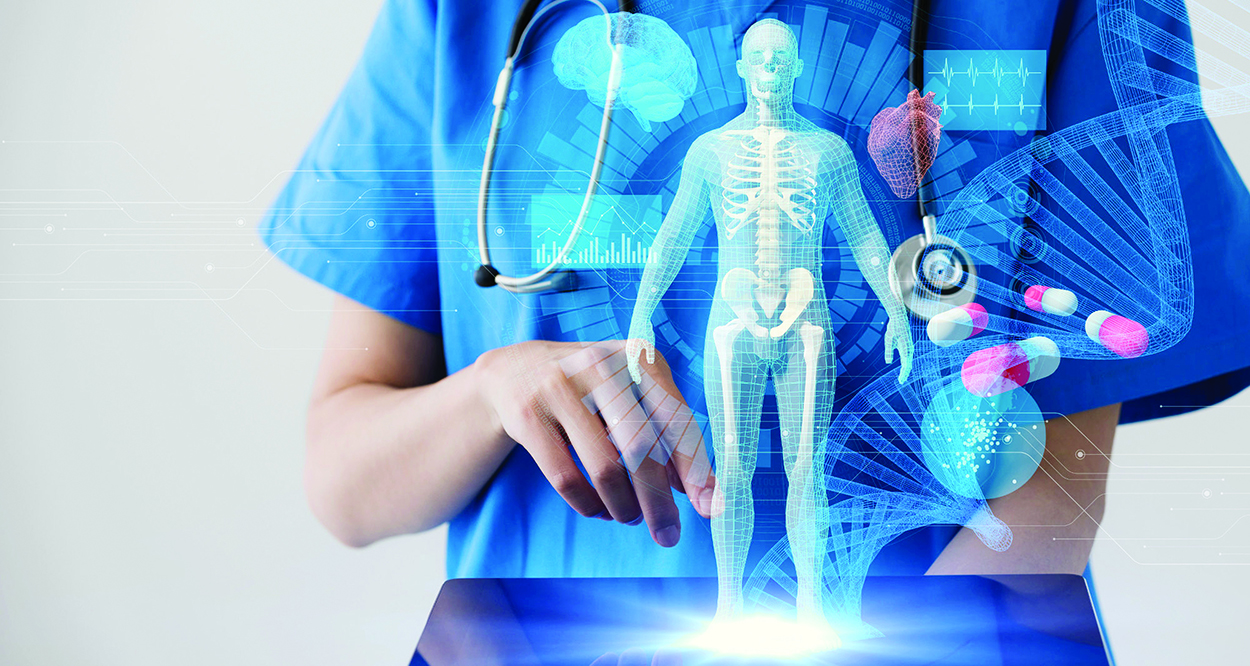
Prosthetics is an achievement of medicine and engineering. A prosthesis is an artificial replacement for lost body parts (arms, legs, teeth, joints, organs, etc.).
Alikhan and his problem
Let us get acquainted with an ordinary guy named Alikhan, a 20-year-old IT specialist. He was born in the city of Aktau and currently lives in Almaty. Recently, Alikhan was hospitalized in the intensive care unit after being hit by a truck. His condition is stable, but as a result of the accident, he lost his left eye, left arm, and right leg. In addition, his left kidney has failed, and his heart valve may stop functioning in the near future.
If all this had happened 80 years ago, it would have been a death sentence for Alikhan. But he lives in our time. So, after regaining consciousness, he began to think: how can he restore his former quality of life? In search of an answer to this question, he went online. And I propose to follow Alikhan and enter a new, little-known field.
Thus, we will answer the following questions:
Why is it safer to break traffic rules than to stand in line?
Which costs more — an airplane wing or a human hand?
Is it possible to restore sight to one eye?
What kind of plastic feels alive?
And why is the pig considered the transplantologist’s best friend?
What technologies exist?
Now let us analyze each part of the body separately and find different ways to replace them.
Left eye
Today, it is impossible to fully restore the eye: the optic nerve contains more than a million nerve fibers through which information is transmitted to the brain, and its thickness is about 3 mm. This means that replacing the entire eye is impossible. However, there are prostheses that can compensate for the loss of an eye. The simplest option is a glass prosthesis, which performs cosmetic and medical functions. It gives Alikhan nothing except, perhaps, freeing him from the nickname “pirate.”
At the same time, there are also more advanced solutions: for example, a 3D-printed eye prosthesis, which can take any shape and even perform additional functions. One man even installed a flashlight and a laser in his prosthesis and developed a control mechanism using magnets. Now this man not only frightens passersby like a terminator but also never loses his keys in the dark and can play with his cat using the laser. Thus, even the simplest version has its advantages.
The most advanced solution is the prosthesis developed by Jeremiah Tao: it is attached to the face and replicates the movement of a natural eye, controlled by special glasses. Since one eye already observes the surrounding space, no additional integration of technologies is required.
If Alikhan had lost both eyes, he could still partially restore his vision and even improve it. Nowadays, there are special glasses with cameras that record video and transmit it via a wire to a chip implanted in the brain. However, the problem with such devices is speed: by the time the video is recorded, processed, and sent to the brain, time passes, meaning people with such devices see the world with a slight delay.
A recently introduced alternative is the 7sense headset, which scans the environment 360 degrees and instantly transmits information through tactile pixels. Thanks to this, a blind person can not only perceive the world in real-time but also avoid brain surgery altogether.
Left arm
Alikhan’s arm was lost up to the shoulder. Prosthetics as a technology has existed since ancient times: the earliest examples date back to the 3rd millennium BC. The modern form of prosthetics developed during World War I. Of course, we cannot completely replace a real hand. The cheapest and simplest option is passive prostheses.
There are also mechanical prostheses. They are inexpensive, lightweight, and easy to operate. These prostheses are mostly suitable for those who lost an arm below the elbow, so this option is not suitable for Alikhan.
A more innovative solution is bionic prostheses. They move using electronics and allow the lost limb’s functions to be almost fully restored. The basic versions are controlled by buttons and activated by the remaining muscles. The advanced types are implanted into the arm and controlled through nerves that receive signals from the brain.
However, bionic prostheses also have drawbacks: the lack of temperature and tactile sensitivity, relatively slow reaction, the need for constant recharging, and limited mobility. Despite this, they are currently the best available option.
Thanks to new IT technologies and the introduction of neural networks, prostheses have become 45% faster and now move in a way more similar to natural motion. Similar research is being conducted in India. Technology is improving every day, and in the near future, solutions indistinguishable from natural limbs will surely appear.
What about the most interesting implants today? Of course, we do not yet have an “Inspector Gadget” arm. However, there are prostheses that can sense touch and temperature — for example, the LUKE Arm. Students from the state of Utah have developed a prosthetic arm that receives signals from remaining nerves through an implanted device that transmits signals to the muscles. As a result, a person can feel warmth and distinguish touch even with a plastic arm.
It should be noted that the LUKE Arm is one of the most expensive prostheses. Its price is $150,000, while manufacturing a new airplane wing on paper costs only about $7,000. Such a “wonder gadget” does not fit Alikhan’s current financial situation, so we will not consider it further.
Controlling leg
When it comes to the leg, Alikhan is more fortunate, as the amputation was only up to the knee. In many ways, the situation is similar to that with the arm.
There are, of course, advanced options. For example, in Kazakhstan, orders can be made through LuxMed. However, leg prostheses share the same issues as arm prostheses: discomfort, lack of sensitivity, and high cost.
Unfortunately, specialists devote less attention to leg prosthetics, so progress is slower in this area. Nevertheless, new technologies are emerging. Thanks to the research of Hughann Sang from the University of Massachusetts, the introduction of new technologies and algorithms for processing neural impulses increased leg movement speed by 41%, making walking much more realistic.
During rehabilitation and in everyday life, a truly futuristic solution can help Alikhan — an exoskeleton. This wearable device, consisting of gears and motors, acts as a full-body accessory: one looks like a superhero, while for Alikhan it can aid recovery after surgery and prevent muscle atrophy.
Fortunately, considering Alikhan’s condition, it is possible to restore leg function to the extent that he could even participate in a marathon.
Left kidney
The kidney issue is somewhat easier, since organ transplantation, rather than prosthetics, can help here. Alikhan only needs to wait for a suitable donor or for a relative to agree to donate a kidney. But if his relatives refuse, he will have to wait — and from that moment on, it becomes a game of Russian roulette. According to statistics by American surgeon Zoe Stewart, every day 17 people die while waiting for an organ, especially from liver failure.
By the way, in Kazakhstan, an average of 10 people die in traffic accidents daily. Thus, the probability of dying from organ failure is higher than dying in a car crash. Therefore, it is worth seeking alternative solutions.
Although the UCSF company has not yet begun clinical trials, it has already developed a device for an internal kidney prosthesis. This device is designed to help people who have lost a kidney and cannot find a donor, but only 10 people will have access to it this summer. Therefore, Alikhan should consider other options as well.
Heart valve
In the case of the heart, the solution is similar to that of the kidney, except that it involves transplanting a pig valve. This is a common operation that has saved many lives. However, it also has drawbacks. Since pig genetic material is not identical to that of humans, the immune system may react, leading to valve failure. According to PubMed data, this problem can be solved through genetic modification of pig tissues — allowing the foreign organ to adapt to the human body as if it were native.
However, there is one issue: Alikhan is a believer, so he may refuse a valve made from pig tissue.
Fortunately, thanks to new technologies, including 3D printing, bioengineering, and remote monitoring systems, these problems are also being resolved. They can reduce the risk of prosthesis failure and track valve performance. Thus, reliable and stable solutions are being developed to ensure Alikhan’s heart neither “stops” nor causes panic with every strong beat.
How do we imagine the future?
At this point, Alikhan began to think about future innovations that could make his life even better. For example, growing organs from stem cells — which could allow him to grow a new kidney. Or a brain-implanted chip that would enable him not only to monitor his health but also to turn the TV on and off with the power of thought.
Perhaps, in the future, donor limb transplantation will also become common. After all, there was a time when a dog’s head was successfully transplanted (for example, in Demikhov’s experiments), meaning replacing human body parts is no longer pure fiction.
And what about microrobots? Even now, microrobots made from bacteria are being used in cancer treatment. In the future, their capabilities may expand into other areas, turning them into tiny “doctors” operating inside the human body.
Daniil STALMASHYEVSKY,
Student of the Faculty of Information Technology