The constitutional system and its features

This year, the celebration of Constitution Day is of particular importance. Thirty years ago, at a nationwide referendum, the Basic Law was adopted. The main ideas of the Constitution were adopted by the people of Kazakhstan and became the basis for the development of the political, legal and economic system of the state. Today we would like to highlight ideas related to the constitutional order.
Currently, the Constitution of the Republic of Kazakhstan consists of 9 sections and 99 articles.
The Republic of Kazakhstan is a single state with a presidential form of government. The president of the Republic ensures the coordinated functioning of all branches of state power and the responsibility of the authorities to the population. Thus, the special place of the head of state in the system of separation of powers was established. That is, it means that the president is at the head of all branches of government.
The president of the Republic of Kazakhstan is the highest official who determines the main directions of domestic and foreign policy of the state, represents Kazakhstan within the country and in international relations.
Legislative functions are performed by the Parliament. The Parliament consists of two chambers – the Senate and the Mazhilis. The Senate is composed of deputies elected from two people from each region, city of Republican significance and the capital of the Republic of Kazakhstan. Ten deputies of the Senate are appointed by the president of the Republic, five of them – on the proposal of the assembly of people of Kazakhstan. The Mazhilis consists of ninety-eight deputies elected according to the proportional representation system on the territory of a single national electoral district, as well as in single-mandate territorial electoral districts.
The government exercises executive power, manages the system of executive bodies and directs their activities.
Judicial power in Kazakhstan is exercised by courts on behalf of the Republic of Kazakhstan. The judicial system includes the Supreme Court of the Republic, local and other courts of the Republic established by law. It is forbidden to create special and extraordinary courts under any name.
The Constitution is not a frozen act: times change, and these changes are reflected in constitutional norms. To the current Constitution 1998, 2007, 2011, 2017, 2019, 2022 changes and additions have been made over the years. The last change was introduced by referendum in 2022. Thus, at the constitutional level, the status of the prosecutor's office and the Commissioner for Human Rights was established. Article 83-1 of the Constitution of the Republic of Kazakhstan defines the legal status of the Commissioner for Human Rights. Thus, this body was created with the aim of promoting the restoration of violated human and civil rights and freedoms, promoting the promotion of human and civil rights and freedoms.
Instead of the Constitutional Council, the Constitutional Court was created. The main difference between the Constitutional Court and the Constitutional Council is that citizens have direct access to the Constitutional Court. The purpose of the Constitutional Court is to ensure the supremacy of the Constitution throughout the territory of the Republic of Kazakhstan. This body exercises control over the constitutionality of all laws and by-laws in the Republic of Kazakhstan. It is not included in the judicial system, it is a special institution of constitutional control. The Constitutional Court in the exercise of its powers is independent and independent of citizens, organizations, state bodies, officials. The Constitutional Court is guided by the Constitution of the Republic of Kazakhstan and the constitutional law "on the Constitutional Court of the Republic of Kazakhstan".
In all cases falling within the competence of courts or other state bodies, it refuses and abstains from identifying, investigating and verifying other issues.
Let us turn to the principle of supremacy of the Constitution. This principle implies that the state and all state bodies, public associations, officials, citizens and all persons on the territory of Kazakhstan must comply with the requirements of the Basic Law, obey the provisions of the Constitution. We note that the principle of the supremacy of the Constitution is based on territorial integrity, a single form of structure, the presidential form of government in Kazakhstan.
Thus, constitutional ideas regarding the sustainable development of our country are a solid foundation for future generations.
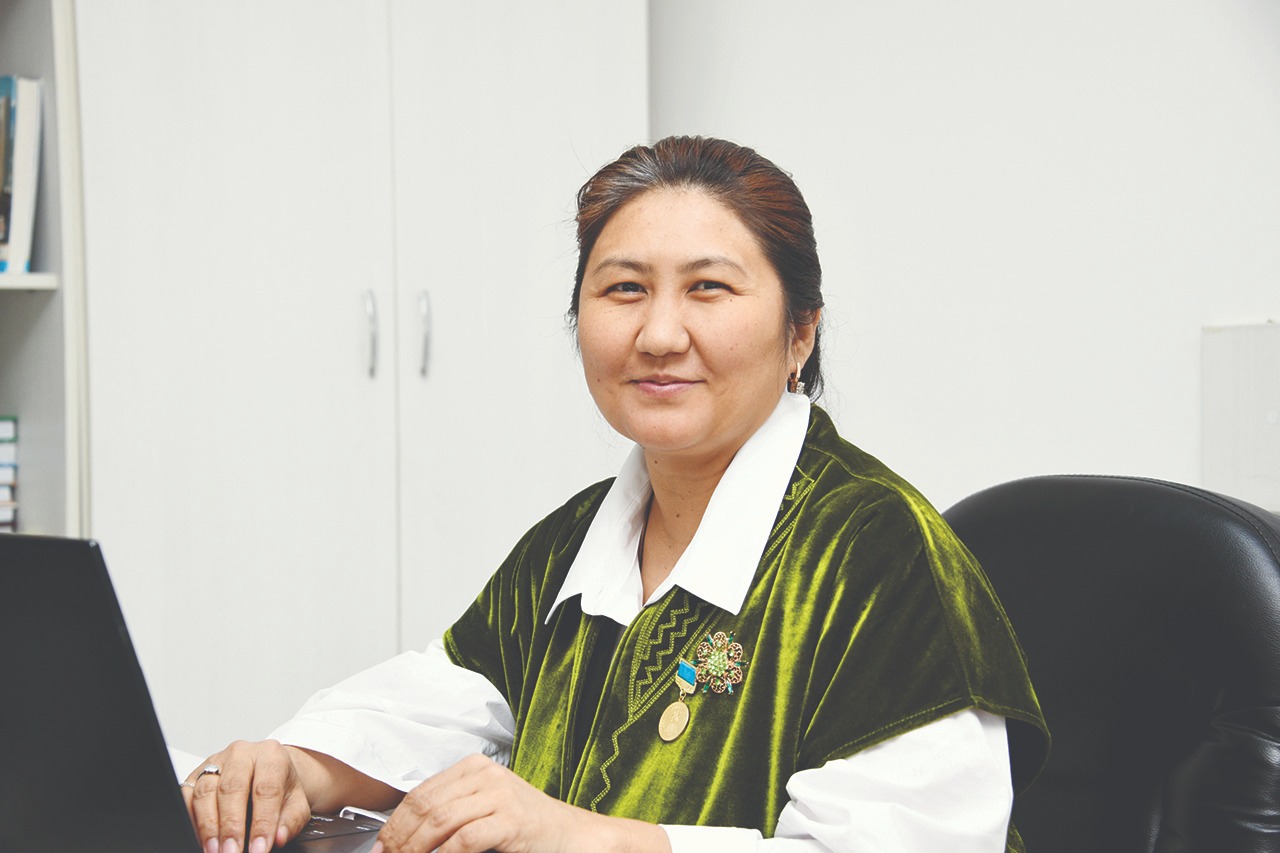
Alua IBRAEVA,
doctor of law, professor