On the importance of legal education of schoolchildren

The process of legal education of minors in secondary schools begins in elementary grades and ends only upon graduation. The current system of education for schoolchildren does not always take into account the needs of legal education, the importance of the level of legal consciousness and perception of personality as a regulator of its behavior. Currently, legal education in schools is generally provided with modern methodological and technical means, but nevertheless, additional measures are largely needed to improve the quality of legal awareness in this age group.
Based on the understanding that legal education is a system of educational and educational actions organized on the idea of law, that it is not enough just to assimilate the sum of knowledge, more attention should be paid to extracurricular activities. In this regard, holding various thematic events of a legal nature in schools helps to enhance the legal culture of the younger generation. High school students can already perceive more complex legal information. As a rule, when working in this age group, it is important to instill respect for the laws and the established rule of law, which will eventually form their worldviews in later life, as well as the education of lawful behavior.
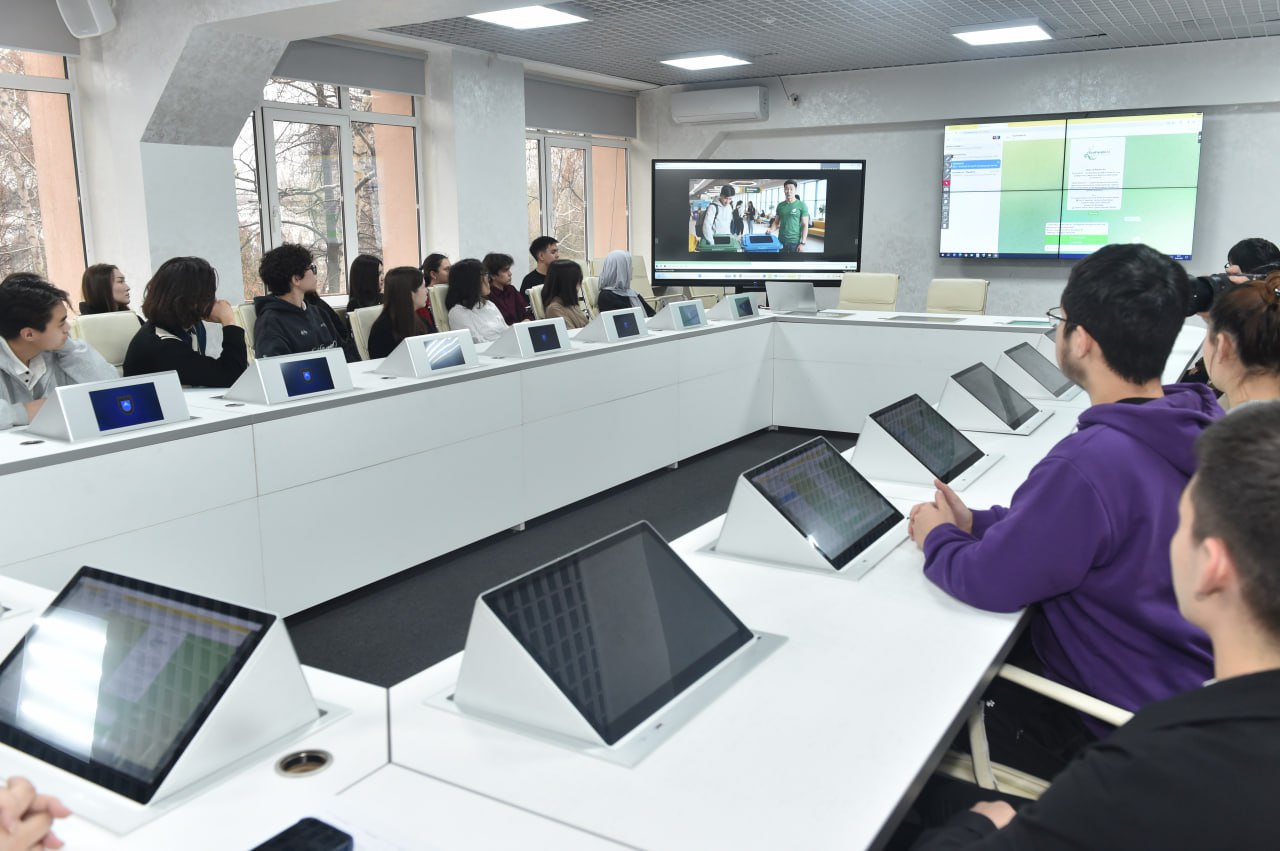
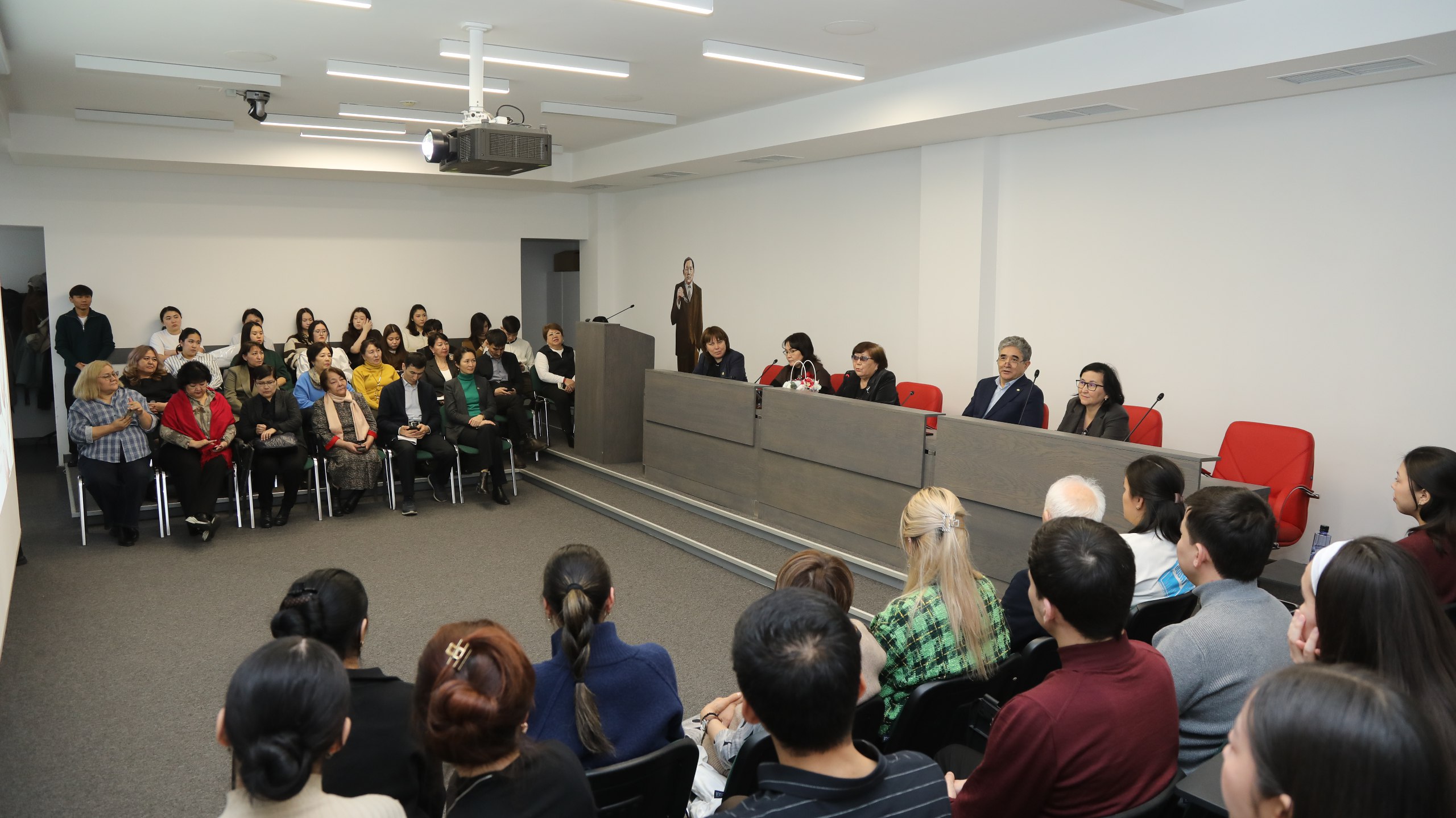
Extracurricular activities at the school also contribute to the formation of students' legal culture. Recently, within the framework of the Birtutas Tarbieh program of the Adal Urpak direction, an Open Dialogue meeting was held with high school students of the KSU General Education School No. 10 with teachers of the Department of Civil Law and Civil Procedure, Labor Law of the al-Farabi Kazakh National University. The theme of the event was designated as "Civil protection of minors".
The protection of the rights and legitimate interests of minors is regulated by various branches of legislation, including civil legislation, with its inherent industry specifics. In particular, the students were introduced to the basic civil rights and duties. The protection of the rights of minors includes a system of legal means provided for by legislation measures aimed at protecting, or recognizing, or restoring violated or disputed civil law subjective rights in the form of property and personal non-property rights and benefits.
There are certain age restrictions for minors. A person who has reached the age of fourteen does not have full legal capacity, but only partial. For example, they can make transactions themselves, but, as a rule, with the consent of their legal representatives. At the same time, they have the right to independently manage their earnings, other incomes and the objects of intellectual property rights created by them, as well as to make small household transactions. Minors under the age of 14 may not always understand and realize the significance of their actions due to their level of development. Therefore, legal representatives make transactions on their behalf. However, if the transaction affects the interests of a minor who is, for example, the owner of a home, then the consent of the guardianship authority is required. The property rights of a minor are also enshrined in the Code of the Republic of Kazakhstan "On Marriage (Matrimony) and Family".
Today, the so-called "school bullying" has become widespread, which has become correlated with the negative statistics of child escapes and suicides. One of its main causes is bullying related to the lack of positive relationships with their peers. According to UNESCO, one in three students worldwide claims to have been physically abused at least once during the year. Every third student is bullied every month. These phenomena have a serious impact not only on academic performance, but also on the mental health of students.
The speakers recommended to schoolchildren that when cases of bullying, as well as bullying, are identified,Students on social media are encouraged to inform the school administration. In the absence of mutual understanding, you should contact the police or the court. In this regard, a minor direct "aggressor" can be brought not only to criminal, but also to civil liability, which can occur simultaneously depending on the offense.
A minor offender is brought to civil liability by a court decision. This means that if he and his legal representatives refuse to voluntarily compensate the victim, he can file a lawsuit. The civil procedure does not provide for preventive measures, detention, or other coercive measures. The evidence in the case is collected and presented by the plaintiff and the defendant themselves. The injured minor and his legal representative have the right to demand in court a refutation of information discrediting honor, dignity or business reputation, if the person who disseminated such information does not prove that they correspond to reality. In addition, compensation for moral damage is possible. It should be borne in mind that up to the age of 14, the parents will compensate for the damage for minors.
During this meeting, students were asked questions of a wide variety of nature, to which the speakers provided comprehensive answers. In general, this event aroused wide and lively interest among schoolchildren, who expressed their desire to meet more often with teachers of the Faculty of Law.
Saida ASANOVA,
PhD Doctor, Acting Associate Professor