- Main
- The center of russian language and culture
- аl-Farabi Kazakh National University faculty members conducted a master class and an online class
аl-Farabi Kazakh National University faculty members conducted a master class and an online class
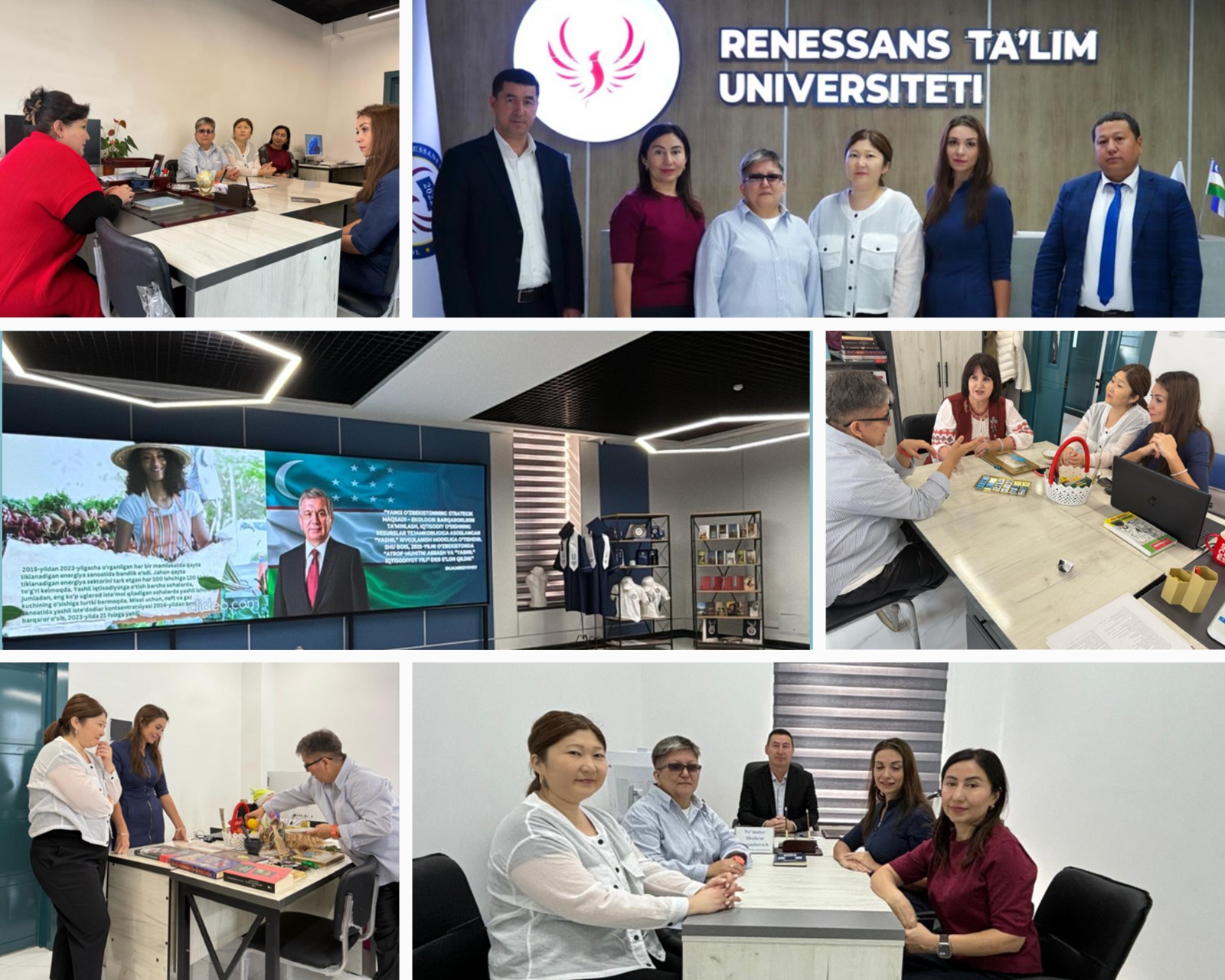
From 1 to 5 November 2025, as part of the international project “International Forum “Interaction of Science and Society: Language, Innovation, Culture’”, the Head of the Department of Russian Philology and World Literature A.S.Demchenko and senior lecturers S.T.Issaliyeva and K.O.Tattimbetova undertook a business trip to Renaissance Educational University (Tashkent, Uzbekistan).
During the visit, meetings were held with the university administration, the international office, the Faculty of Philology and History, and the faculty members of the Department of Philology. In the online format, the events were attended by the head of the international project, research professor and Director of the “Russian Language and Culture” Center, S.B.Begaliyeva.
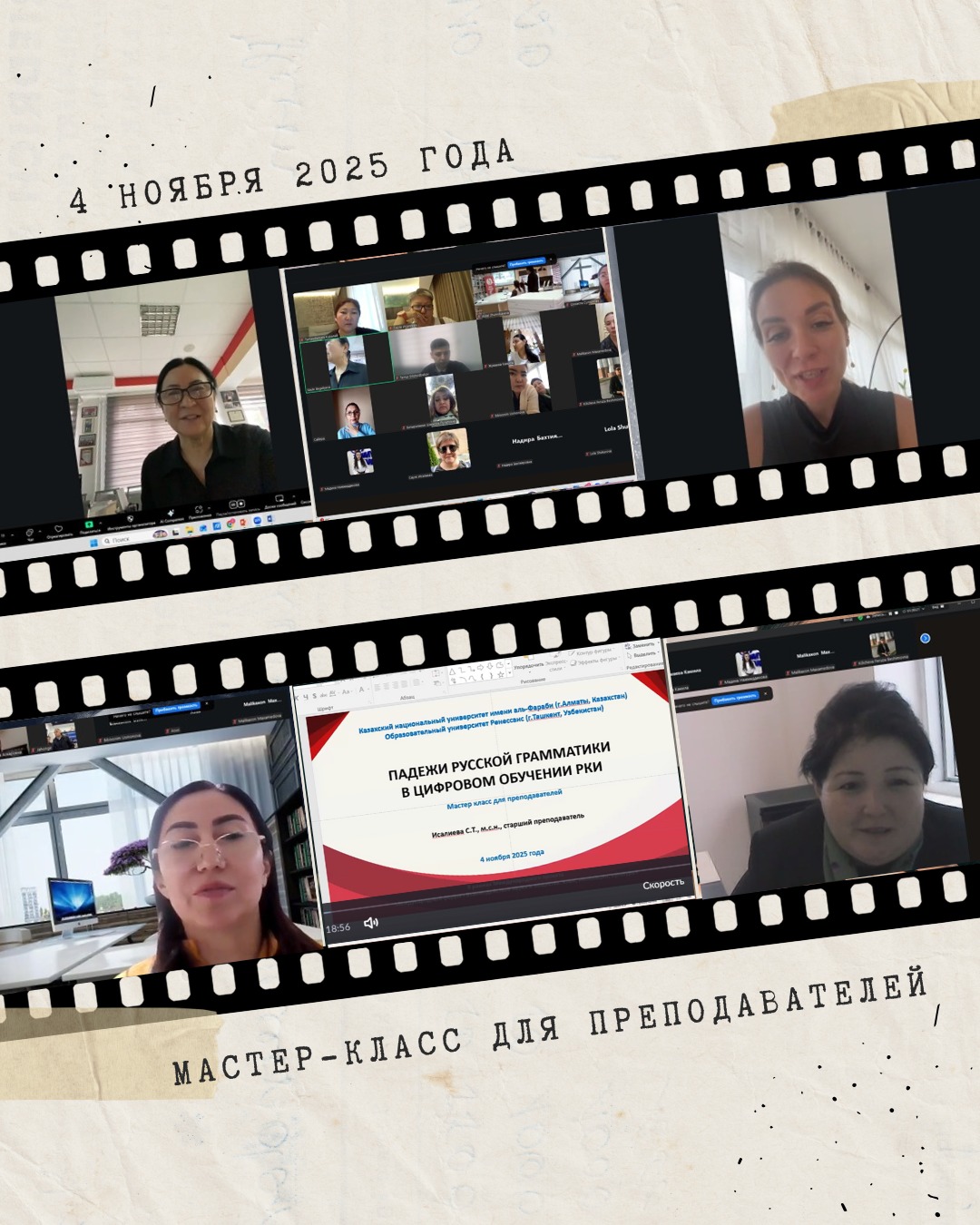
For the university’s teaching staff, a master class titled “Cases of Russian Grammar in Digital RFL Instruction” was conducted. Participants discussed digital tools for working with students, methods for compensating missed classes, and approaches to organizing effective independent work.
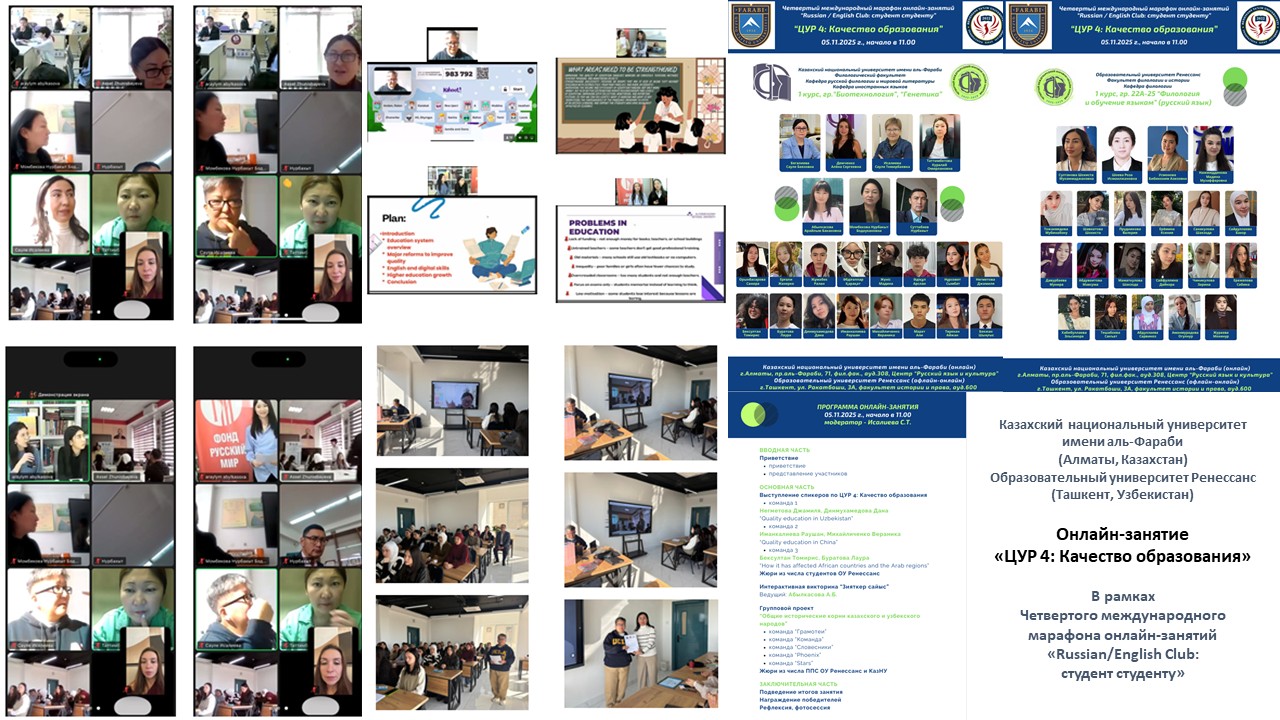
As part of the Fourth International Marathon of Online Slasses “Russian/English Club: Student-to-Student”, a joint online class titled “SDG 4: Quality Education” was held for students of Renaissance Educational University. First-year students of the “Biotechnology” and “Genetics” programs at al-Farabi Kazakh National University took part in the event. The organizers were faculty members of the Department of Russian Philology and World Languages and the Department of Foreign Languages of the Faculty of Philology.
In the first round, Uzbek students evaluated presentations delivered in English by our students; in the second round, all participants took part in the quiz “Ziyatker Saily”; and in the third round, students presented group projects titled “Common Historical Roots of the Kazakh and Uzbek Peoples”.
The joint online session became a vivid example of how international student cooperation enhances learning motivation, broadens academic horizons, and strengthens intercultural dialogue. Participants emphasized that the “student-to-student” format helps not only to improve language skills but also to develop global thinking, which is highly relevant in today’s educational environment. Such initiatives strengthen institutional partnerships and open new opportunities for joint projects, research, and students’ professional growth.
Other news