Sustainable development for children and youth
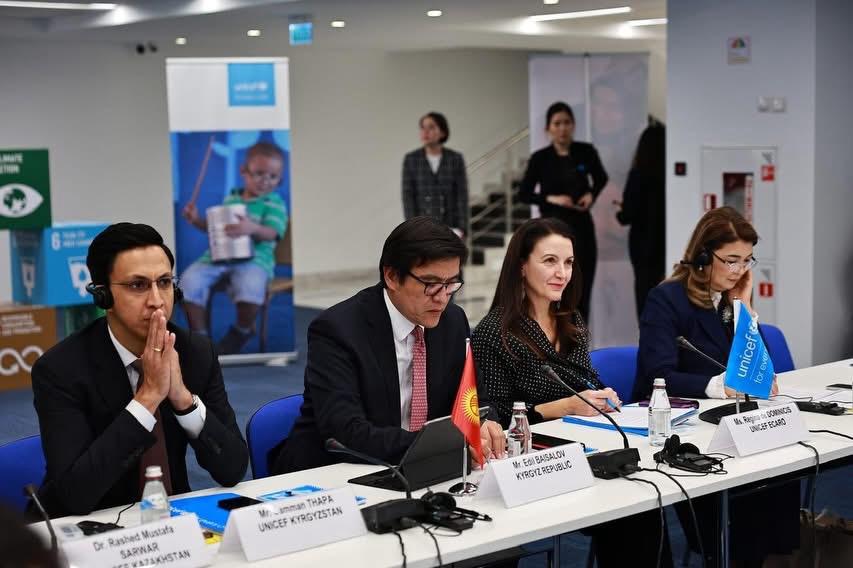
SDG-17 Today in Almaty was held a ministerial meeting "Generation 2050: Investing in the Future today", bringing together about 60 participants from five Central Asian countries. The meeting was attended by Deputy Prime ministers, vice ministers, and senior government officials from Kazakhstan, Kyrgyzstan, Tajikistan, Turkmenistan, and Uzbekistan, as well as development partners, representatives of UN agencies in the region, and representatives of the UNICEF regional and country offices.
The regional analysis "Generation 2050: Central Asia" prepared by UNICEF was presented at the meeting. Its purpose is to show how strategic investments in human capital can ensure sustainable economic growth in the region's countries.
During the sessions, issues of cross-country cooperation and the role of development partners in promoting reforms aimed at children and youth were discussed.
UNICEF Regional Director for Europe and Central Asia Regina de Dominicis opened the meeting and stressed the importance of joint action by the countries of the region to build a sustainable future.
First Vice Minister of Education of the Republic of Kazakhstan M.T. Meldebekova thanked the guests for coming to an important event for the future of the country and sharing their opinions.
"Kazakhstan has significant opportunities to strengthen human capital. The successes already achieved create a solid foundation, and further steps will maximize the country's demographic potential. Strategic investments in children are not only a social policy, but also a powerful tool for the country's sustainable economic growth" - said UNICEF Representative in Kazakhstan Rashed Mustafa Sarwar.
According to experts, investments in education, health and social well-being of children and youth can provide the country with up to 14 percent additional GDP growth per capita by 2050.
UNICEF confirmed its readiness to continue supporting the Government of Kazakhstan in the framework of the implementation of the national program "Children of Kazakhstan – 2026-2030", as well as to promote the exchange of experience between Central Asian countries to strengthen sustainable development and implement innovative solutions for the benefit of children and youth.
Oshanova Oryntay,
Head of UNESCO Chair in Journalism and Communication,
Farabi University