- Main
- News
- Event under SDG 3: Discussion seminar with students on the topic: “Application of bioinformatic methods for the analysis of genetic markers associated with susceptibility to chronic diseases”
Event under SDG 3: Discussion seminar with students on the topic: “Application of bioinformatic methods for the analysis of genetic markers associated with susceptibility to chronic diseases”

|
|
Срок проведения |
12.11.2025 |
|||
|
|
SDGоbjective 3: |
Using bioinformatic methods to identify genetic risk factors for chronic diseases and to develop personalized approaches to disease prevention and health promotion. |
|||
|
|
Name of the event |
Discussion seminar with students on the topic: “Application of bioinformatic methods for the analysis of genetic markers associated with susceptibility to chronic diseases” |
|||
|
|
Objective of the event |
To explore the potential of bioinformatic methods for identifying genetic markers associated with susceptibility to chronic diseases in order to improve the quality of prevention and support personalized approaches to health care. |
|||
|
|
Responsible teacher |
Prof. Atambayeva Sh. |
|||
|
|
Link on the information portal www.kaznu.kz |
|
|||
|
|
Рhotoreport
|
|
|||
|
|
Brief description of the event |
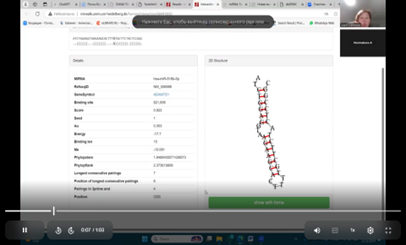
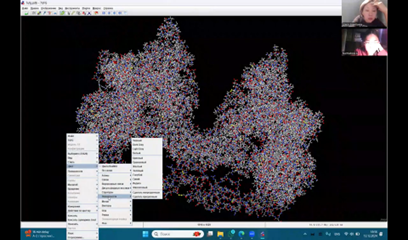
On November 12, 2025, Professor Sh. A. Atambayeva, within the framework of SDG 3: Good Health and Well-Being, conducted a discussion seminar on the topic: The seminar aimed to examine the possibilities of using bioinformatic tools to detect genetic markers of predisposition to chronic diseases, thereby enhancing prevention quality and promoting personalized health strategies. The demonstration of bioinformatic software and databases was organized via the Zoom platform, which enabled recording of the session and providing it to students for subsequent viewing and independent study at a convenient time. The demonstration of bioinformatic software and databases was organized via the Zoom platform, which made it possible to record the session and provide it to students for later viewing and independent study of the material at a convenient time. Results:Key genetic markers associated with chronic diseases were identified. Conclusion:The seminar demonstrated that bioinformatic tools offer new opportunities for prevention and early prediction of chronic diseases. The identified SNP markers and the developed prototype approach confirm the potential of personalized medicine in strengthening health, which aligns with the objectives of SDG 3 and contributes to improving the well-being of the population.
|
|||
|
|
|||||