“ТHE TEACHING OF ABAI AS A SYSTEM OF SPIRITUAL VALUES”
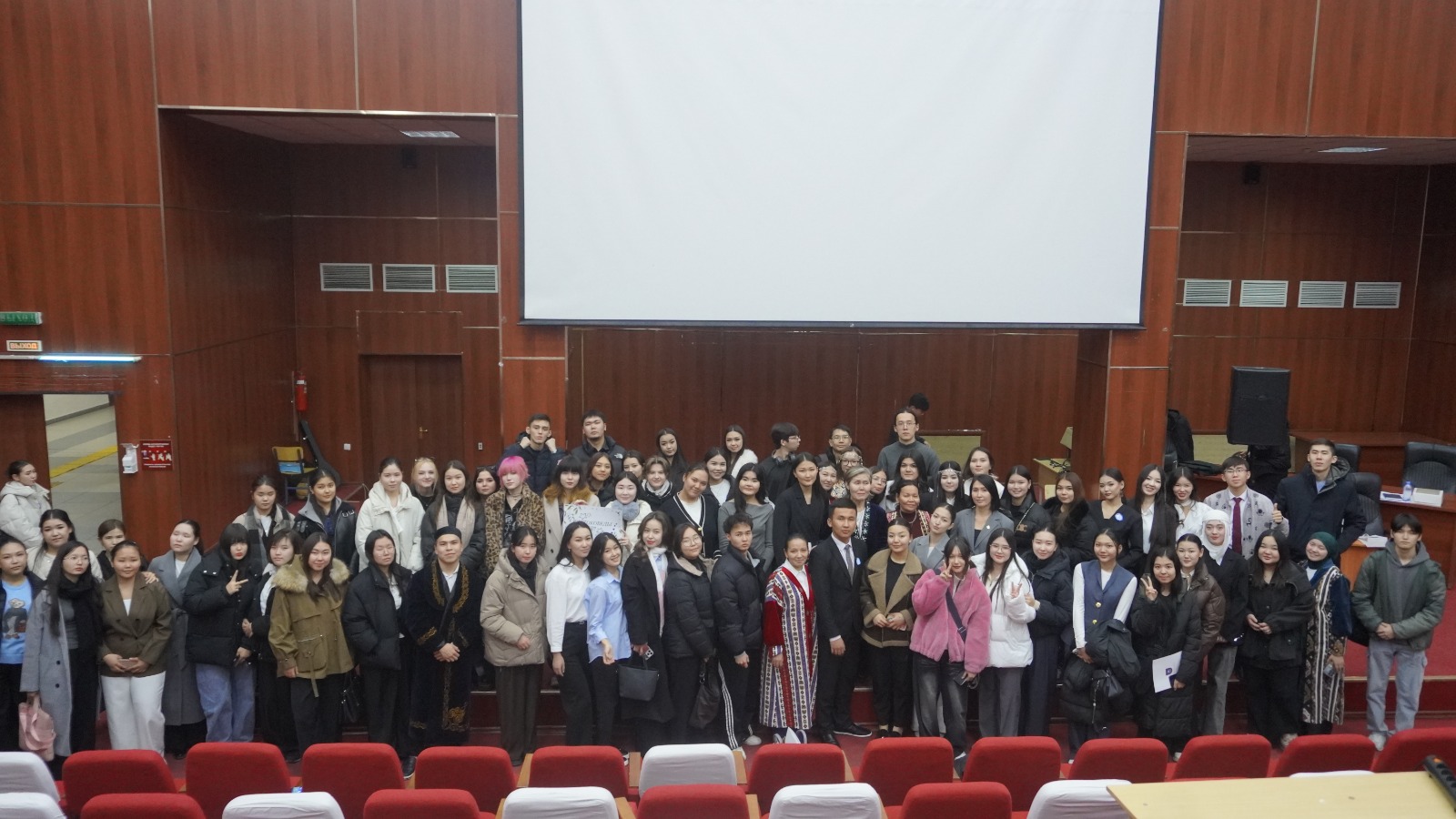
On December 4, 2025, a significant educational demo lesson on the topic: “Abai’s teaching as a system of spiritual values” was held in the Red Hall of the Faculty of Mechanics and Mathematics.
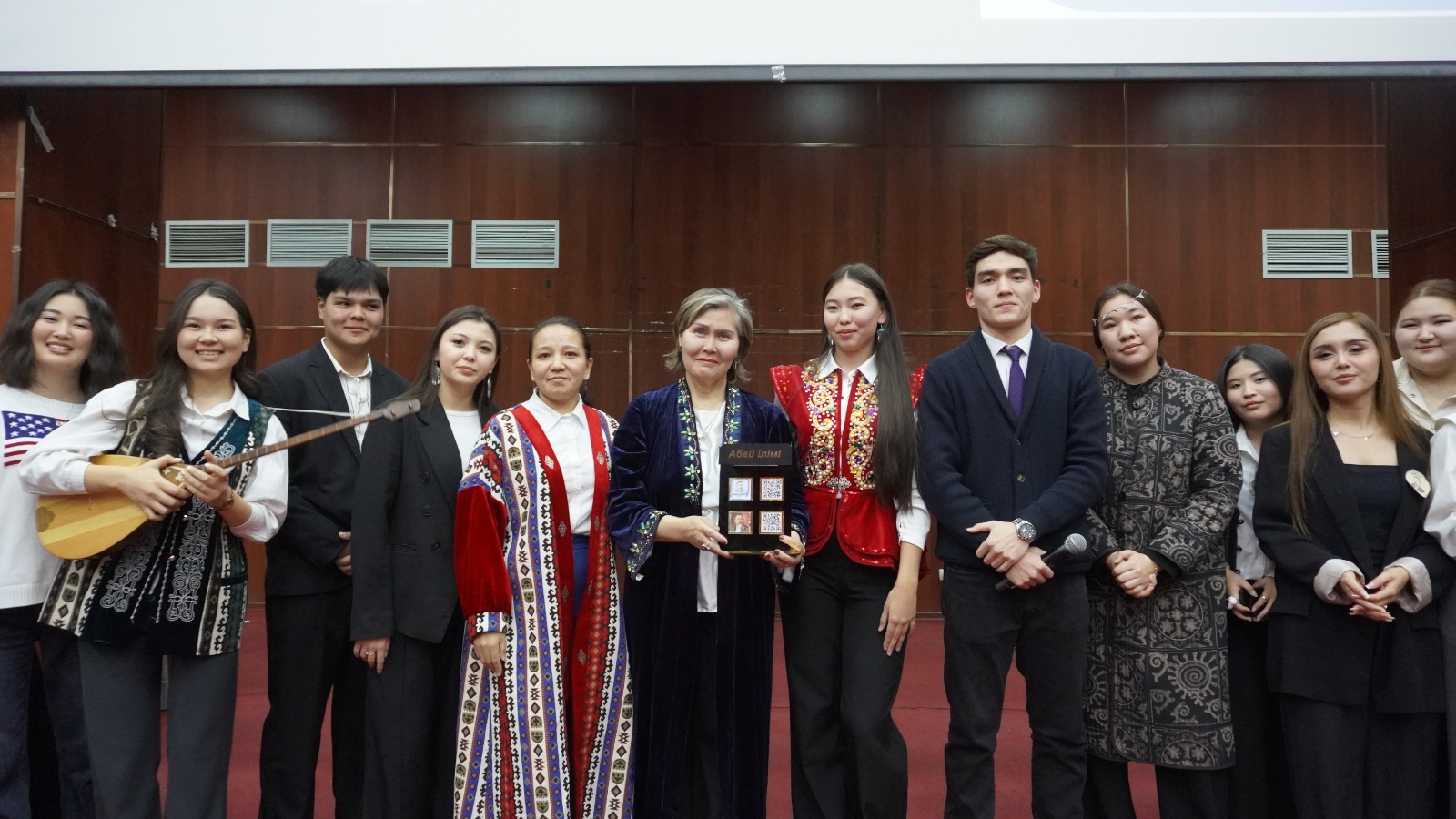
It was organized by the lecturers from Abai Research Institute. At this pre-planned and officially announced final demo class, the students of all majors presented their group projects covering each topic of the course. The project works included interactive role-playing games, situational scenes based on the code of humanity, creative challenges inspired by Abai’s works, and, most importantly, the presentation of an intellectual product from each group according to the “Application” stage of Abai’s taxonomy.
The event was opened with a screening of t “The conversation of two sparrows” fable from the official website of Abai Research Institute. After that, associate professor L.Zh. Musaly of the institute emphasized that the science of being human is the essence of Abai’s teaching, explained the rules of the class, and encouraged the students, following Abai’s words, not to work only for their own benefit, but for the good of society by sharing their knowledge.
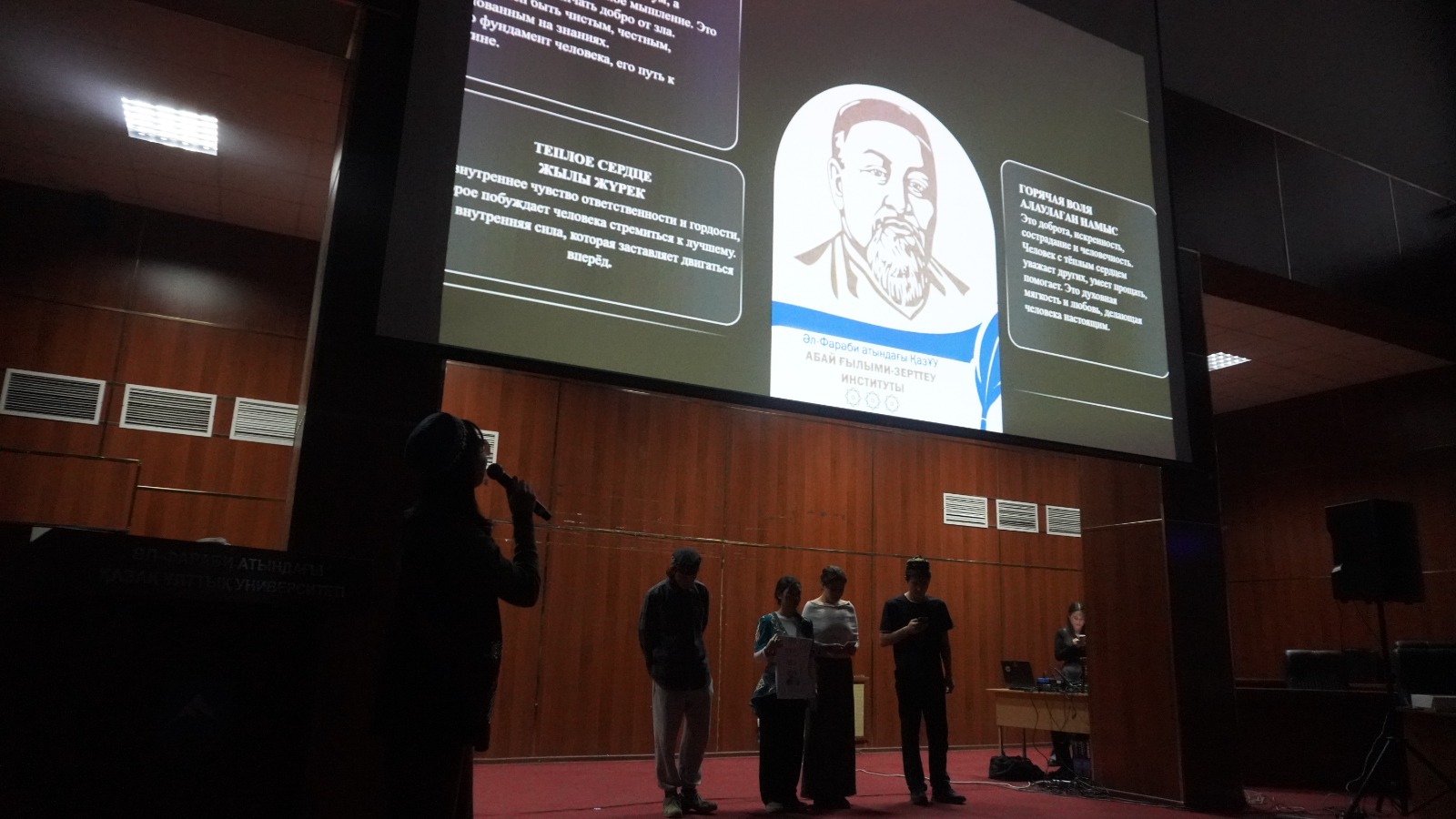
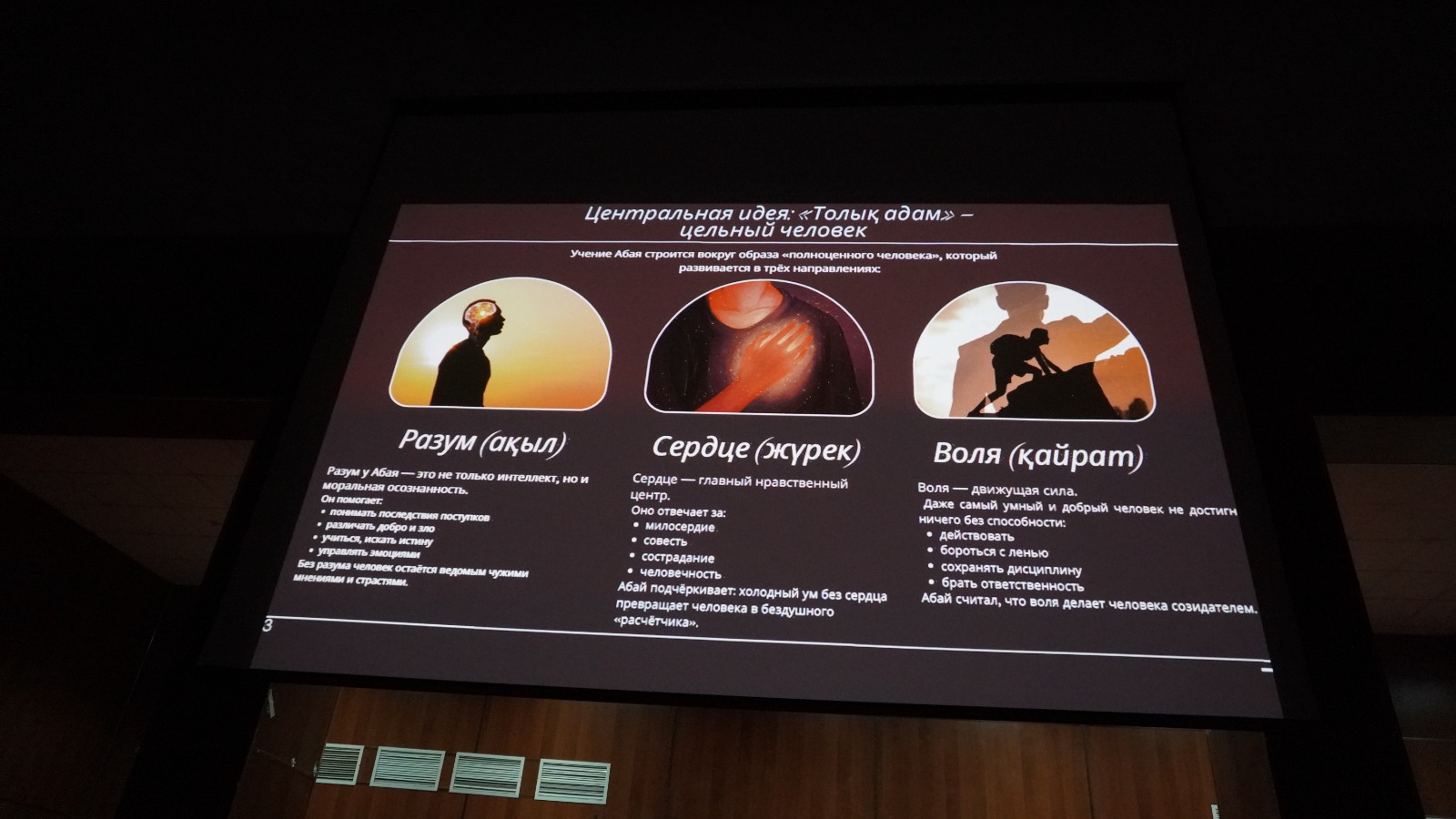
The students from the faculties of philology, history, oriental studies, and journalism took part in the demo lesson. They analyzed the components of Abai’s teaching — the significance of reason, will, and heart; the relevance of Abai’s ideas in the modern world; the spiritual principles of the poet’s eastern worldview; and the concept of measure — presenting these through detailed presentations.
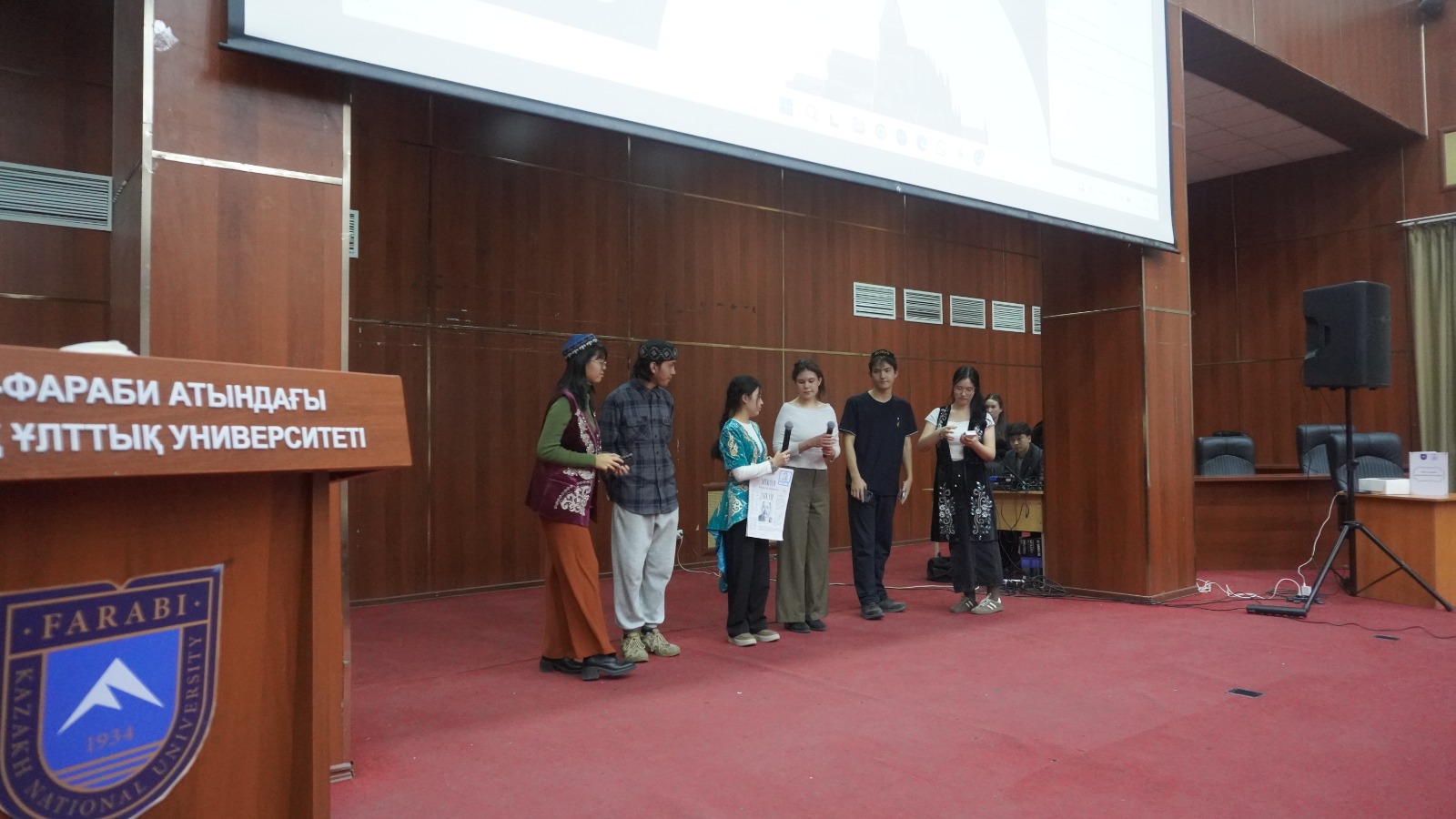
By connecting Abai’s ideas with modern disciplines such as philosophy, pedagogy, oriental studies, and history, the students demonstrated the universality and interdisciplinary nature of Abai’s teaching. They also interpreted important ideas from Abai’s code of humanity, his poems, and his prose by preparing creative challenges, video clips, and short films.
The students’ role-playing performances added depth to the lesson. Through these dramatizations they illustrated Abai’s moral principles, the meaning of the five noble qualities and the five harmful traits, the harmony of reason, will, and heart, and the importance of maintaining balance in every action. This approach allowed the students to understand Abai’s teaching more deeply, connect theory with practice, and express their creativity.
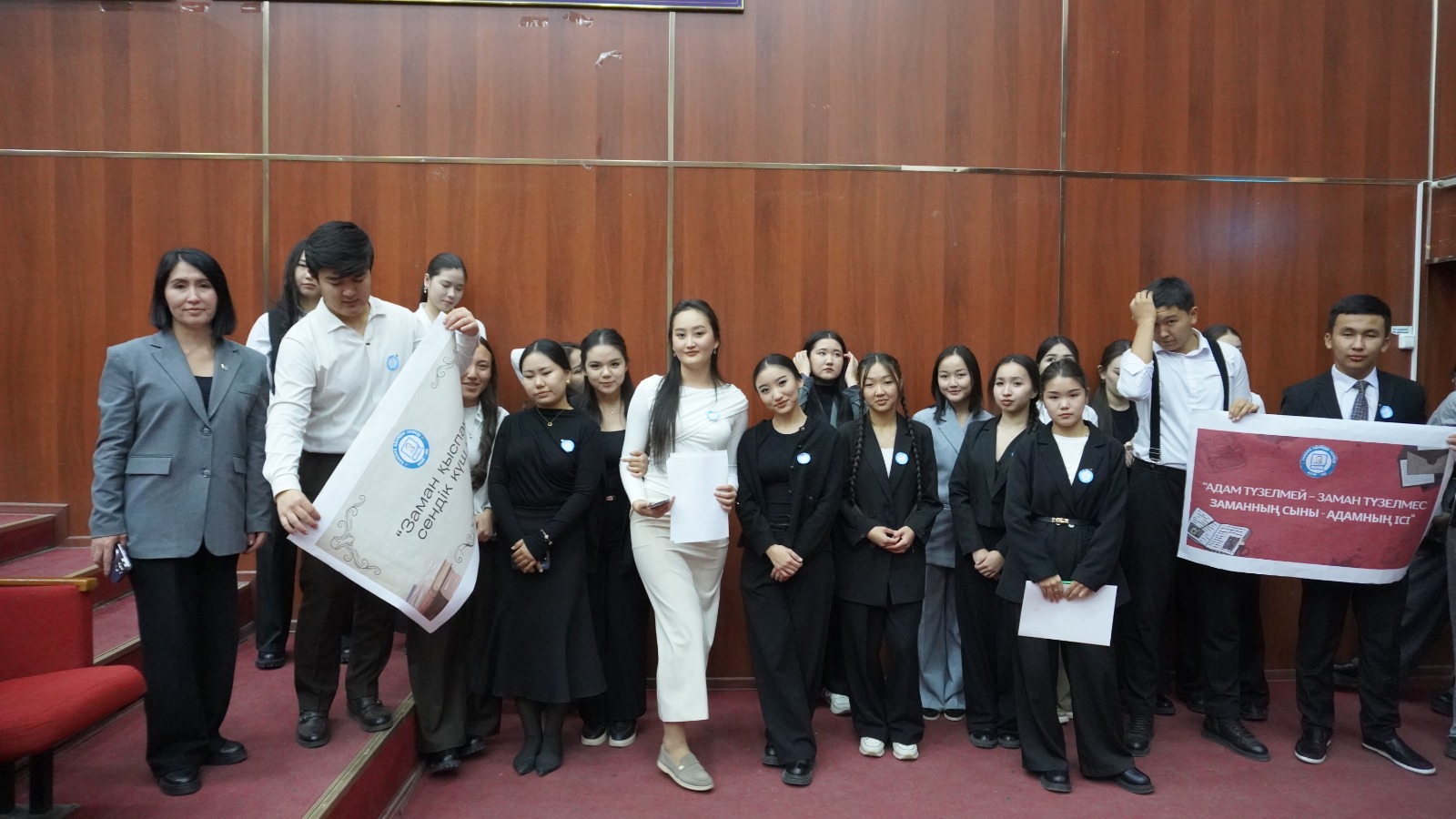
Students of different specializations presented their intellectual products by linking Abai’s teaching with the IT field and promoting Abai as a national brand. They explained how their projects were created and how they could be applied in real life. These products included a Telegram channel, a diary, a dictionary, a short film, a phone case, a newspaper, and other works. This activity enhanced the students’ research skills, information literacy, and creative thinking.
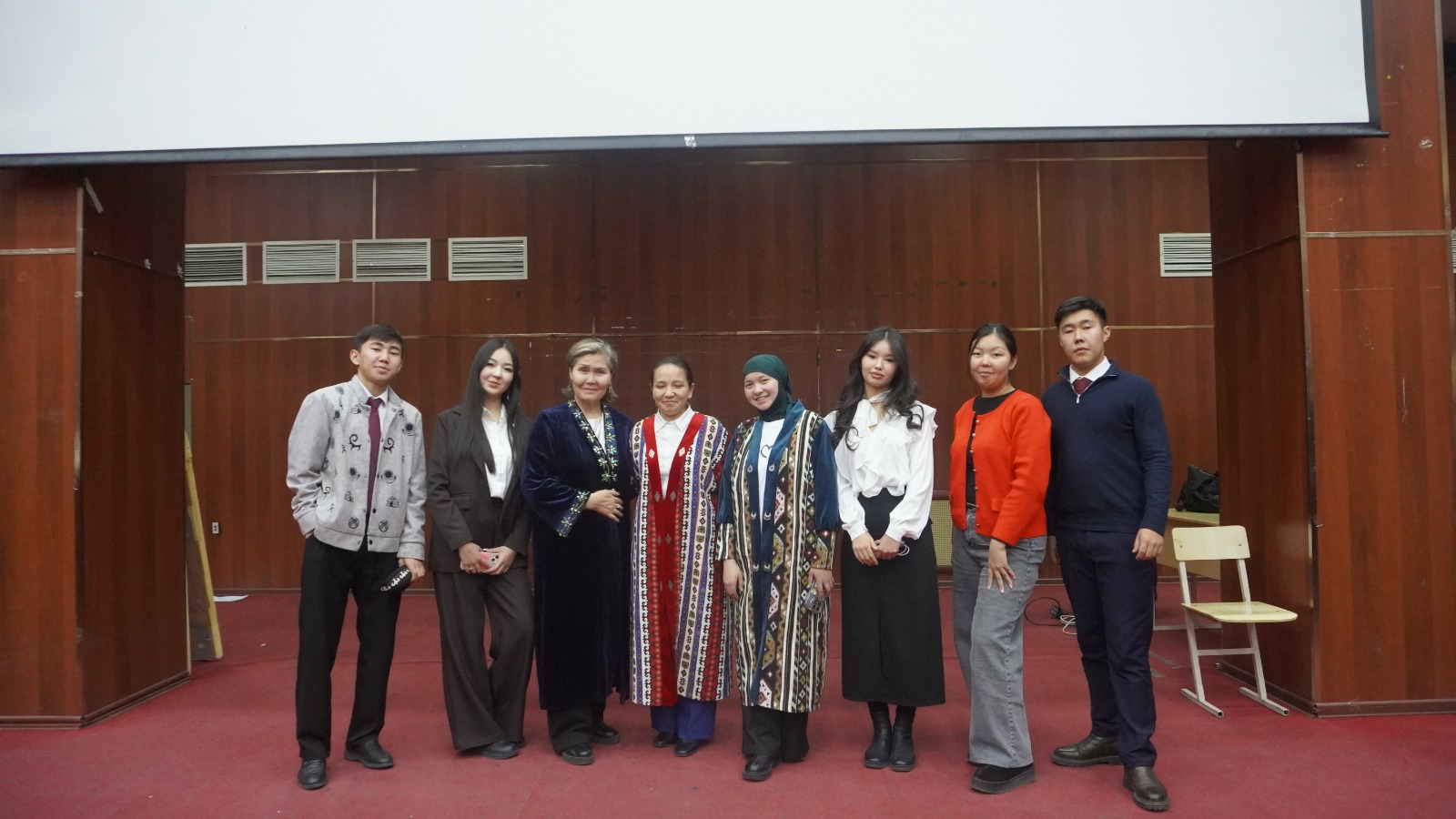
The event welcomed special guests — professor Ornai Zhubai of KazNU, Doctor of Philology and Scholar specialized in the study of Akhmet Baitursynuly’s works, as well as senior lecturer from the Faculty of Oriental Studies Simbat Smagulova. They shared valuable ideas regarding Abai’s teachings, issues of spiritual values, and principles of morality.
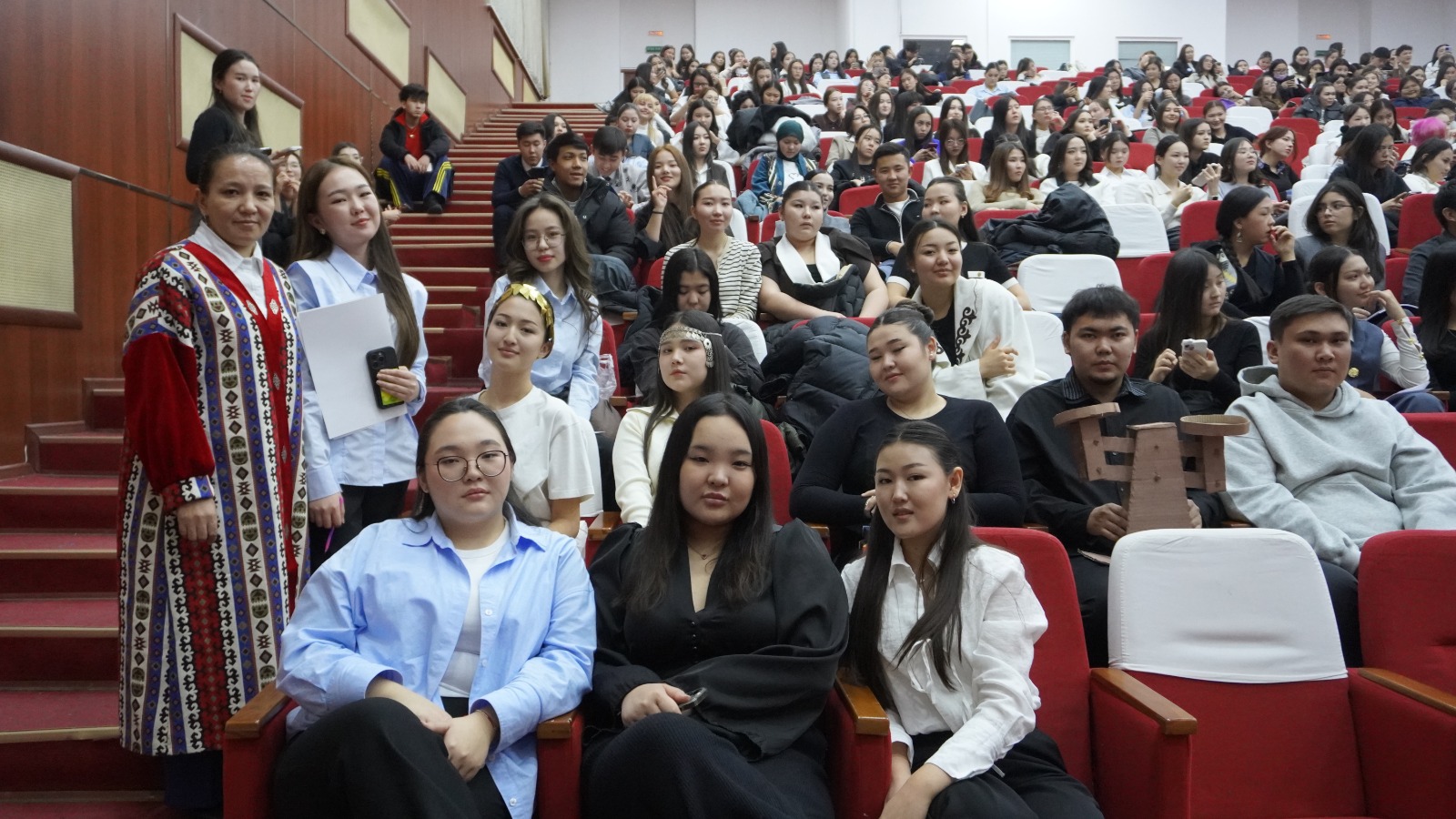
The guests highly praised the students’ scientific and creative efforts and highlighted the importance of intellectual products and interactive approaches in the modern educational process. Instructors of the Abai research Institute — Laila Zhumatayqyzy Musaly, Bibigul Dauletqyzy Dautova, and Gulzhan Ybyraikyzy — evaluated all the students’ works.
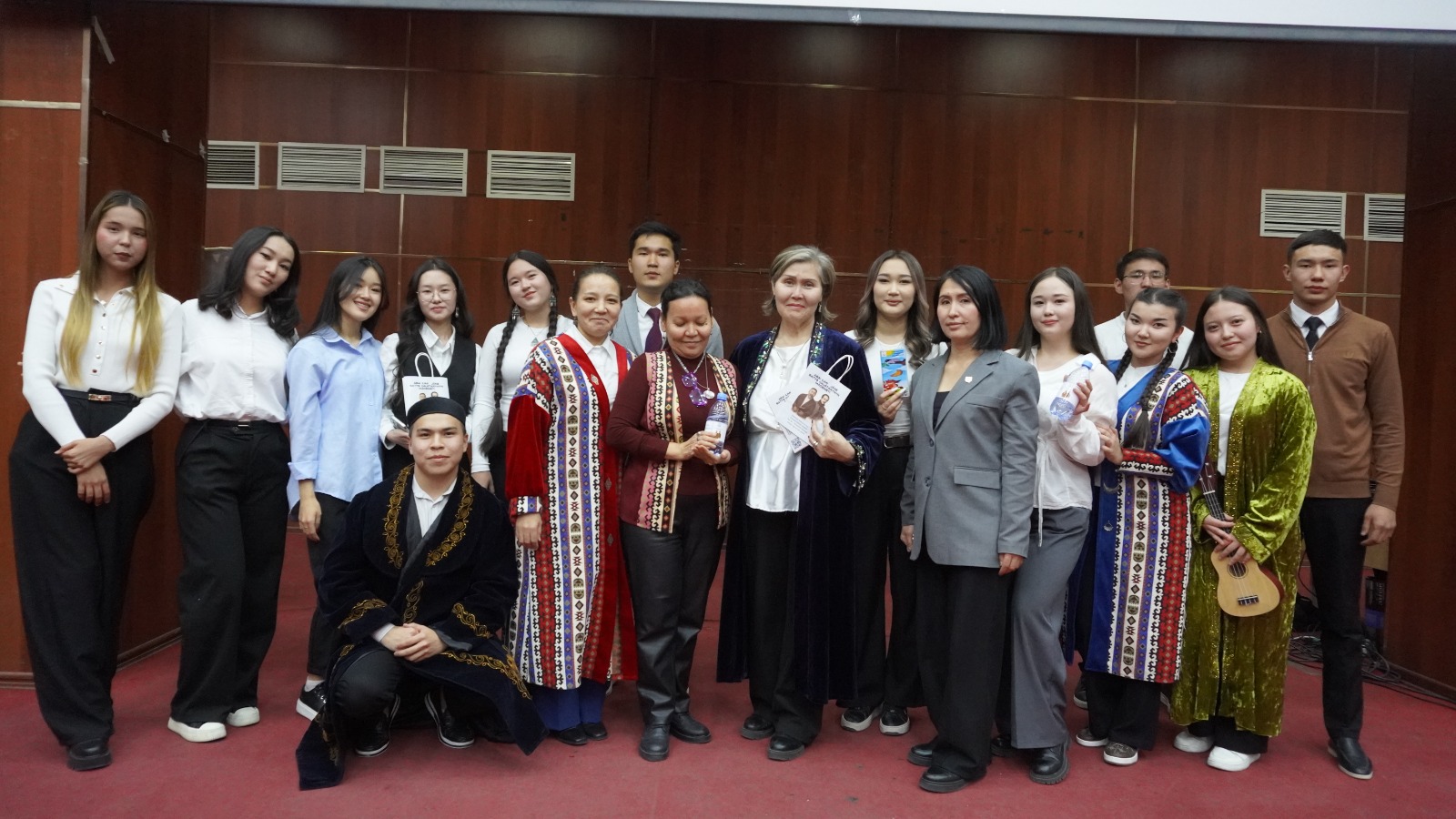
In conclusion, the open educational lesson “the teaching of Abai as a system of spiritual values” stood out with its depth and innovative character. It clearly demonstrated that Abai’s morally grounded, spiritually rich teaching serves as a guiding light for today’s society — a reliable direction and system of spiritual values, especially important for the younger generation.
Other news