SDG 16: Building a Just Society Through the Eyes of Future Philologists
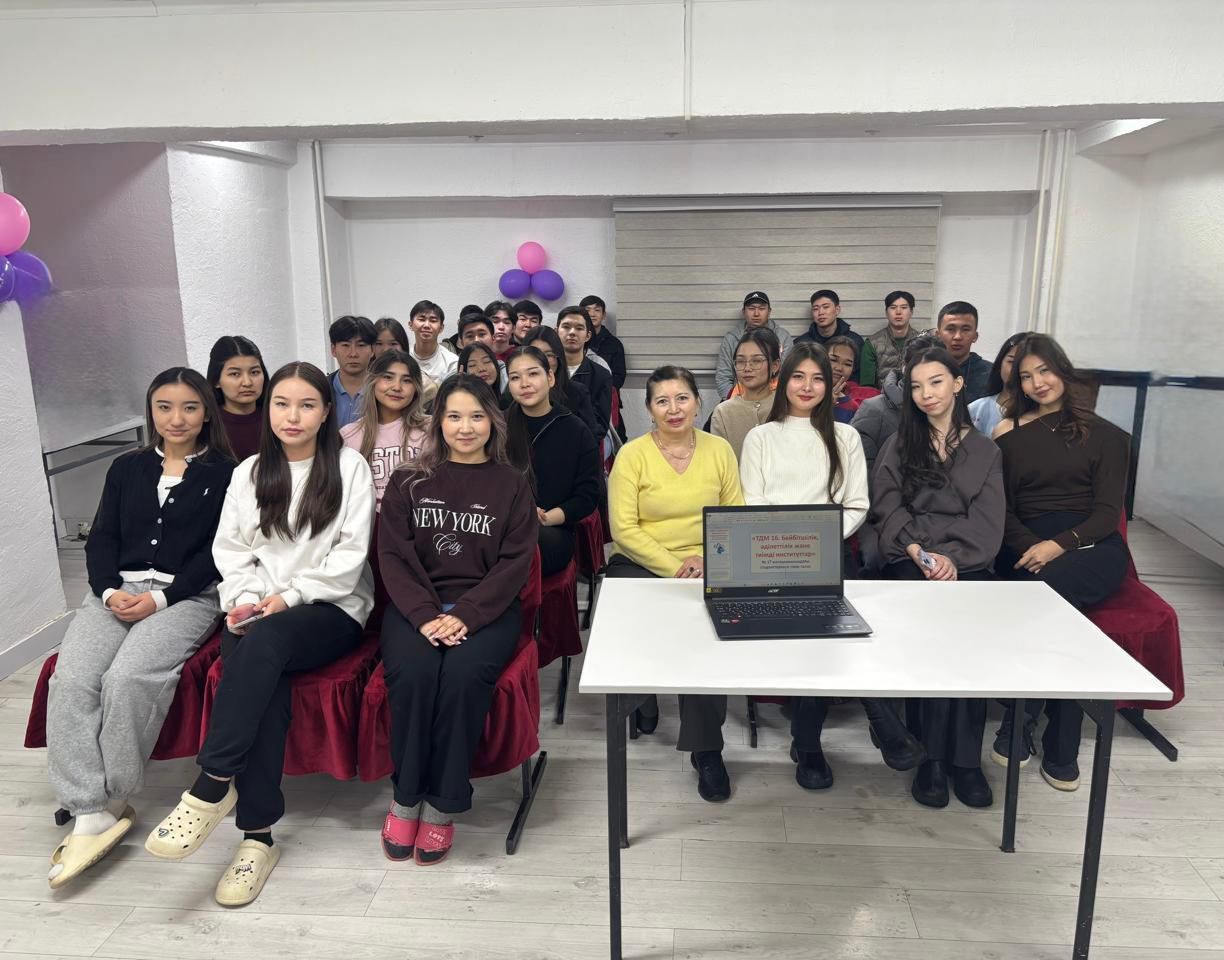
On January 27, 2026, as part of the implementation of SDG 16 "Peace, Justice, and Effective Institutions", a meeting was organized between L.B. Nagiyatova, an advisor and lecturer of the Department of Foreign Philology and Translation Studies, and students of the Faculty of Philology residing in Dormitory No. 17. The lecturer explored the theoretical aspects of citizens' rights and freedoms and invited the students to find their own ways to optimize the components that make up the mechanism for ensuring and protecting human rights.
During the discussion, the students agreed that "global security, the rule of law, and the existence of effective government structures are the foundation of long-term human prosperity." These priorities, the lecturer noted, are enshrined in UN Sustainable Development Goal (SDG) 16, which serves as a vector for the transformation of modern societies. The primary focus of this initiative is to eradicate all forms of violence, ensure equal access to justice, and uncompromisingly combat corruption and organized crime.
The implementation of SDG 16 reflects the collective commitment of the international community to addressing the root causes of global crises. Political instability and administrative arbitrariness are recognized as the main barriers to progress. Overcoming these challenges requires a systemic approach: 1) Building inclusive institutions: creating structures that take into account the interests of all segments of the population and respond promptly to public demands. 2) Rule of law: guaranteeing the protection of civil rights and freedoms through an independent judiciary and transparent law enforcement agencies. 3) Transparency and accountability: implementing mechanisms to oversee government authority, which is the only way to restore and maintain public trust. Thus, creating a reliable institutional environment is not just a bureaucratic task, but a necessary condition for the survival and stable growth of any state, the advisor summarized the main idea of the lecture and the subsequent discussion.
Nagiyatova L.B.,
Al-Farabi Kazakh National University, Faculty of Philology,
Ph.D., Department of Foreign Languages and Translation
Other news