Sustainable Development Practices: The Experience of Al-Farabi Kazakh National University
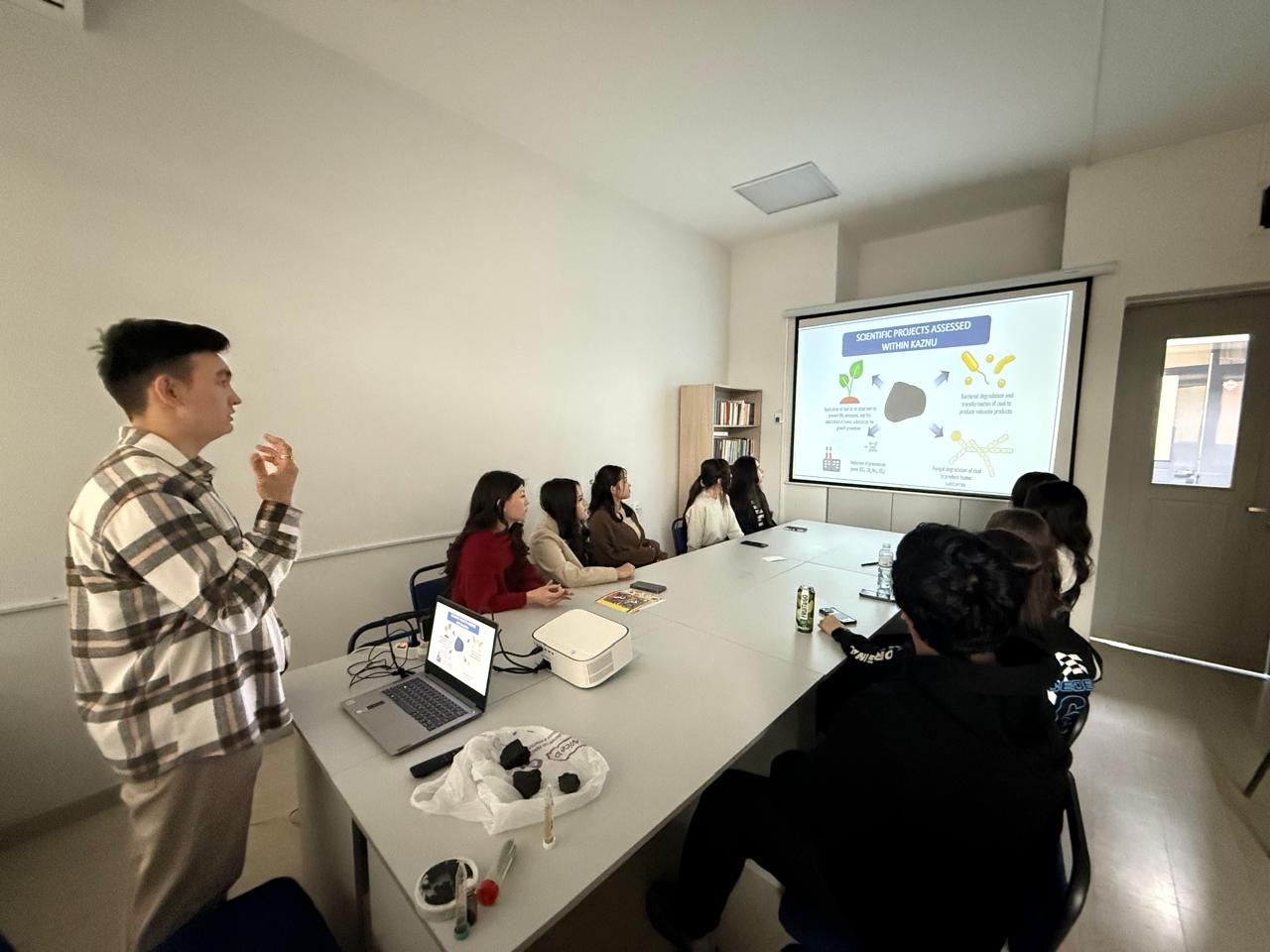
On February 6, a meeting was held at the Faculty of Philology of Al-Farabi Kazakh National University with first-year students majoring in “Foreign Philology (Western Languages)”. The event was organized by the Department of Foreign Philology and Translation Studies in cooperation with the International Kazakh-German-Chinese Laboratory of Applied Microbiology as part of civic and patriotic education and the environmental dimension of sustainable development.
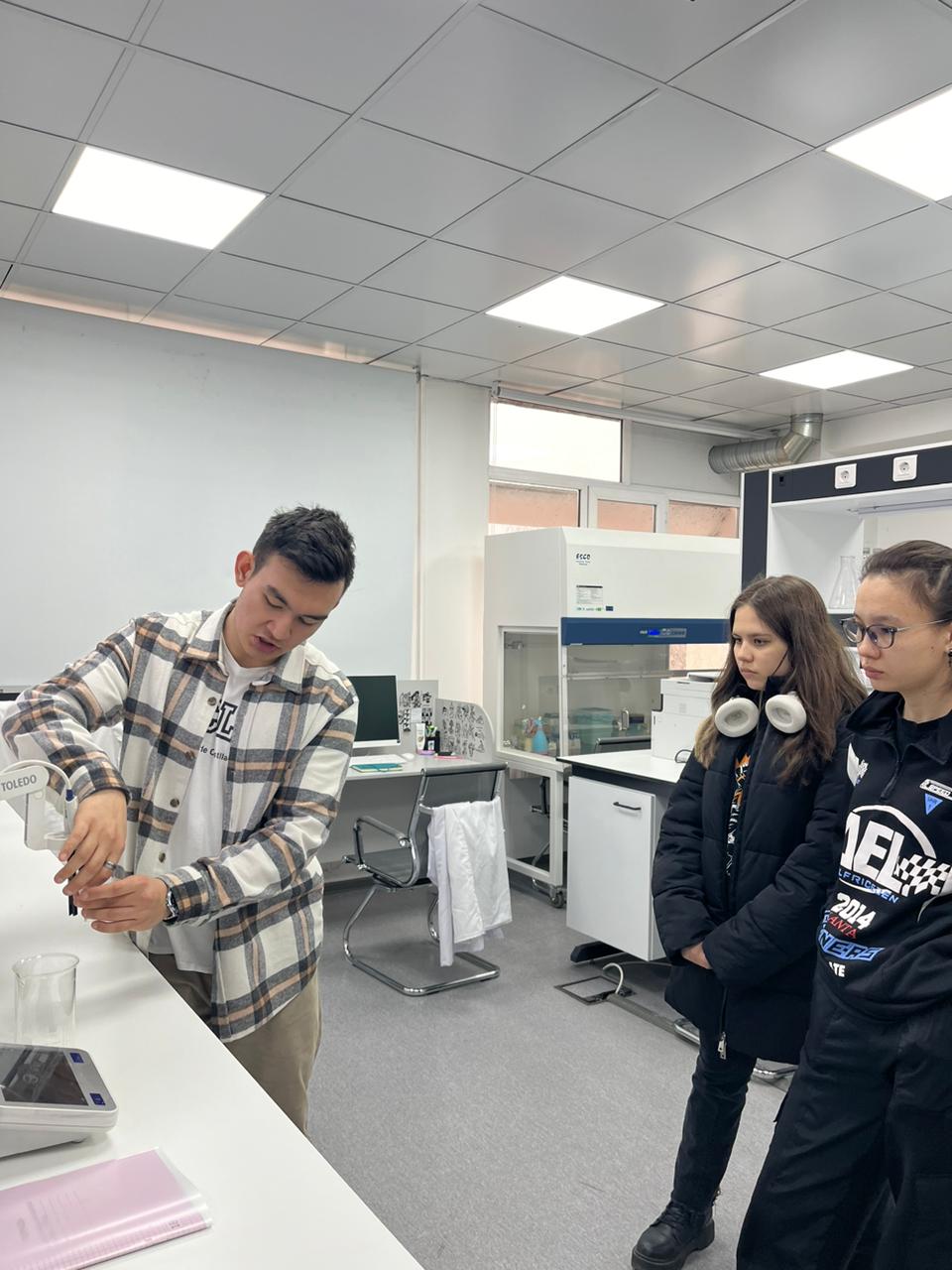
The event aimed to support the implementation of the United Nations Sustainable Development Goal (SDG) 13, Climate Action, which focuses on reducing anthropogenic impact on the environment and fostering environmentally responsible thinking.

During the meeting, Alan Aimagambetov, a researcher at the International Kazakh-German-Chinese Laboratory of Applied Microbiology, highlighted current environmental challenges specific to Kazakhstan, outlined the characteristics of its natural ecosystems, and presented scientific and applied projects implemented at KazNU that are aimed at mitigating climate and environmental risks.
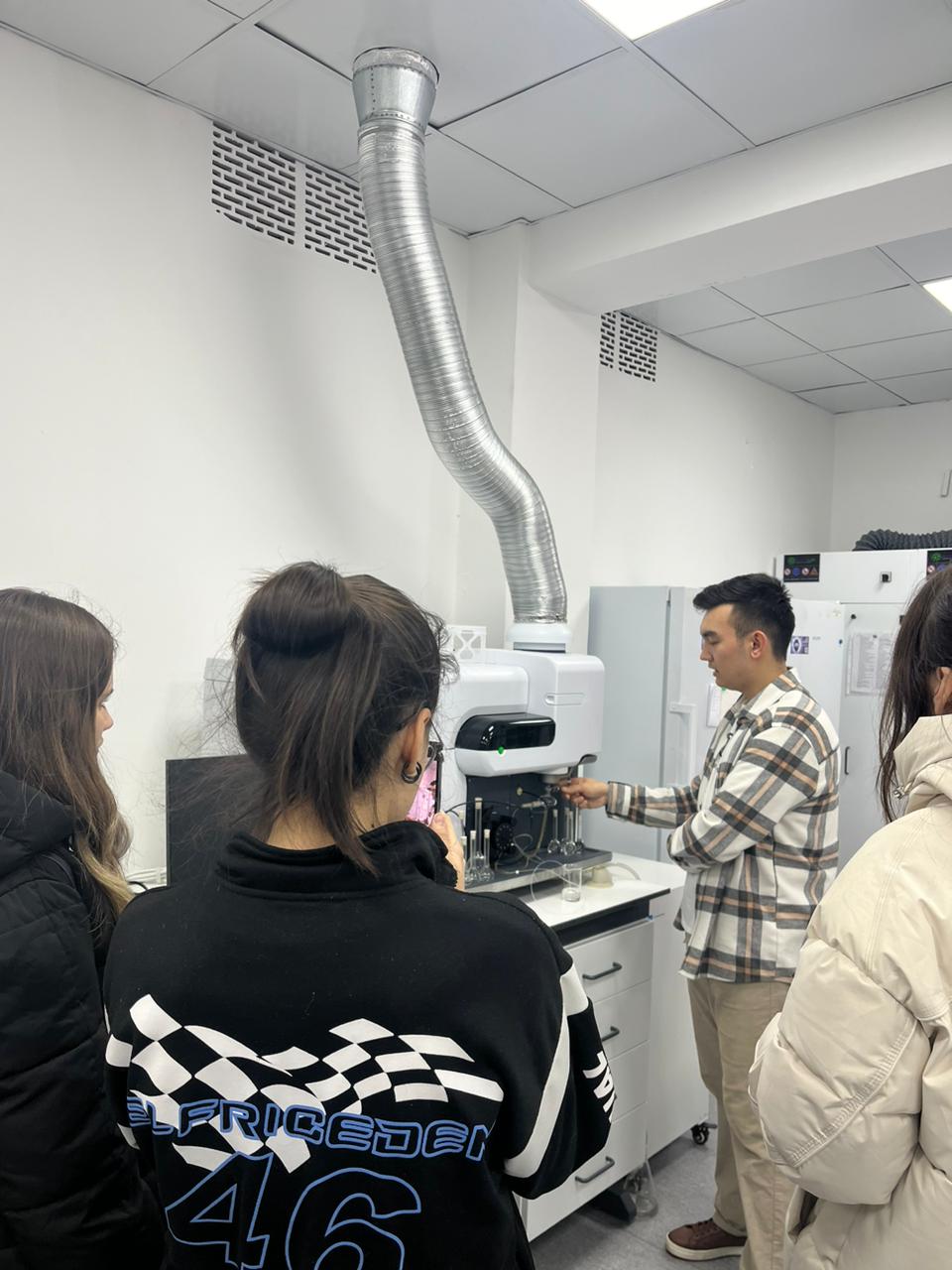
The discussion addressed issues of coal bioconversion; the reduction of carbon dioxide, methane, and other greenhouse gas emissions; the use of microorganisms and microalgae in environmentally friendly technologies; as well as scientific approaches to soil restoration and the minimization of industrial impact. The discussion demonstrated a high level of student interest in contemporary environmental research and the practical application of scientific developments.
Following the main part of the meeting, students visited the research laboratories of the Institute of Ecology and Biodiversity. They were introduced to modern analytical instruments and laboratory equipment used for analyzing materials, soil, coal, and industrial emissions, as well as ongoing scientific projects focused on biological coal processing, the reduction of ammonia emissions, carbon footprint assessment, and the development of eco-friendly technologies.
Overall, the event highlighted the significant contribution of Al-Farabi Kazakh National University to addressing climate and environmental challenges and to the implementation of sustainable development principles.
А. Aimagambetov, M.M. Aimagambetova, A.A. Alimbayeva
Other news