- Main
- News
- "The referendum in the Republic of Kazakhstan as an instrument of democratic participation and its role in achieving the United Nations Sustainable Development Goals."
"The referendum in the Republic of Kazakhstan as an instrument of democratic participation and its role in achieving the United Nations Sustainable Development Goals."
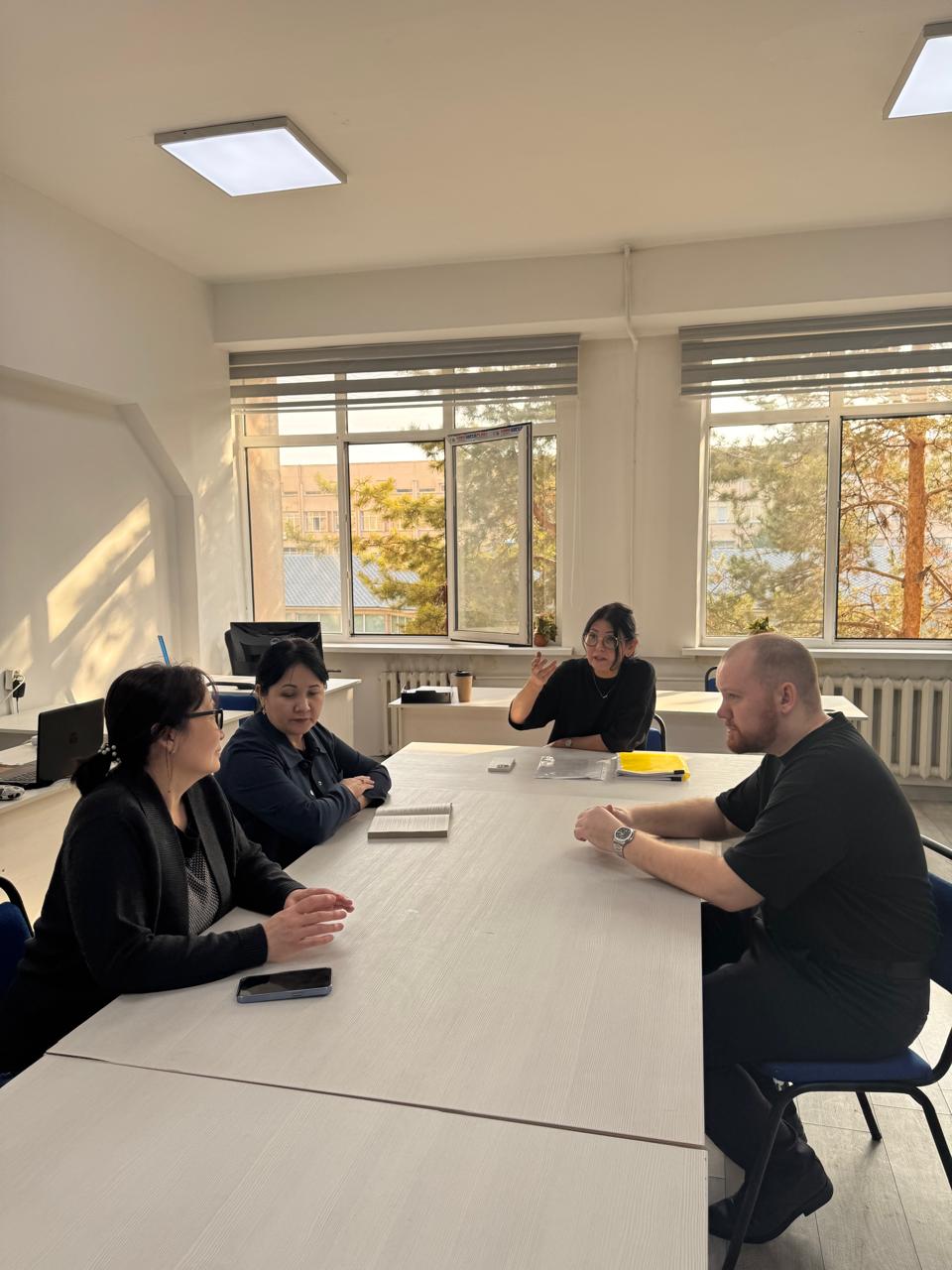
On 17.02.2026, the Department of Civil Law, Civil Procedure and Labor Law hosted a scientific seminar on the topic: "The referendum in the Republic of Kazakhstan as an instrument of democratic participation and its role in achieving the United Nations Sustainable Development Goals."
The speaker was Akku Tursinova, a 1st-year doctoral student at Al-Farabi Kazakh National University. The scientific seminar and discussion were moderated by Professor of the Department of Civil Law, Civil Procedure and Labor Law, Doctor of Law, Professor Suleimenova Saule Zhusupbekovna.
During the scientific seminar, constitutional reforms and modernization of the political system of the Republic of Kazakhstan were highlighted. The institution of a referendum as a form of direct democracy is becoming particularly relevant. The referendum is not only a mechanism for expressing the will of the people, but also an important tool for strengthening the rule of law, transparency of government and public participation.
In the context of the global sustainable development agenda implemented within the framework of the Sustainable Development Goals (SDGs) adopted by the United Nations, the referendum institute can be considered as a mechanism to promote the achievement of SDG 16 — "Peace, justice and effective institutions", as well as other goals related to inclusivity, partnership and sustainable social institutions.
The seminar is aimed at a scientific understanding of the role of the referendum in the development of democratic processes and its relationship with the implementation of Kazakhstan's international commitments in the field of sustainable development.
During the discussion and exchange of views, the participants of the scientific seminar expressed the opinion that a thorough and complete analysis of actual law enforcement practice and the law-making process is necessary in order to formulate proposals aimed at improving the mechanisms of application of existing legal institutions.