- Main
- News
- “Financial Security in the Digital World: Fraud, Online Payments, Data Protection (Phishing, Scams, Bank Cards)”
“Financial Security in the Digital World: Fraud, Online Payments, Data Protection (Phishing, Scams, Bank Cards)”
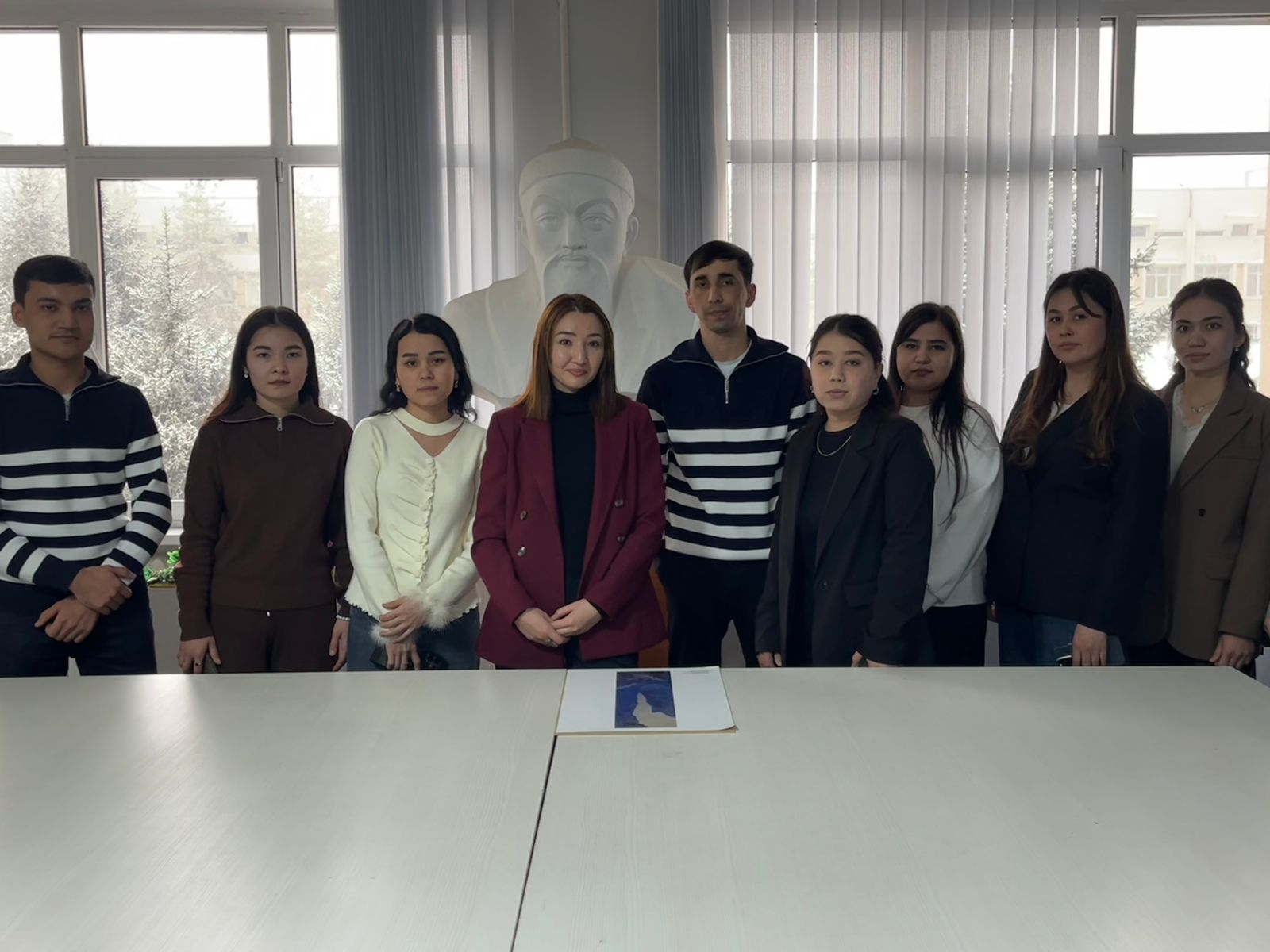
On February 23, 2026, a curatorial hour titled “Financial Security in the Digital World: Fraud, Online Payments, Data Protection (Phishing, Scams, Bank Cards)” was held at Al-Farabi Kazakh National University under the supervision of Senior Lecturer of the Department of Russian Philology and World Literature, Ospan A. O. The event was attended by third-year students of the educational program “6B02312 – Russian as a Foreign Language.”
The purpose of this event was to improve students’ financial and digital literacy, develop safe behavior skills when making online payments, and prevent internet fraud and personal data leakage.
The objectives of the event were:
• To familiarize students with the main types of digital financial fraud;
• To explain the principles of safe use of bank cards and online payments;
• To develop skills in identifying phishing and scam schemes;
• To foster a responsible attitude toward the protection of personal and banking data.
During the curatorial hour, current threats to financial security in the digital environment were discussed. Particular attention was paid to phishing, scams, telephone fraud, and banking fraud.
Students were informed about key methods of protecting bank cards and electronic wallets: never sharing CVV codes and one-time SMS verification codes with third parties; using two-factor authentication; verifying the authenticity of websites before entering payment details; setting transaction limits for online operations; and regularly monitoring banking transactions.
Real-life fraud schemes in messengers and social networks were also reviewed, including fake giveaways, fraudulent investment offers, and messages allegedly sent by a «bank security service».
In the practical part, students were given case studies to identify signs of fraud and to develop an action plan in case of suspected financial deception.
Additionally, the norms of the legislation of the Republic of Kazakhstan providing for liability for fraud and unlawful access to personal data were discussed.
Students showed strong interest in the topic and actively participated in discussions and analysis of practical situations.
As a result of the curatorial hour, students gained knowledge about common digital fraud schemes and mastered basic financial security measures when using online payments and bank cards.
Other news