- Main
- News
- Al-Farabi Kazakh National University & Jeju National University Joint AI Global Leadership Camp Program
Al-Farabi Kazakh National University & Jeju National University Joint AI Global Leadership Camp Program
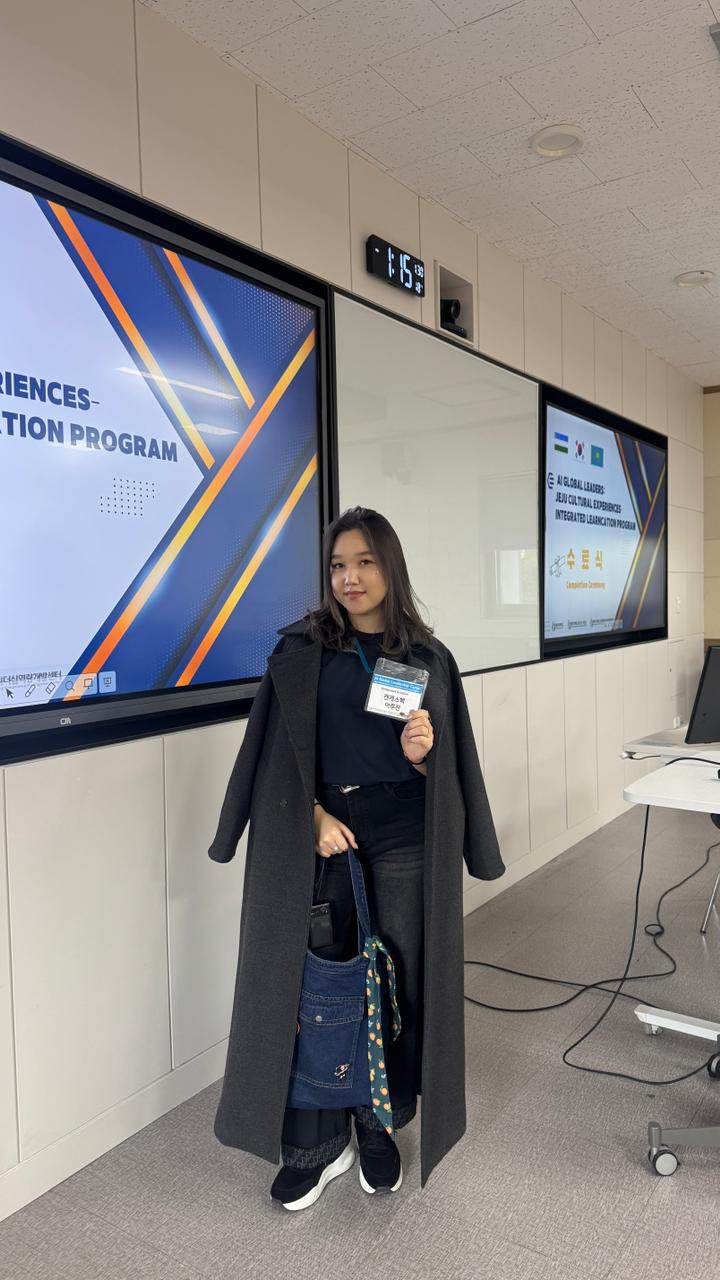
SDG-4 From January 25 to 31, 2026, I participated in the international educational program “AI Global Leadership Camp: Jeju Cultural Experiences – Integrated Learncation Program”. The program took place on Jeju Island and was designed to combine the capabilities of artificial intelligence with cultural experiences.
The academic component of the program comprehensively explored the role of AI in the educational process. Lectures explained the advantages of using AI tools for preparing learning materials, designing assignments, and analyzing information effectively. Theoretical knowledge was reinforced through practical tasks, enabling participants to develop skills in applying modern technologies.
On the first day, we were welcomed by representatives of Jeju University and attended an official introduction. Students were divided into several groups, each assigned a topic related to the symbols of the island. During excursions, participants were tasked with collecting information to prepare a group presentation.
The program included excursions to historical and tourist sites on the island: Jeju Aqua Planet, the location where the popular “All In” project (Va-Bank) was filmed, Hallasan National Park, and beach areas. These trips provided a deeper understanding of the natural, historical, and cultural features of Jeju.
Our group’s topic was “Stones.” Since Jeju was formed as a result of volcanic eruptions, stones hold a special place in the island’s culture. One of the island’s symbols is the dolharoban stones. Although their external appearance is similar to Kazakh bal-bal stones, they differ in historical meaning and cultural function. During the group research, we analyzed and compared these features.
I served as the group analyst: collecting information, analyzing data, developing the presentation structure, and preparing speaker texts. This work required responsibility, organization, and strengthened team collaboration.
The work of Jeju’s traditional haneo women made a strong impression. They dive into the sea without special tools, collect seafood, and earn their living. This practice is an important part of the island’s cultural heritage.
On the final day, all groups presented their projects and were awarded prizes. Participants received certificates, and the program concluded with a farewell dinner.
This international program significantly contributed to deepening my professional knowledge, developing research and analytical skills, and enhancing my intercultural communication experience.
I sincerely thank the leadership of Al-Farabi Kazakh National University and the organizers for providing this opportunity and supporting the acquisition of international educational experience.