- Main
- The center of russian language and culture
- Donation of Educational and Teaching Aids within the Project “Collaborative Environment ‘School–University’”
Donation of Educational and Teaching Aids within the Project “Collaborative Environment ‘School–University’”
.jpeg)
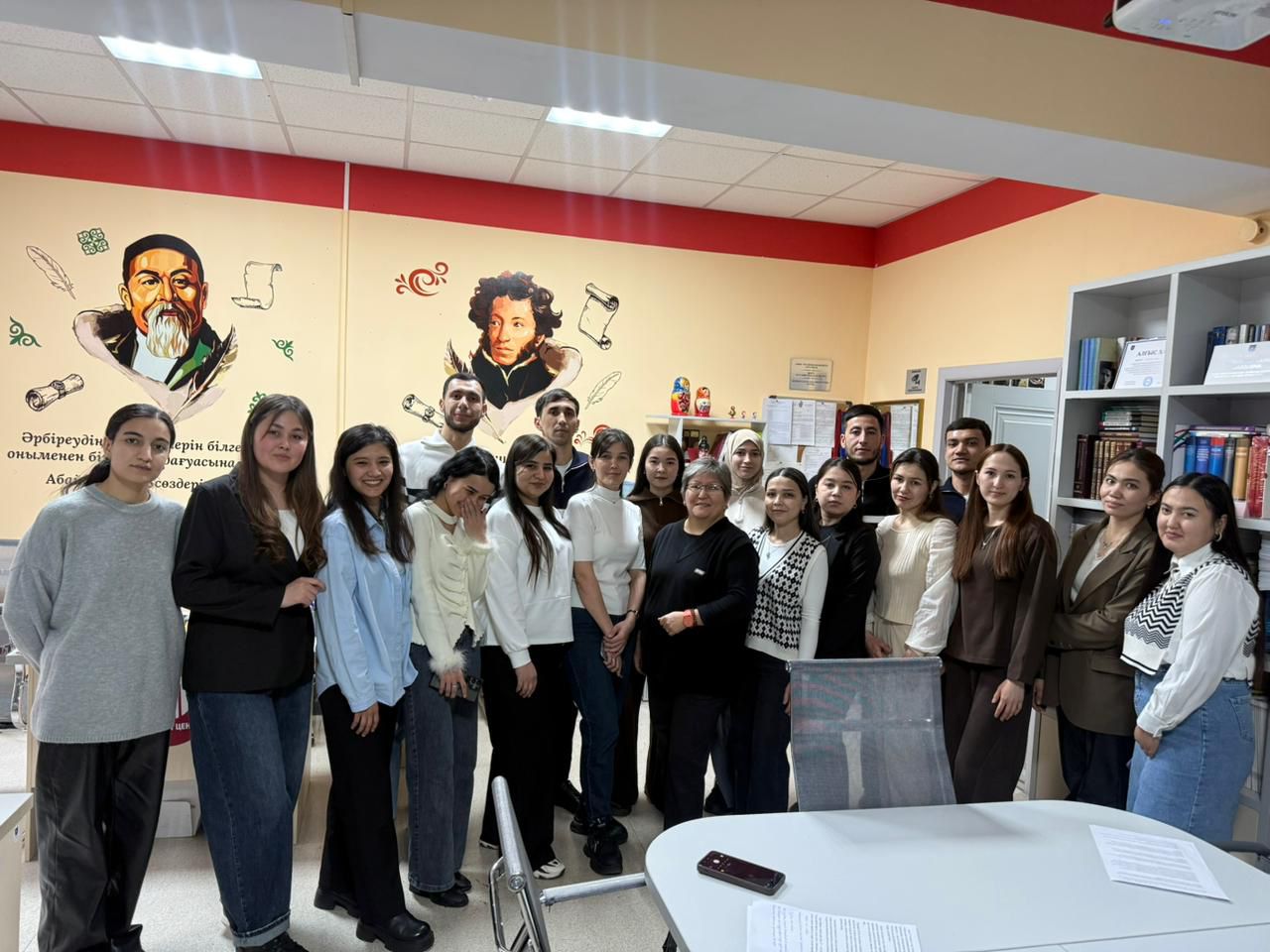
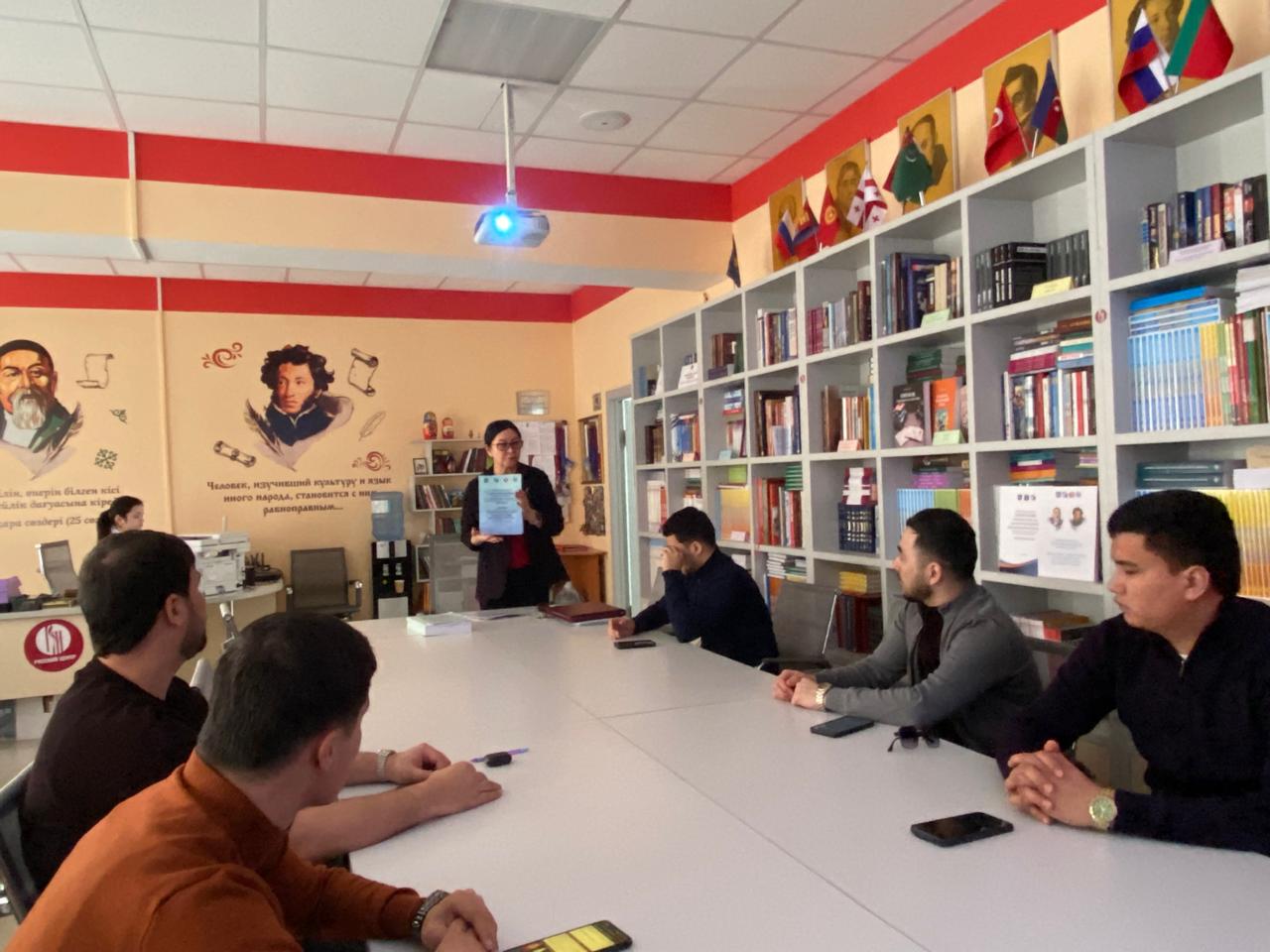
On February 26, 2026, the Faculty of Philology hosted a ceremony to donate educational and teaching aids prepared within the framework of “Collaborative Environment ‘School–University’: Implementation of Research Projects within the Digital Humanities Concept” the IRN AP23489121 research project supported by the Ministry of Science and Higher Education of the Republic of Kazakhstan.
.jpeg)
The following publications were donated to the faculty’s collection and to the Department of Russian Philology and World Literature:
– “Fundamentals of Scientific Project Activity within the Digital Humanities Concept” (S.B. Begalieva, E.S. Shmakova);
– “Where Does Science Begin?” (S.B. Begalieva, A.K. Oralbekova).
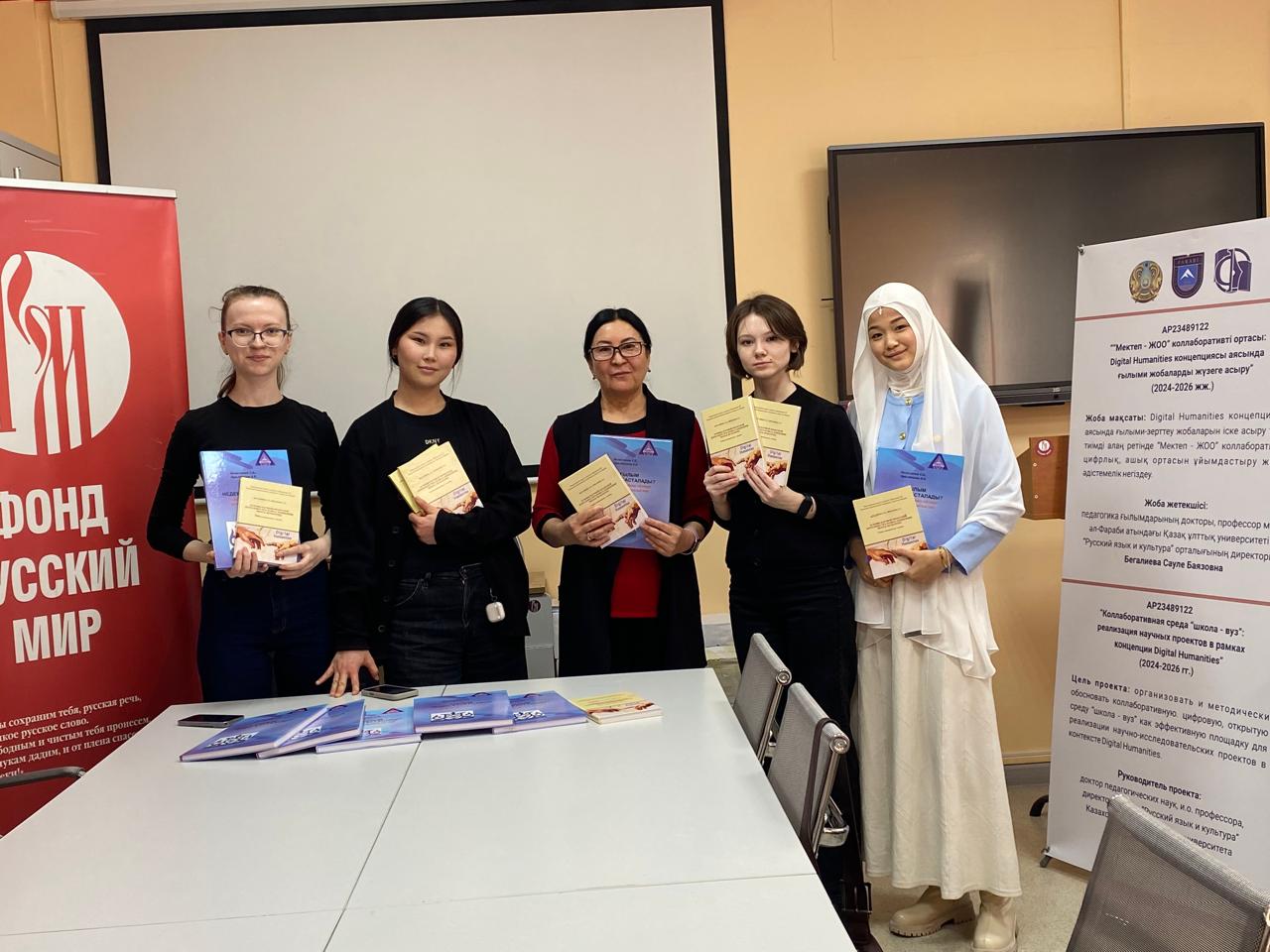
The manuals are aimed at developing students’ research, project, and digital competencies, fostering academic culture, and introducing Digital Humanities tools into the educational process.
The publications were presented:
– to the collection of the Faculty of Philology — to the Dean, B.U. Dzholdasbekova;
– to the Department of Russian Philology and World Literature — to the Head of the Department, A.S. Demchenko.
The donation was carried out by the project leader, S.B. Begalieva.
Participants’ Comments
Dean of the Faculty of Philology B.U. Dzholdasbekova noted that the new manuals will become an important resource for students and faculty members, expand educational opportunities in the field of Russian philology, and contribute to the development of research and project competencies.
Project leader S.B. Begalieva emphasized that the donation of the manuals promotes the integration of school and university, the development of students’ scientific project skills, and the implementation of modern Digital Humanities approaches. In her opinion, the materials will stimulate new research initiatives and project activities among students.
The implementation of the project strengthens cooperation in the “school–university” format, promotes students’ research activity, and facilitates the introduction of modern digital technologies into humanities education.
Project Leader S. Begalieva
Other news