- Main
- News
- Report on Participation in the Academic Mobility Program at MATE University (Budapest, Hungary) (Within the SDGs Framework)
Report on Participation in the Academic Mobility Program at MATE University (Budapest, Hungary) (Within the SDGs Framework)
I, Serikbayeva Diana Maratovna, am a student of the “Biology NIS” group at the Faculty of Biology and Biotechnology, Al-Farabi Kazakh National University. During the first semester of my second year, I took part in an academic mobility program and studied for one semester in Budapest, Hungary, at MATE – Hungarian University of Agriculture and Life Sciences. This experience is closely connected to initiatives within the UN Sustainable Development Goals (SDGs): supporting Quality Education (SDG 4), advancing sustainable agriculture through science and innovation (SDG 2), and following the principles of Responsible Consumption and Production (SDG 12).
My studies at the host university lasted one semester and were organized according to an individual learning track in Agricultural Biotechnology. Within the program, I completed 10 courses covering agricultural biotechnology, microbiology, biochemistry, analytical methods, and applied calculations. In each course, theoretical content was combined with practical tasks, with strong emphasis on modern laboratory standards, accurate data recording, and scientific interpretation of results. Lectures and seminars included real case studies, while laboratory sessions focused on the stages of experimental design, the use of controls and variables, safety requirements, and methods for improving measurement accuracy.
Classes were delivered in an interactive format, including group discussions, short quizzes, mini-projects, and structured reviews of scientific articles. The instructors provided regular feedback and clearly explained requirements for report writing, reference formatting, and academic integrity. Due to the modern laboratory facilities, special attention was paid to measurement precision and compliance with biosafety procedures while conducting experiments.
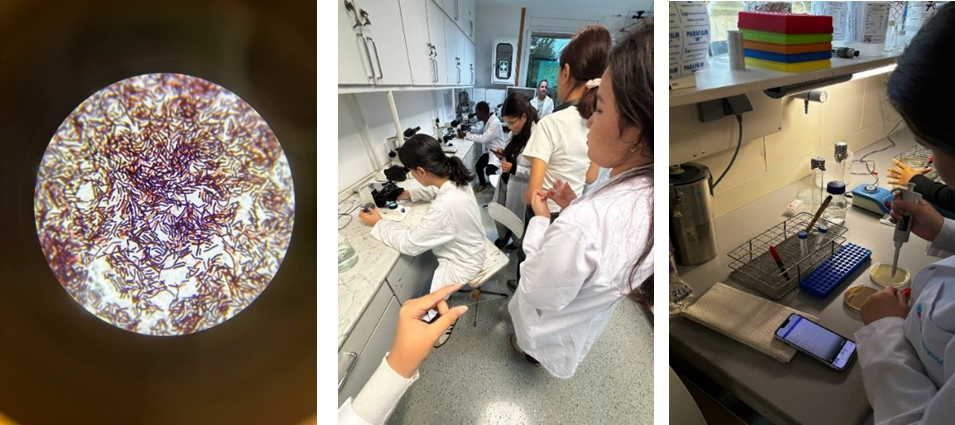
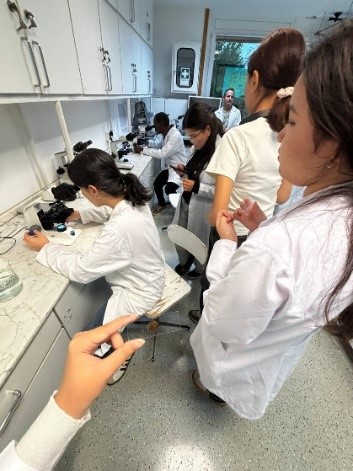
In microbiology- and biotechnology-focused courses, I carried out laboratory work on preparing microbiological slides, fixation, staining, and microscopy. Using light microscopy, including oil-immersion magnification, I assessed the morphology of bacterial cells: shape, size, cell arrangement patterns, preliminary conclusions based on colony-related characteristics, and staining features. These skills strengthened my ability to work under sterile conditions, prepare culture media, label samples correctly, and maintain a complete and well-structured laboratory notebook. In addition, I prepared short presentations based on the results, practiced comparing experimental data, identifying possible sources of error, and presenting conclusions in a clear and evidence-based manner.
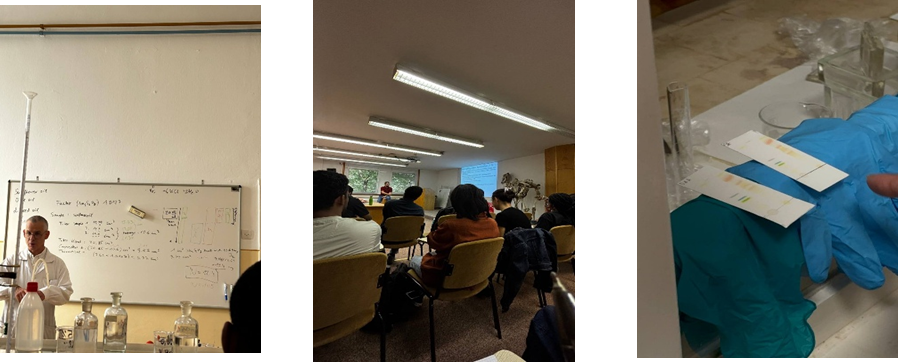
I would also like to highlight the course “Applied Organic and Biochemistry”, which covered applied aspects of organic and biochemistry, analytical approaches, calculations of concentrations and reaction yields, and their role in biochemical and biotechnological research. The lectures were supported by demonstrations of laboratory equipment principles and reinforced through practical exercises.
Studying in an international academic environment together with master’s students and peers from different countries broadened my professional perspective and improved my academic communication skills in English. Overall, participation in the academic mobility program deepened my knowledge in biology and agricultural biotechnology and helped clarify my professional goals. Moreover, access to the university library and digital platforms expanded my use of scientific literature and allowed me to become more familiar with research culture. I also attended academic events on campus and learned more about laboratory research areas, the topics of research groups, and potential opportunities for future collaboration.
In conclusion, I express my sincere gratitude to Al-Farabi Kazakh National University for providing the opportunity to participate in the academic mobility program, and to MATE University for high-quality education, supportive conditions, and comprehensive assistance.
Department of Botany and Agroecology