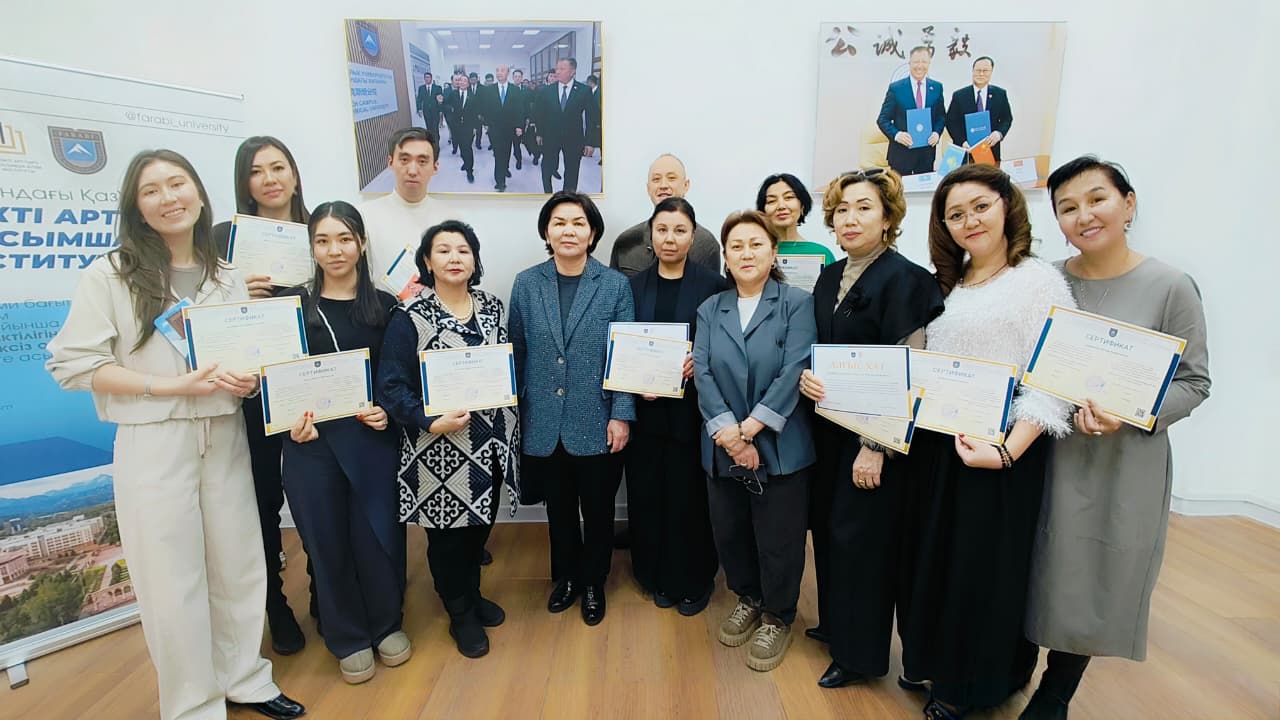

On March 12, 2026, an open educational event — a curatorial session dedicated to the pressing issues of the global energy transition — was held at the Faculty of Physics and Technology of Al-Farabi Kazakh National University. The event brought together students, faculty members, and young researchers interested in discussing modern scientific and technological approaches to addressing contemporary environmental and energy challenges.
The primary objective of the event was to promote a deeper scientific and practical understanding of current environmental challenges and to explore possible pathways for transforming the energy sector in the context of the global transition toward a low-carbon economy. In the theoretical part of the program, participants examined realistic scenarios for the modernization of the energy sector, with particular attention given to the potential implementation of “clean coal” technologies as a means of maintaining a stable energy balance during the transitional period. It was emphasized that such technologies may play an important role in ensuring energy security, particularly in countries where coal-based energy generation remains a significant component of the national energy system.
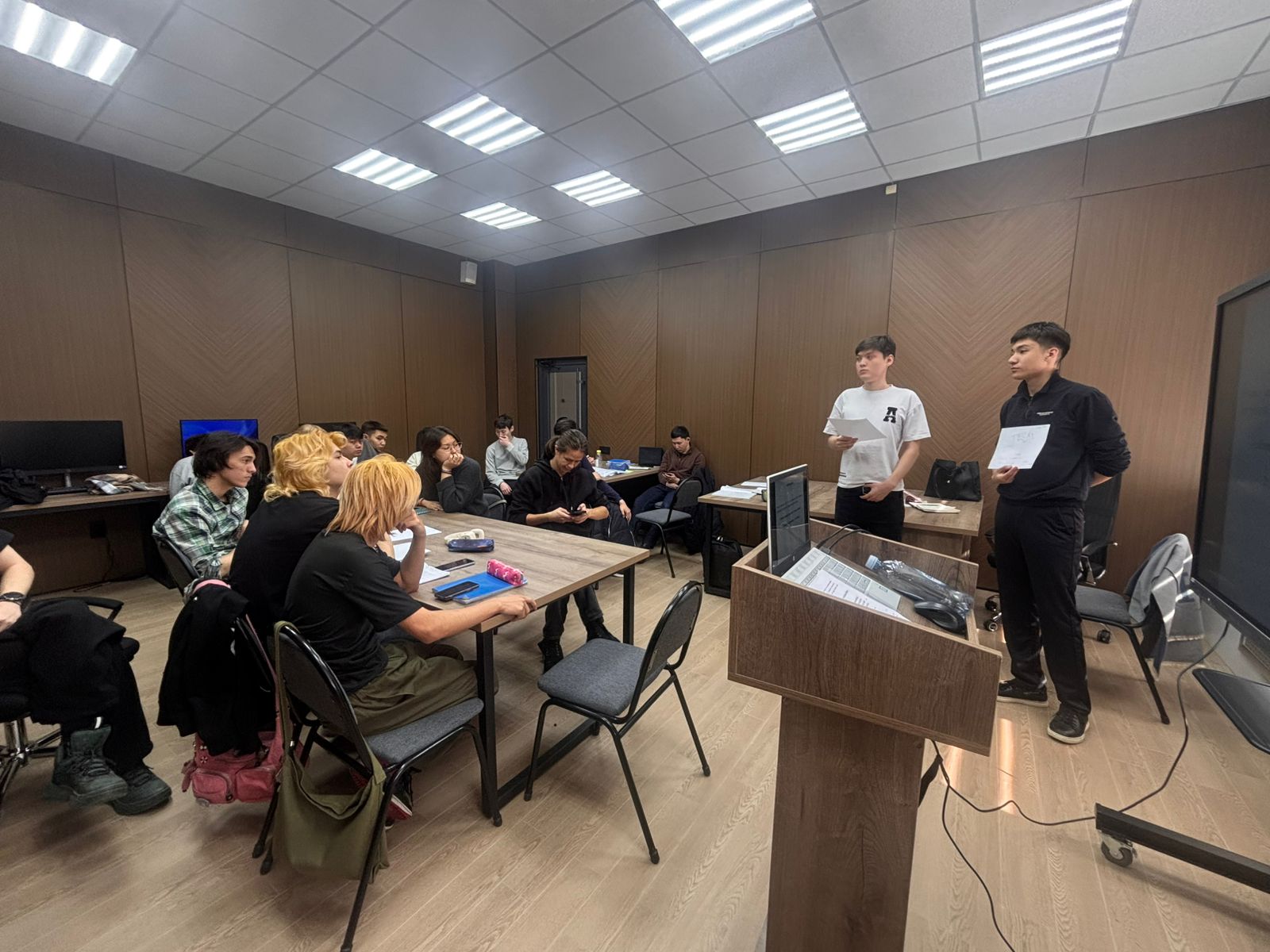
In order to actively engage students in research-oriented discussions, the event continued in an interactive format. The program included a thematic quiz and academic debates, allowing participants to apply theoretical knowledge in practice and critically analyze different aspects of the ongoing global energy transition.
The central focus of the discussion was a comprehensive examination of nuclear power plants (NPPs) as one of the fundamental pillars of environmentally sustainable energy systems. Guided by the fundamental laws of physics, calculations of fuel energy density, and international environmental standards, students conducted a detailed analysis of the role of nuclear energy in shaping the future of sustainable energy systems.
During the discussions, participants examined nuclear power plants as a reliable source of baseload electricity generation with minimal greenhouse gas emissions. Students presented well-reasoned arguments demonstrating that modern nuclear power plants are among the most stable and environmentally responsible sources of electricity. It was highlighted that during their operational phase, nuclear power plants produce virtually no greenhouse gas emissions, making them an important tool in global efforts to mitigate climate change.
Special attention was also given to the analysis of the full carbon footprint of modern energy technologies. As part of the debates, students examined the life cycle of the electric vehicle industry and concluded that achieving the concept of “zero emissions” transportation is only feasible if it is supported by a powerful and stable carbon-free energy base. In this context, nuclear power plants were identified as one of the most effective sources of such energy. Otherwise, the carbon footprint may simply shift to earlier stages of electricity generation from fossil fuels and to the manufacturing processes of battery systems.
At the conclusion of the event, a high level of student engagement and active participation in the scientific discussions was noted. The curatorial session enabled students not only to deepen their knowledge in the fields of nuclear physics, energy systems, and sustainable development, but also to strengthen their skills in analytical reasoning and evidence-based argumentation.
The event was organized by Assistant Professor A.U. Amrenova, senior lecturers of the Department of Plasma Physics, Nanotechnology and Computer Physics Sh.A. Abdieva, M.T. Tolemis, Zh.B. Igibaev, and PhD doctoral student S.B. Dyusembekova (1st year, educational program 8D07112).
The event served as an important educational platform for discussing key issues in modern energy development and contributed to strengthening students’ scientific outlook while fostering interest in research related to sustainable energy and environmental responsibility.