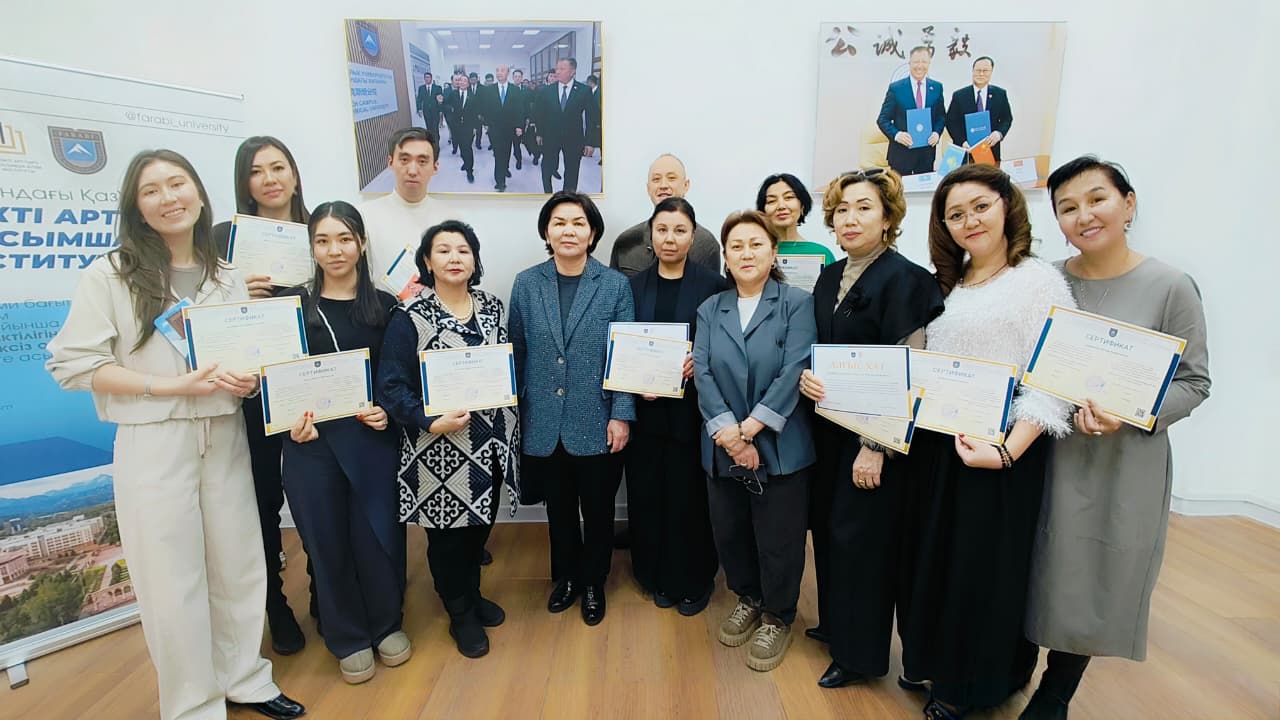
Open Curatorial Lesson on Developing Legal Skills Among Youth. SDG 4
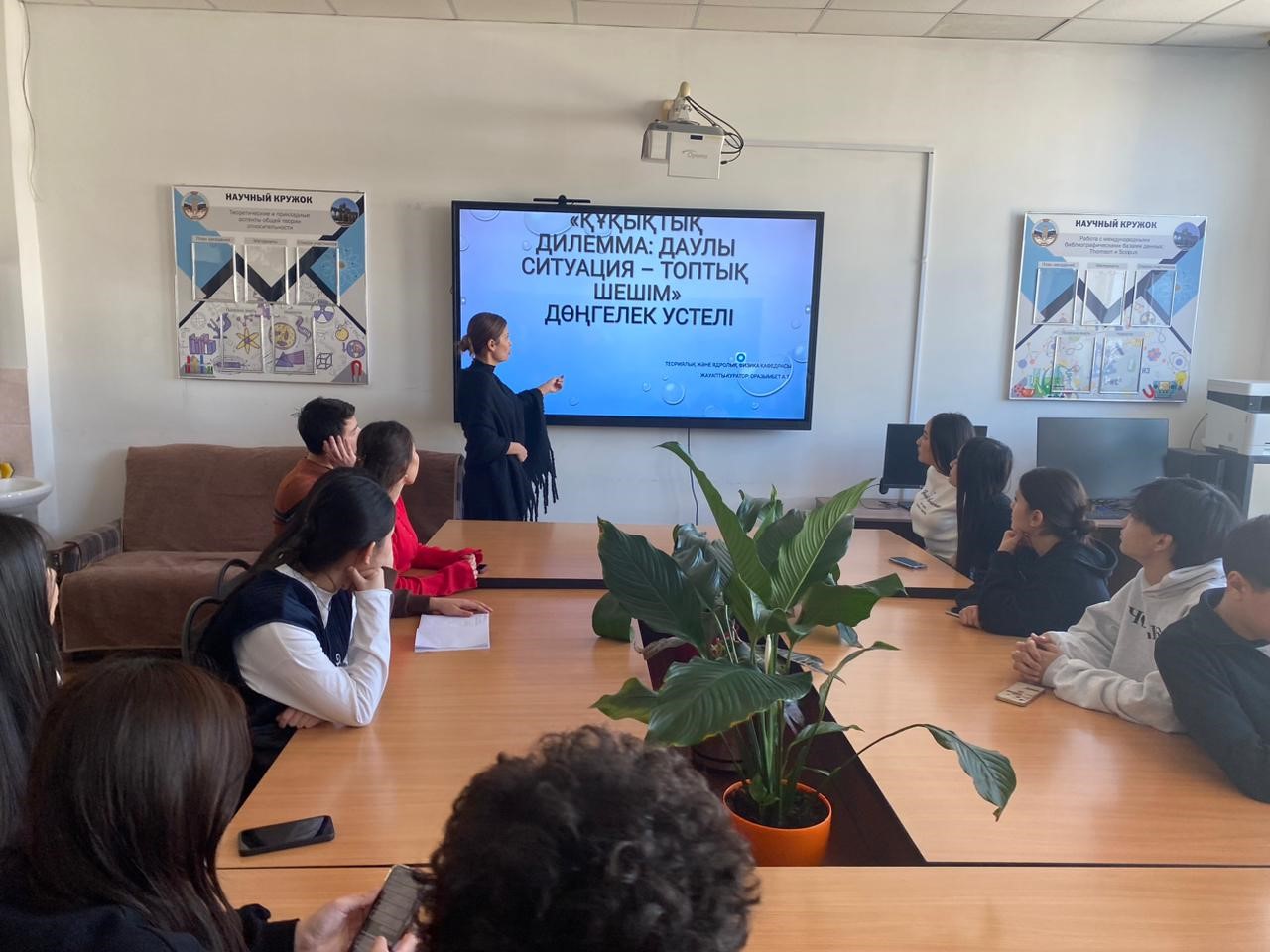
An open curatorial lesson titled “Legal Dilemma: Controversial Situation – Group Decision” was held at the Department of Theoretical and Nuclear Physics of the Faculty of Physics and Technology at Al-Farabi Kazakh National University. The event was attended by students of Group 115 from the Kazakh-language track of the Physics educational program. The curatorial session was conducted by the group advisor, Senior Lecturer A.T. Orazymbet.
Such activities represent an important component of the faculty’s educational and mentoring work aimed at fostering students’ legal awareness, strengthening civic responsibility, and developing critical thinking skills. In contemporary society, a high level of legal literacy is considered an essential competence for every individual. Understanding legal norms, being able to analyze controversial situations, and making well-reasoned decisions contribute to the development of responsible and socially aware citizens. These competencies are particularly important for future professionals who will operate in complex social and professional environments.
The primary objective of the curatorial lesson was to enhance students’ ability to analyze legal situations, develop their skills in making informed decisions, and strengthen their capacity for collaborative discussion and collective problem-solving. Special attention was paid to understanding the interconnection between legal norms, ethical principles, and societal values.
The session was organized in the format of a round-table discussion, which created an open and interactive environment for dialogue. Students were presented with a series of legal dilemmas and controversial scenarios reflecting real-life situations that require thoughtful decision-making within the framework of the law. Participants analyzed the cases, discussed possible courses of action, and expressed their viewpoints while referring to relevant legal principles and legislative frameworks.
During the discussion, students actively exchanged opinions on issues related to legal responsibility, civil rights and obligations, and the role of law in regulating social relations. Particular interest was generated by debates concerning the boundaries of personal responsibility and collective decision-making in complex legal contexts. Participants examined the proposed scenarios from multiple perspectives, comparing legal arguments with ethical considerations and societal expectations.
The collective analysis of the scenarios contributed to the development of students’ critical thinking, argumentation skills, and teamwork abilities. Students practiced listening carefully to alternative viewpoints, evaluating different arguments, and reaching consensus-based decisions grounded in the principles of legality and fairness. This collaborative approach not only increased student engagement but also created a productive learning environment that encouraged active participation and thoughtful reflection.
One of the key outcomes of the event was a deeper understanding among students of the importance of legal culture in both professional and civic life. Participants emphasized that knowledge of legislation and the ability to apply legal principles in practice are essential competencies for specialists in any field, including the natural sciences.
The open curatorial lesson demonstrated a high level of student interest in discussing socially significant and legal issues. Active participation in the discussion made the session dynamic, interactive, and practice-oriented, highlighting the effectiveness of dialogue-based educational formats in higher education.
Such educational initiatives contribute to the development of responsible citizenship, strengthen students’ legal literacy, and promote a culture of constructive dialogue and informed decision-making. Moreover, the event aligns with the United Nations Sustainable Development Goal 4 – “Quality Education”, which aims to ensure inclusive and equitable education while promoting critical thinking, civic awareness, and the development of essential competencies among young people.
Overall, the curatorial lesson served as an important platform for discussing legal issues, developing analytical thinking, and fostering an understanding of the role of law in modern society. It also demonstrated the effectiveness of interactive educational approaches and reaffirmed the university’s commitment to cultivating legal awareness and responsible citizenship among students.