SDG No.4: Clean Energy – Clean Ecology
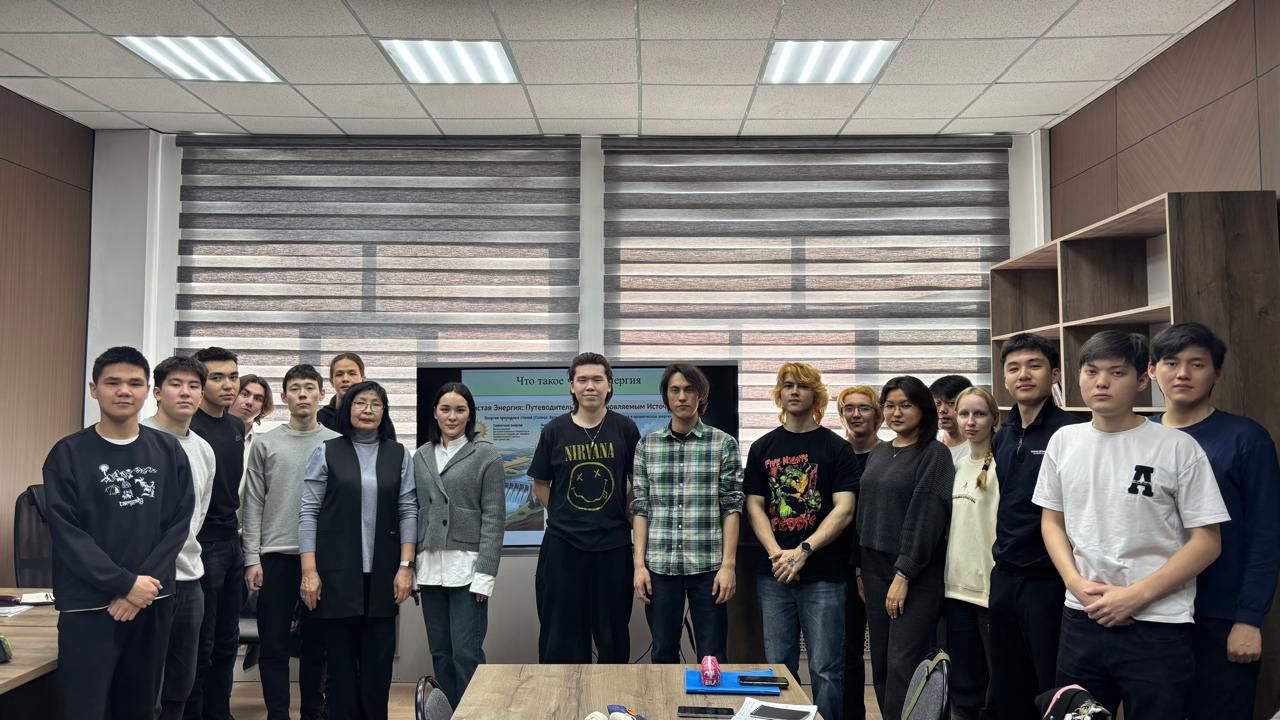
On March 12, 2026, the Faculty of Physics and Technology of Al-Farabi Kazakh National University hosted an open educational event (curatorial hour) with student participation, dedicated to the pressing issues of the global energy transition. Students actively discussed contemporary environmental challenges from both scientific and practical perspectives.
The main goal of the event was to explore innovations in the energy sector, particularly environmentally clean energy sources, and to understand current ecological challenges. The theoretical part examined real scenarios for upgrading the energy sector, including the prospects of implementing «clean coal» technologies to maintain a sustainable energy balance during the transition period.
To engage students in research activities, the event was conducted in an interactive format, including thematic quizzes and academic debates. The main focus of the discussion was a comprehensive analysis of nuclear power plants (NPPs) as a foundation for clean energy. Using the laws of physics, fuel energy density calculations, and international environmental standards, students analyzed several key issues:
NPPs as a clean energy source: Students demonstrated that modern nuclear plants are the most reliable and environmentally clean source of baseload generation. During NPP operation, greenhouse gas emissions are practically negligible, making them a key tool in combating climate change.
Full carbon footprint assessment: For objective comparison, the life cycle of the electric vehicle industry was analyzed. Debate participants emphasized that the «zero-emission» concept for electric cars is only achievable with a powerful and stable carbon-free energy base (optimally provided by NPPs). Otherwise, the carbon footprint shifts to electricity production from fossil fuels and battery manufacturing.
The event concluded with high student engagement. The curatorial hour not only allowed future professionals to deepen their knowledge of nuclear physics and sustainable development but also helped them strengthen their skills in confidently defending their scientific positions.
Other news