- Main
- News
- Advisory Hour Dedicated to the Upcoming Referendum with Materials Science Students. SDG 4 and SDG 16
Advisory Hour Dedicated to the Upcoming Referendum with Materials Science Students. SDG 4 and SDG 16
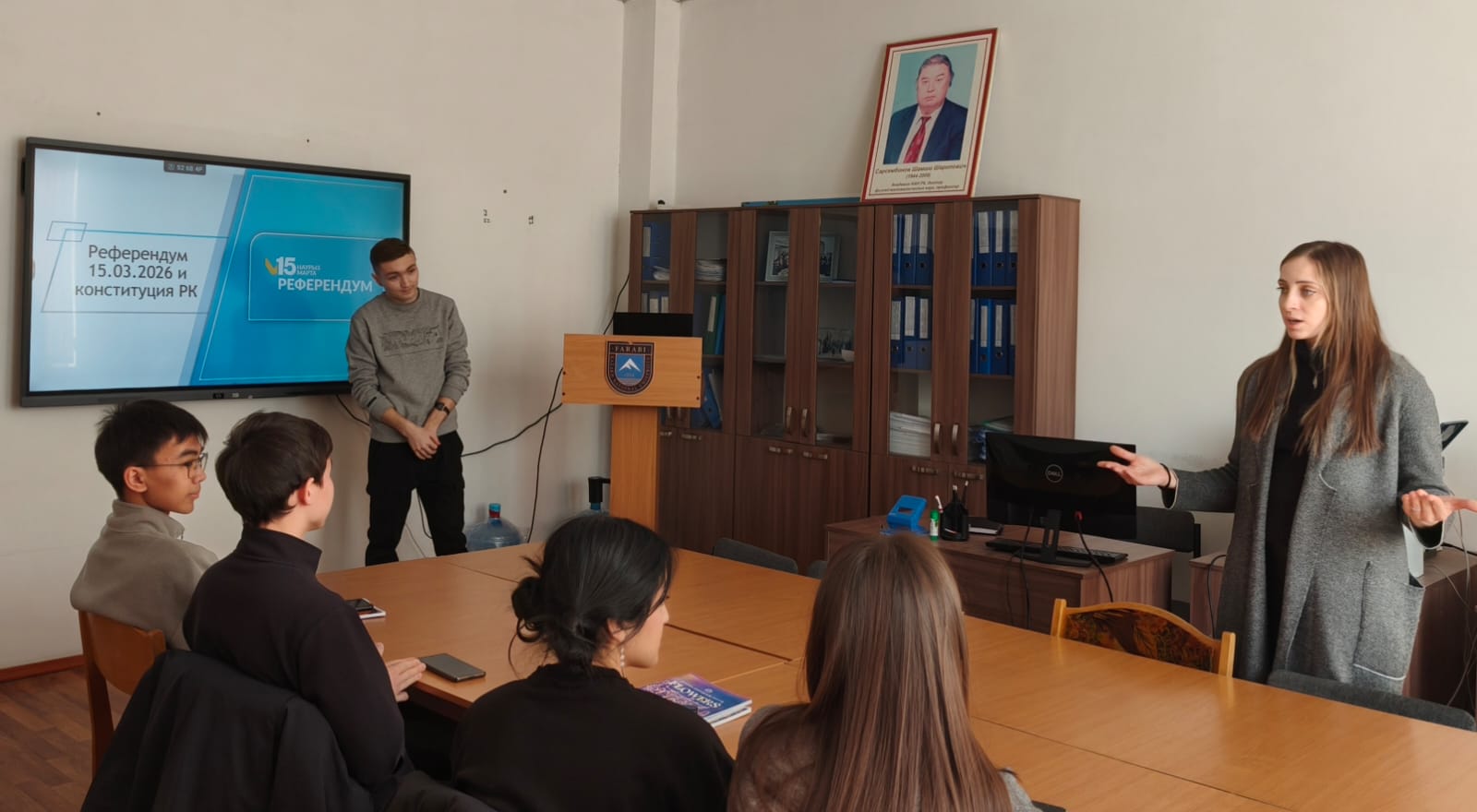
An advisory (curatorial) session dedicated to the upcoming referendum and the proposed amendments to the Constitution of the Republic of Kazakhstan was held at the Faculty of Physics and Technology of Al-Farabi Kazakh National University. The event was organized for first-year students and aimed at enhancing legal awareness among young people, fostering civic responsibility, and explaining the importance of citizens’ participation in socio-political processes.
The advisory session was conducted by the group advisor, PhD and Associate Professor Svetlana Leonidovna Peshaya. Master’s students specializing in materials science from the Department of Solid State Physics and Technology of New Materials also took part in the meeting, actively contributing to the explanation of the key provisions of the proposed constitutional amendments. During the session, the master’s students discussed the significance of the referendum and explained its role as an important mechanism of direct democracy that enables citizens to participate in national decision-making.
The main objective of the event was to provide students with a comprehensive understanding of constitutional reforms, strengthen their legal culture, and stimulate their interest in issues related to state governance and societal development. In modern society, knowledge of the foundations of constitutional law and an understanding of the functioning of state institutions constitute an essential component of civic education.
During the advisory hour, students were introduced to the fundamental principles of the Constitution of the Republic of Kazakhstan, its role in shaping the country’s legal system, and its significance in regulating social relations. Particular attention was given to discussing the proposed amendments and their potential impact on the development of the political system, the strengthening of democratic institutions, and the improvement of public governance mechanisms.
The master’s students in materials science prepared presentation materials explaining the key aspects of the constitutional amendments in an accessible and structured manner. They highlighted the importance of constitutional reforms for the further development of society, the enhancement of transparency within state institutions, and the reinforcement of the rule of law. The meeting was held in the format of an open dialogue, allowing first-year students to ask questions, exchange opinions, and discuss the topics presented.
Special attention was paid to the role of young people in the socio-political life of the country. It was emphasized that citizens’ participation in referendums is an essential element of democratic processes and contributes to the strengthening of civil society. Students were encouraged to recognize the importance of an active civic position and the responsibility of each citizen for the future development of the state.
The advisory session also aligns with the United Nations Sustainable Development Goals (SDGs). In particular, the event contributes to SDG 4 – Quality Education, as it promotes the development of legal literacy, critical thinking, and civic competencies among young people. Furthermore, discussions on democratic participation and the role of citizens in decision-making processes correspond to SDG 16 – Peace, Justice and Strong Institutions, which aims to strengthen legal institutions, promote transparent governance, and support the development of responsible and active civil society.
At the conclusion of the session, participants emphasized the importance of such educational initiatives in fostering students’ civic awareness and legal culture. Events of this kind contribute to strengthening social responsibility among young people and promote stability and civic engagement within society.
Thus, the advisory hour dedicated to the upcoming referendum and constitutional amendments served as an effective platform for open dialogue between students and graduate participants, enabling young people to better understand the significance of constitutional reforms and the role of civic participation in the development of a democratic society.