Shanyrak Day: Strengthening National Values in the Student Community. SDG 11 and SDG 16
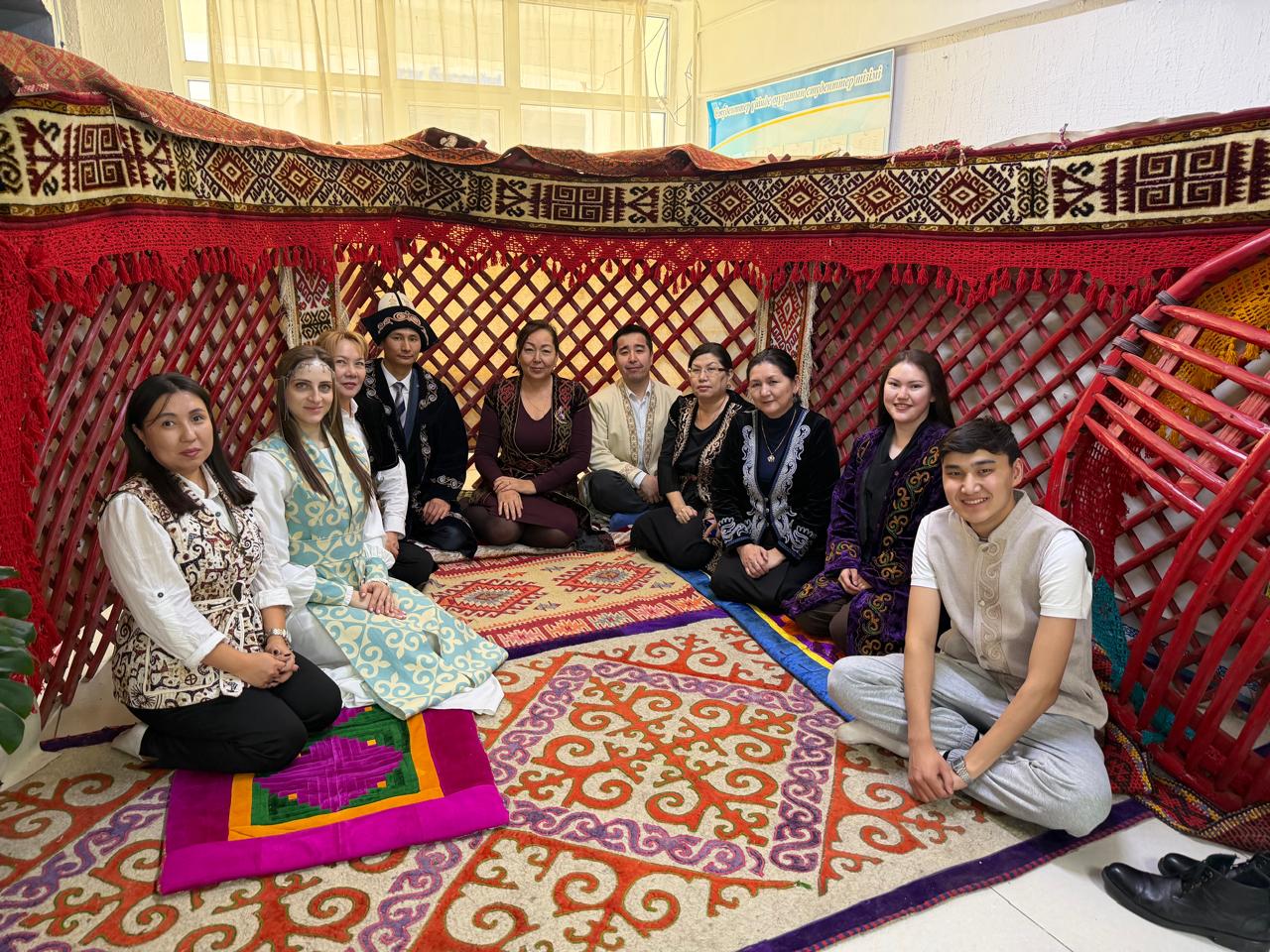
On March 17, as part of the celebration of Shanyrak Day, a meaningful educational event in the format of a thematic meeting was organized at Dormitory No. 1 of the Faculty of Physics and Technology at Al-Farabi Kazakh National University. The primary objective of the event was to promote national values among students, deepen their understanding of the role of the family institution in contemporary society, and explore the multifaceted meaning of the concept of shanyrak as an important cultural and symbolic phenomenon.
During the meeting, particular attention was devoted to the significance of the shanyrak in the traditional culture and worldview of the Kazakh people. It was emphasized that the shanyrak is not merely an architectural element of a dwelling, but also a powerful symbol of family unity, generational continuity, spiritual resilience, and national identity. Participants discussed its historical and cultural importance, as well as its relevance in the context of a rapidly globalizing world. Special emphasis was placed on the preservation and transmission of national values to younger generations and on the importance of harmoniously integrating traditional heritage with modern social and technological realities.
The Dean of the Faculty, Dr. Nurzada Beissen, delivered a welcoming address, highlighting the importance of Shanyrak Day as a significant element of national cultural tradition. In her speech, she underlined that the strength of family values serves as a foundation for the sustainable development of society and the state. She encouraged students to preserve respect for traditions, demonstrate reverence for elders, and develop a responsible attitude toward the family as a key social institution. It was also noted that such events play an important role in fostering civic responsibility and strengthening moral values among young people.
During the meeting, Dr. Sandugash Kodanova, Head of Department, emphasized the importance of educational initiatives aimed at the comprehensive development of students. She noted that student dormitories function not only as residential spaces but also as important environments for socialization, where mutual respect, cooperation, and support are cultivated. Particular attention was given to the need to combine professional education with the development of cultural and moral values, as well as to foster initiative and social engagement among students.
As part of the event, students presented short theatrical performances reflecting elements of national traditions and participated in thematic discussions. The high level of engagement demonstrated by participants contributed to the development of their creative abilities, public speaking skills, and interest in cultural heritage. The interactive format of the meeting facilitated open dialogue and the exchange of ideas, thereby supporting the development of critical thinking and the ability to articulate well-reasoned viewpoints.
The event also aligns with several United Nations Sustainable Development Goals (SDGs). In particular, it contributes to strengthening communities and preserving cultural heritage within the framework of SDG 11 (Sustainable Cities and Communities), and supports the development of inclusive and responsible societies in line with the principles of SDG 16 (Peace, Justice and Strong Institutions).
Overall, the Shanyrak Day event was well-organized and successfully achieved its intended objectives. It contributed to strengthening students’ national identity, fostering respect for family values, and supporting their moral and personal development. Such initiatives represent an important component of the university’s educational mission and are aimed at nurturing well-rounded individuals capable of integrating traditional values with the demands of modern society.