- Main
- News
- Educational Event on Cooperative Business: The Indonesian Experience and Sustainable Development Goals
Educational Event on Cooperative Business: The Indonesian Experience and Sustainable Development Goals
 (1).jpg)
The event focused on key global goals, such as poverty reduction (SDG 1), promoting decent work and economic growth (SDG 8), reducing inequality (SDG 10), and encouraging responsible consumption and production (SDG 12).
Participants discussed how economic institutions at the community level can support people, especially those often excluded from traditional financial systems. The Indonesian experience demonstrated that cooperatives are an effective tool for mutual support: they provide access to finance, create jobs, and strengthen local economies.
The event also addressed global challenges, including persistent poverty, rising economic inequality, limited access to financial services, and difficulties faced by small businesses. It was noted that existing government programs and market mechanisms do not always consider the needs of all population groups, particularly small entrepreneurs. In this context, the cooperative model represents a fairer and more sustainable approach, focused not only on profit but also on supporting people and developing communities.
Students explored the question, “What is a cooperative?” In Indonesia, the cooperative movement has deep roots: Article 33 of the 1945 Constitution enshrines collective economy principles, while the cultural value of gotong royong (mutual assistance) fosters a spirit of cooperation. A key figure in the movement is Mohammad Hatta, the first Vice President of Indonesia and known as the “Father of Indonesian Cooperatives,” who promoted economic democracy and collective welfare.
The state supports cooperatives through legislation, training, financial assistance, programs such as Koperasi Merah Putih, and support for small and medium-sized enterprises (SMEs). Cooperative capital comes from member savings, profits, and external sources, with the main focus on sustainable development and participant well-being.
Contribution of Indonesian Cooperatives to the SDGs:
- SDG 1: access to finance and creation of collective income.
- SDG 8: support for entrepreneurship, training, and job creation.
- SDG 10: inclusive ownership, democratic governance, participation of marginalized groups.
- SDG 12: local production, shared use of resources, sustainable practices.
Example of a student cooperative: campus store or café, printing and digital services, collaborative student initiatives.
Participants discussed: Are there cooperatives in your country? Do people trust them? And most importantly, would you join one?
The Indonesian experience shows how such organizations help reduce poverty, create jobs, lower inequality, and promote sustainable development. Their principles are also applicable at the student community level, fostering skill development, initiative, and collaboration.
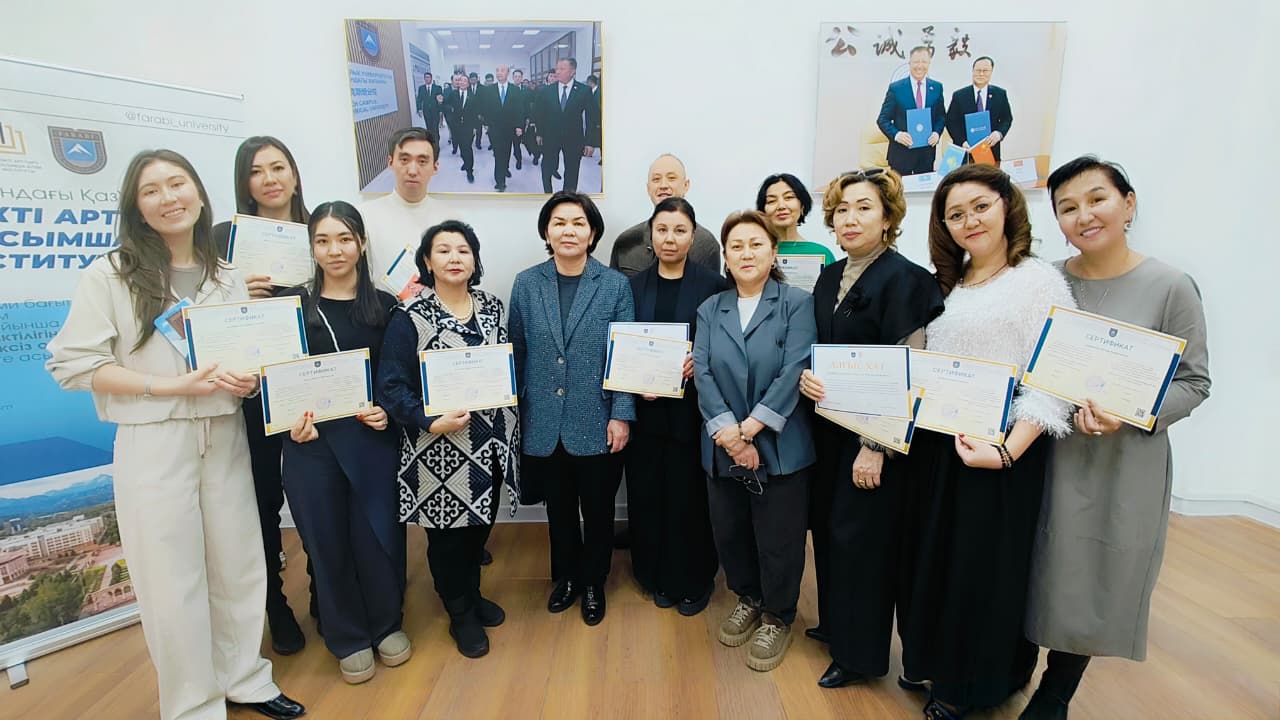
March 25, 2026, room 212, 5:00 PM. Supervisor: PhD, Associate Professor and Researcher O. Yu. Kogut, first-year doctoral student in Accounting and Audit Sugiri Dani (Indonesia), 2nd year students of the Finance specialty (English group) and 1st year students of the Accounting and Auditing specialty (Russian group).