- Main
- News
- 🇬🇧 “Reducing Plastic Use — A Step Towards Ecology (SDGs: Responsible Consumption and Production; Climate Action; Life Below Water; Life on Land)”
🇬🇧 “Reducing Plastic Use — A Step Towards Ecology (SDGs: Responsible Consumption and Production; Climate Action; Life Below Water; Life on Land)”
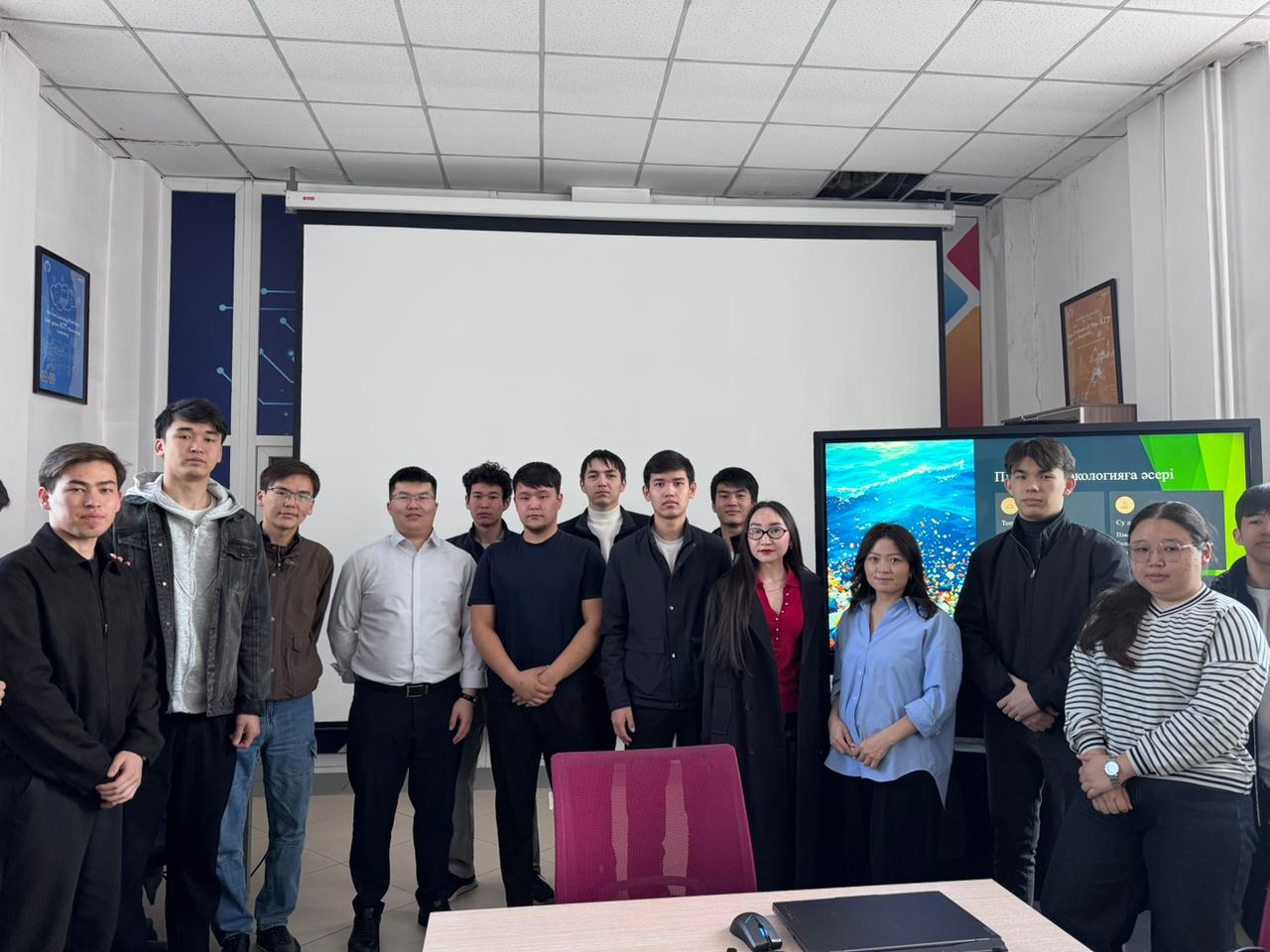
At Al-Farabi Kazakh National University, a curatorial session titled “Reducing Plastic Use – A Step Towards Ecology” was held. The main purpose of the event was to raise students’ environmental awareness, promote a culture of responsible behavior towards the environment, and explain the harmful effects of plastic waste on both humans and nature. The session was conducted by Senior Lecturer of the Department of Electronics and Astrophysics, Zholamanov Batyrbek Nurullauly.
During the session, the negative impact of plastic waste on the environment, human health, and ecosystems was discussed comprehensively. In particular, it was noted that single-use plastic items decompose extremely slowly, polluting soil and water, harming flora and fauna, and posing a direct threat to living organisms. Special attention was also given to the problem of microplastics, which form as plastic breaks down and can enter the food chain, adversely affecting human health.
The session further focused on ways to reduce plastic consumption and promote sustainable habits. Students discussed the use of reusable items, such as cloth bags, bottles, and containers, as well as the importance of developing a culture of waste sorting and mindful consumption. It was emphasized that environmental responsibility begins with everyday habits, and even small actions, such as refusing a plastic bag, can make a significant difference in protecting nature.
The curatorial session was closely linked to the United Nations Sustainable Development Goals, particularly SDG 12 – “Responsible Consumption and Production,” SDG 14 – “Life Below Water,” and SDG 15 – “Life on Land.” Students explored how individual actions could contribute to achieving these goals, ranging from reducing household plastic use to participating in community environmental initiatives.
The session was conducted in an interactive format. Students actively shared their thoughts, proposed practical solutions to minimize plastic usage, and discussed how to implement environmentally friendly habits in everyday life. During the discussions, it was emphasized that protecting the environment starts with individual responsibility. It was also highlighted that engaging youth in ecological campaigns, regularly using reusable items, and practicing mindful consumption are key elements in fostering a sustainable future.
In conclusion, participants stressed that reducing plastic use is an important step towards environmental conservation. Protecting nature, using resources efficiently, and following the principles of an environmentally responsible lifestyle were identified as essential duties toward future generations. Students also emphasized that reducing plastic waste helps protect water resources, preserve terrestrial ecosystems, and decrease the overall volume of household waste.
The curatorial session on “Reducing Plastic Use – A Step Towards Ecology” served as an important educational event aimed at enhancing students’ ecological culture and promoting the values of environmental protection. Participants expressed their readiness to actively engage in environmental initiatives, increase the use of reusable items, and support projects aimed at protecting the natural environment. Such educational events play a significant role in developing youth awareness of environmental issues and a sustainable future, cultivating a sense of responsibility and respect for nature.