
Biopesticides - a key area of the future
During the “Green Revolution,” a widespread practice in commercial agriculture was the intensive use of synthetic pesticides in order to increase productivity and meet the global demand for food. However, this approach negatively affected the environment, ecosystems, and human health. As a result of these adverse consequences, in the 1960s the pursuit of sustainable development, aimed at achieving a balance between economic growth, social acceptability, and environmental protection, became increasingly important.
In response, a comprehensive program was created that includes 17 Sustainable Development Goals (SDGs) and 169 related targets (https://sdgs.un.org/goals). For example, some SDGs are linked to combating hunger, improving human health and well-being, protecting and restoring ecosystems, and addressing climate change. Achieving the sustainable development goals requires monitoring the use of harmful chemicals and the quality of water and soil.
Today, biopesticides are at the center of attention for the agrochemical industry and agricultural producers worldwide due to their environmental safety. They are considered an alternative to chemical pesticides or are used within integrated pest management systems alongside them, ensuring stability for the agricultural sector. Biopesticides account for a small share of the plant protection products market—their global value is around 3 billion USD, which represents only 5% of the total market volume. Over 200 products are available on the U.S. market, while the European Union market has only 60 equivalents. Currently, only 20 biological products are registered on the list of pesticides permitted for use in the Republic of Kazakhstan. The global use of biopesticides increases annually by nearly 10%. According to analysts, biopesticides will occupy half of the pesticide market by approximately 2050.
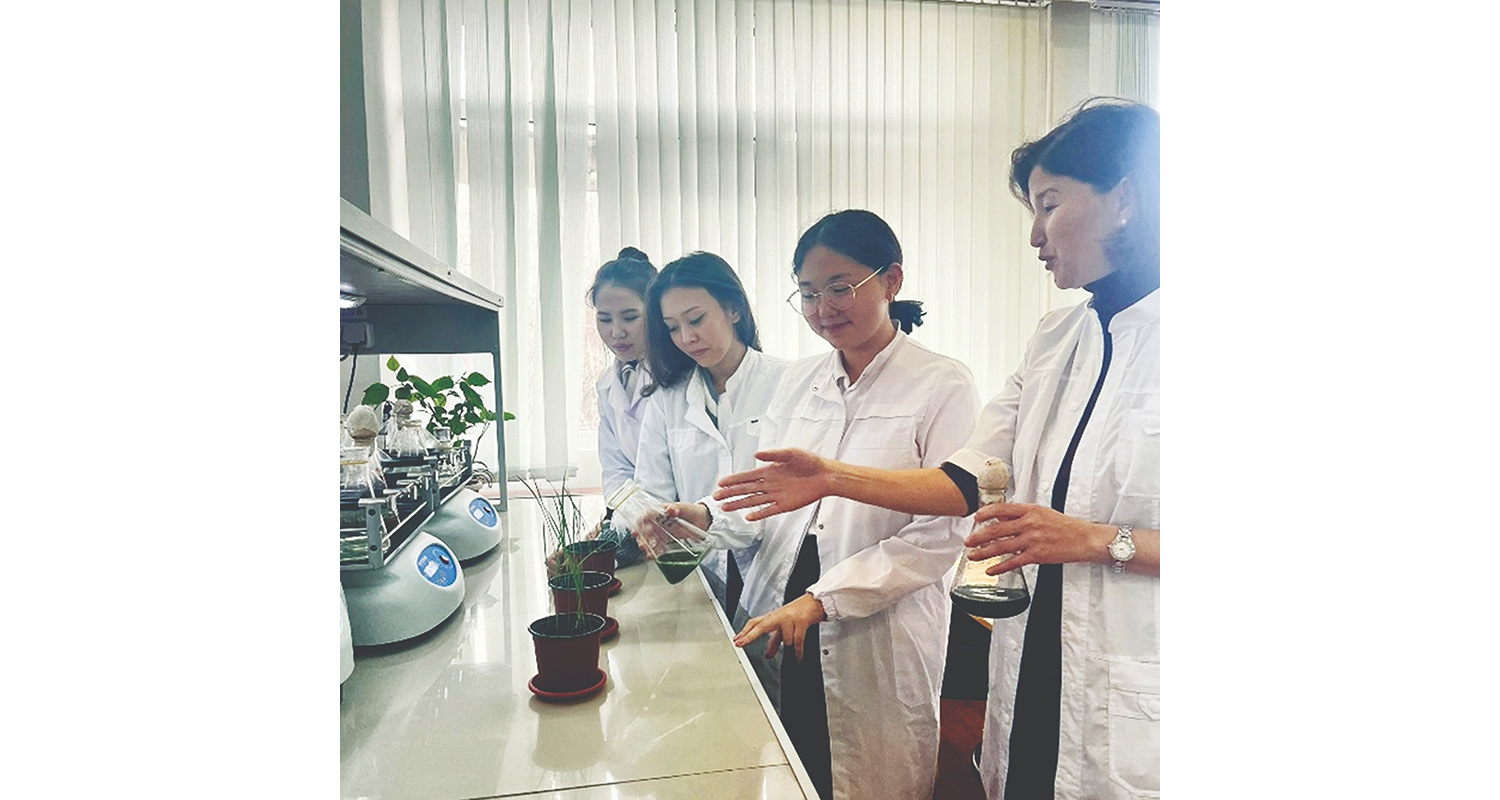
Second-year students at the Department of Biotechnology discussed the possibility of developing biopesticides based on cyanobacteria. This event was organized with the intent to assess the potential of cyanobacteria in agriculture and identify their significant promise as potential sources for the development of biopesticides in the agrochemical field. The potential applications of cyanobacteria in agri-biotechnology are determined by their broad metabolic capabilities and high productivity. Several metabolites of cyanobacteria can be used as allelochemical substances. The use of these compounds as biocides (such as algicides, herbicides, and insecticides) is predicted to be more beneficial from an environmental standpoint compared to synthetic biocides. Due to the numerous problems caused by synthetic pesticides, the development of biogenic pesticides with reduced risk potential is desirable. Thus, cyanobacteria, as promising producers of biologically active compounds, may be of great interest for the development of agrochemical agents in the form of biopesticides.
The Government of Kazakhstan has identified priority areas for the development of biotechnology, one of which is the agricultural sector. One of the key tasks in the active application of agroecological methods in Kazakhstan is the implementation of integrated plant protection. This implies a thorough study of all existing methods for controlling agricultural pests and the subsequent integration of appropriate measures aimed at preventing the development of harmful organism populations. It also includes reducing pesticide use to economically justified levels to minimize risks to human and animal health, as well as to the environment. All these efforts contribute to the achievement of several of the 17 Sustainable Development Goals, such as Goal 6 (Clean Water and Sanitation), Goal 12 (Responsible Consumption and Production), and Goal 15 (Life on Land). During the discussion, students became thoroughly acquainted with the scientific research of the Photobiotechnology Laboratory of the Department of Biotechnology, showing strong interest in various aspects of its activities, particularly in studying cyanobacteria and their potential for developing agrochemical agents as biopesticides. In the course of a lively dialogue, students asked a variety of questions and discussed the opportunities available to them through work in the research laboratory of the Department of Biotechnology.
Nurzhiya AKMUKHANOVA,
PhD in Biological Sciences,
Associate Professor,
Department of Biotechnology