Kazakhstan actively supports "green" initiatives
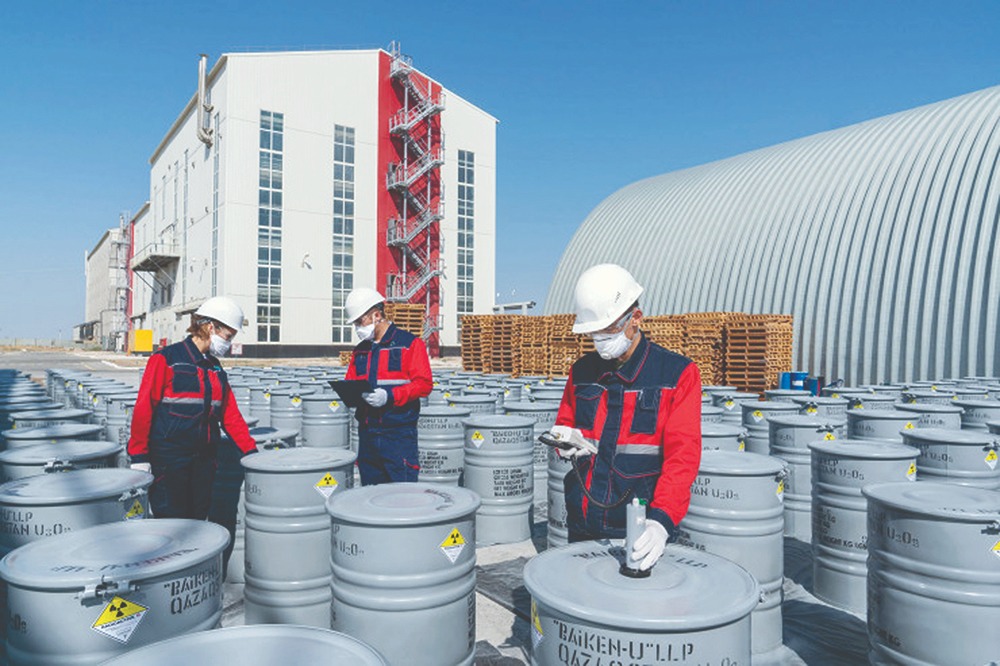
Recently, President of Kazakhstan Kassym-Jomart Tokayev took part in the World Climate Summit under the auspices of the UN Climate Change Conference, where he launched several initiatives. As the Head of State stated, our country, being the leading exporter of uranium, providing 43% of the world's supplies, plays a crucial role in the production of carbon-free electricity on a global scale.
Today, Kazakhstan's contribution to clean nuclear energy is particularly valuable and important, as global carbon dioxide emissions from burning fossil fuels may reach record levels this year, which will worsen the climate change situation.
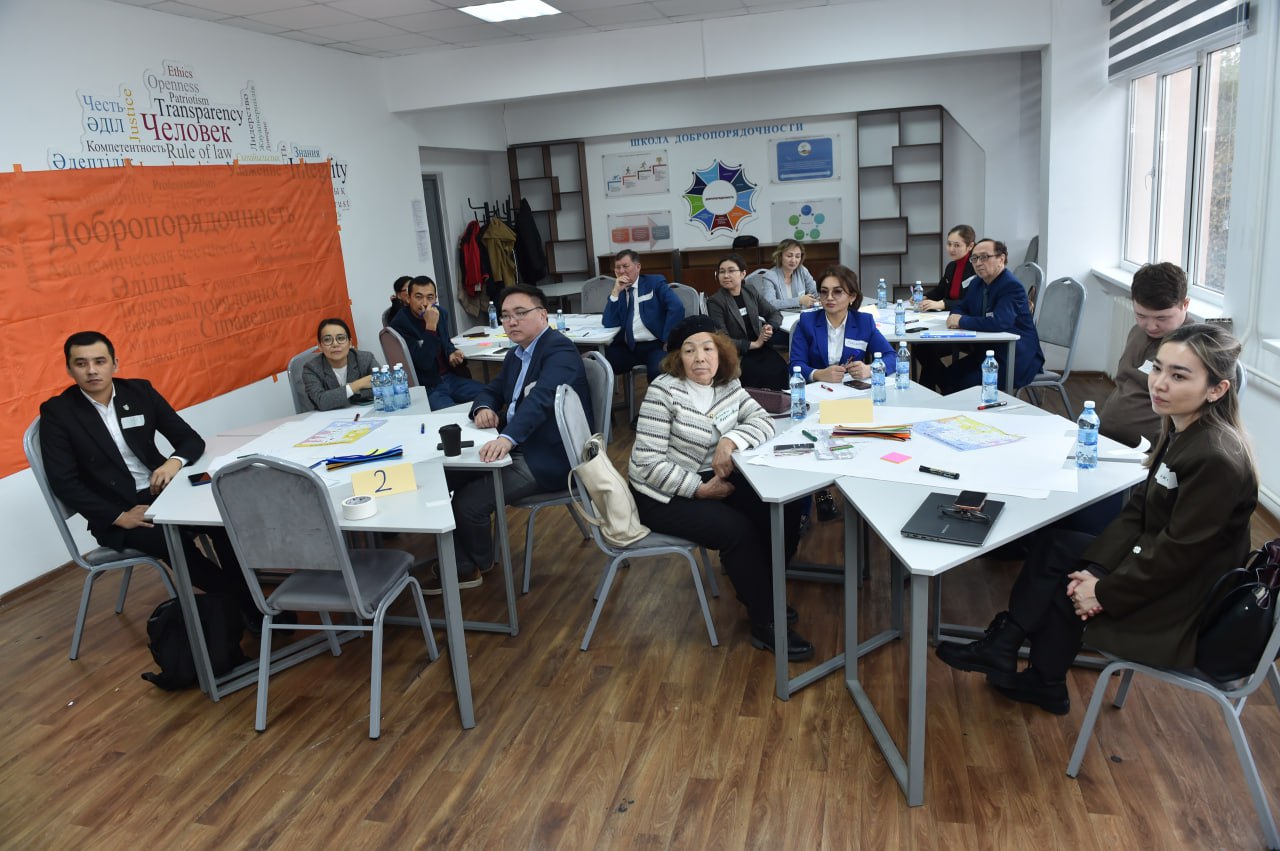
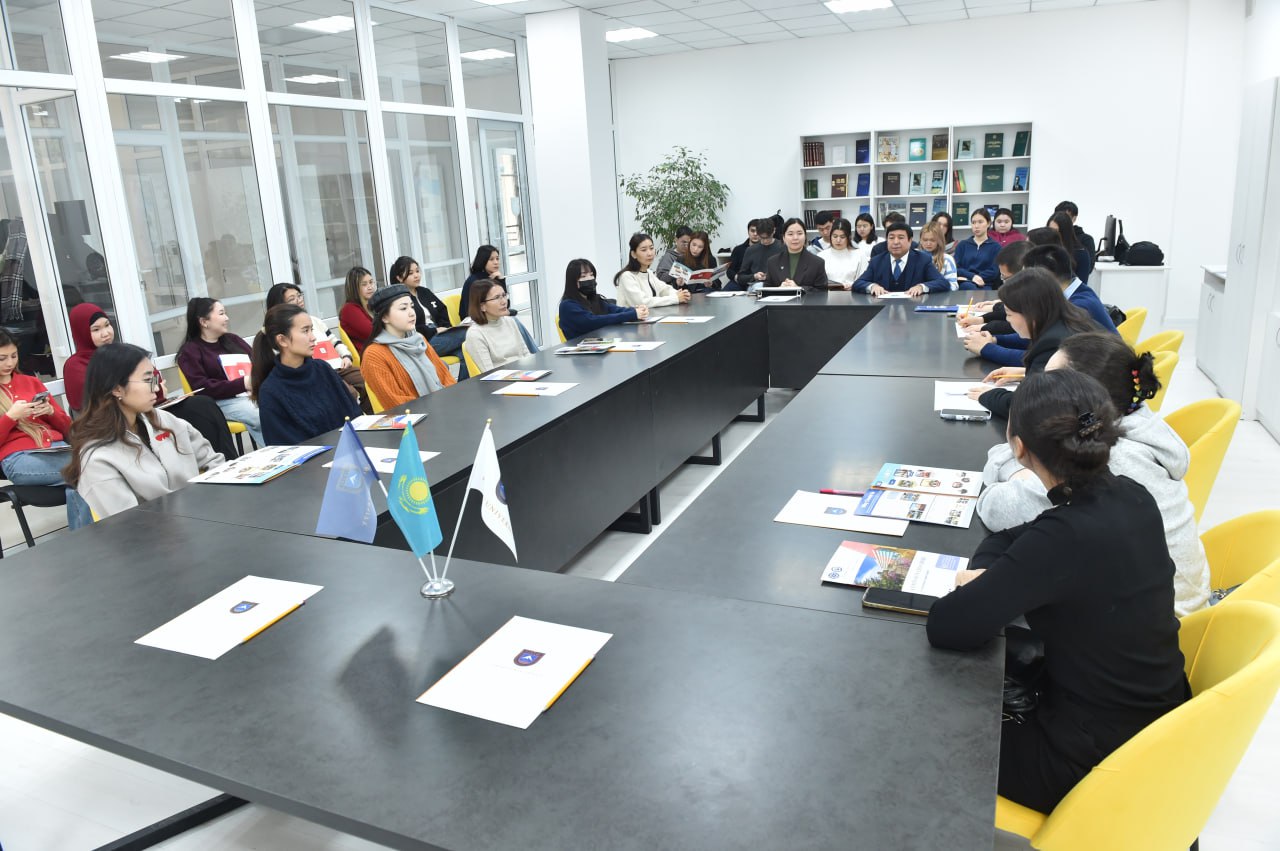
The staff of the Department of Language and General Education Training of Foreigners at Al-Farabi Kazakh National University studied the President's speech with great attention, because it concerns Kazakhstanis more than anyone else. As Kassym-Jomart Tokayev noted, even if we manage to limit the global temperature rise to 1.5 degrees by 2050, the Central Asian countries will still face a temperature rise to 2.5 degrees. This will lead to water scarcity, extreme heat, desertification, and extreme hydrological events. We must not allow the situation to get out of control.
On the one hand, Kazakhstan actively supports "green" initiatives. The Republic fully shares the UN's call for concrete actions to preserve the environment for future generations. By ratifying the Paris Agreement and adopting the Carbon Neutrality Strategy until 2060, Kazakhstan decided to join the Global Commitment to Reduce Methane Emissions. The adoption of the new Environmental Code of Kazakhstan will contribute to the comprehensive adaptation of green technologies in almost every sector of the national economy.
On the other hand, the "green transition" is a long and ambiguous process. The President considers it principled and fair not to require emerging economies to sacrifice national development and modernization in the name of climate protection. On the contrary, these goals should go hand in hand and reinforce each other. Currently, the country's energy sector is mainly built on coal. In terms of coal reserves, Kazakhstan is one of the ten leading countries, the state balance sheet includes reserves from 49 deposits and amounts to 33.6 billion tons. This is our wealth. Should we give it up?
We strive to solve the large-scale coal problem in the countries of our region by implementing the region's first Partnership for a Fair Energy Transition (JETP) in Kazakhstan, the President stressed. There are quite a large number of areas where Kazakhstan could make a significant contribution to global "green" programs. For example, as the world decarbonizes in the coming decades, the most important minerals, including rare earths, will become indispensable. Kazakhstan is ready to become the main supplier of these minerals in the transition period. Rare earth metals are the "vitamins" of industry, without them it is impossible to develop any new technologies. Kazakhstan has them. In Europe, they are practically absent.
Kazakhstan itself puts forward a number of environmental initiatives. We call for allocating more funds to support the International Fund for Saving the Aral Sea. Kazakhstan will assume the chairmanship of the Fund next year and hopes to involve all partners in resolving this issue. The President invited the participating states to the Astana International Forum in June 2024. The Forum can serve as a dialogue platform for continued focused cooperation on sensitive climate-related issues until COP 29. To give momentum to climate protection actions in Central Asia, we have also decided to convene a Regional Climate Summit in Kazakhstan in 2026 under the auspices of the United Nations.
Our country has great potential for the development of wind and solar energy, as well as for the production of "green" hydrogen. We will continue to work closely with our partners to unlock this potential. In order for green initiatives to succeed, we call on our friends and partners to provide concrete support, including – we hope that the international community will expand its commitments to increase funding for climate programs.
The climate emergency is a global crisis that requires a global response, Kassym-Jomart Tokayev stressed. Kazakhstan is firmly convinced that only collective action and cooperation will help us solve this problem.
Taisa KURMANOVA,
Aigul SADENOVA,
teachers of the Department of Language and General Education training of foreigners
Faculty of Pre-University Education
Other news