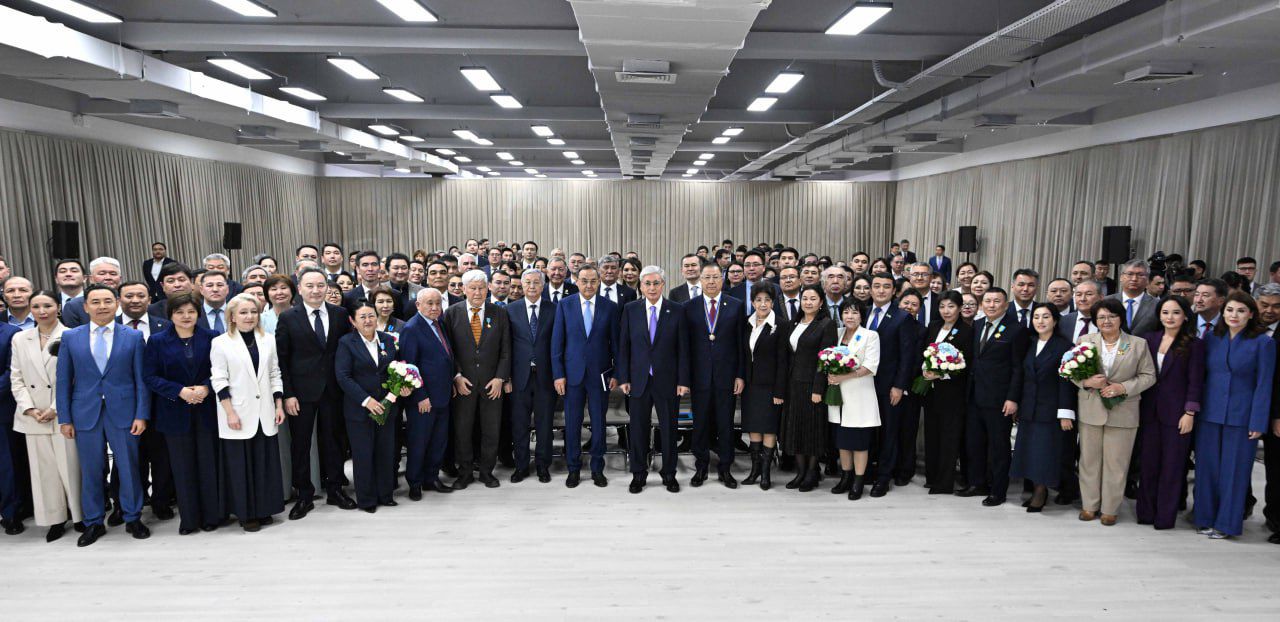
At the Faculty of Geography and Nature Management of Al-Farabi Kazakh National University, the Soil Ecology Laboratory has been opened.
The Soil Ecology Laboratory plays an important role in achieving the 15th Sustainable Development Goal, which focuses on protecting, restoring, and promoting the sustainable use of terrestrial ecosystems. This laboratory provides the necessary scientific foundation for maintaining and restoring the sustainability of terrestrial ecosystems. One of its main objectives is to offer scientific solutions to problems such as soil degradation, desertification, and pollution, to conduct ecological research, develop innovative technologies, and strengthen cooperation between universities and scientific centers in addressing these issues.
In the laboratory, research is conducted on the impact of natural and anthropogenic factors on soil cover, as well as on the current ecological state of soils in Kazakhstan’s regions to ensure sustainable development in agriculture, industry, and other sectors. To carry out these scientific studies, the laboratory is equipped with the latest instruments and technology.
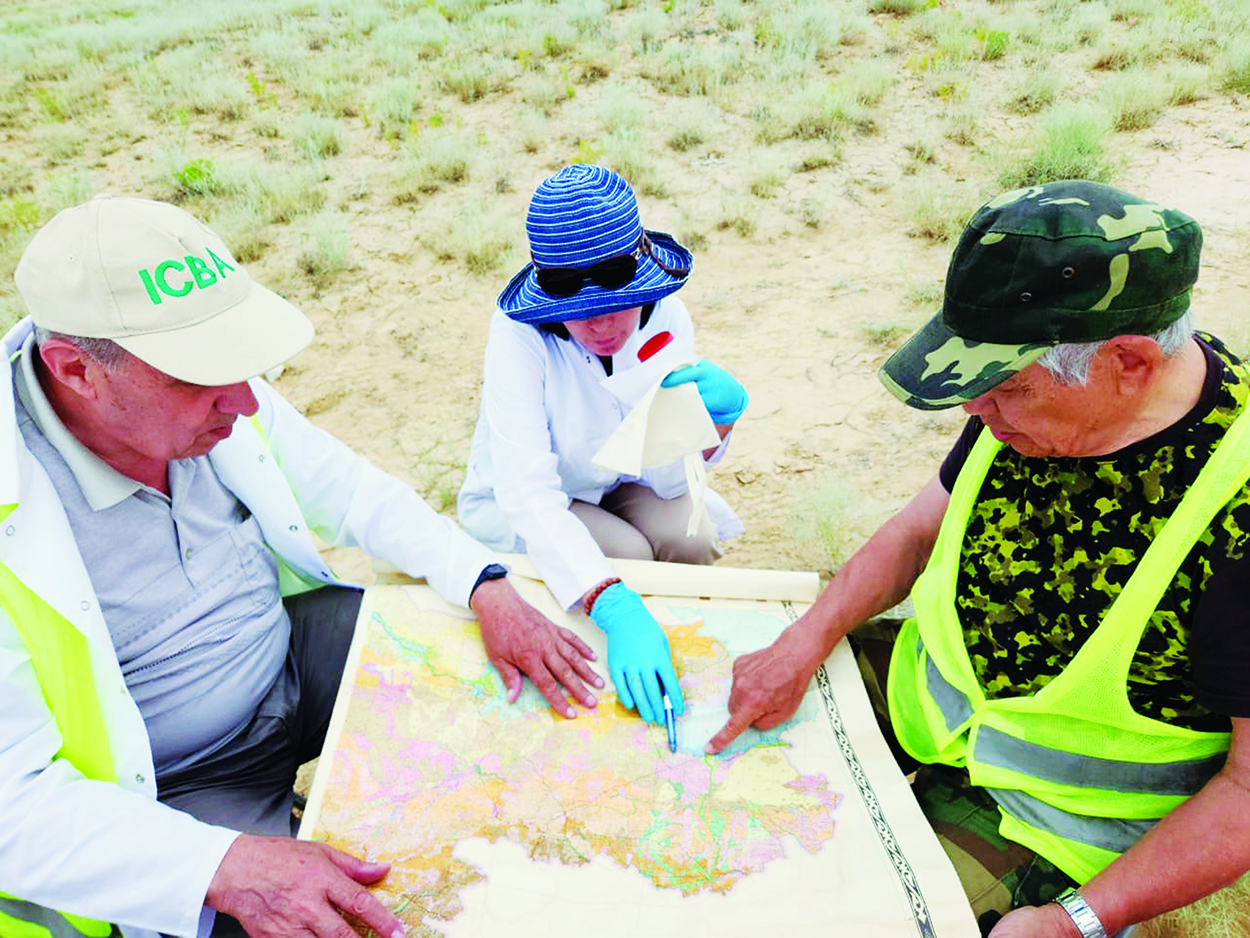
Based on the research conducted at the Soil Ecology Laboratory, the direction and intensity of pollution in the soils of Atyrau, Mangystau, Aktobe, and West Kazakhstan regions were determined. During the study on the topic “Assessment of Industrial Soil Pollution with Toxic Chemical Substances in the West Kazakhstan Region,” an electronic version of a soil map at a scale of 1:3,000,000 and a corresponding soil data repository, as well as a map of heavy metal contamination, were created.
The laboratory’s researchers, including T. Bazarbayeva, B. Shimshikov, Z. Tukenova, G. Mukanova, and doctoral students, conducted studies on the ecological issues of soils in the West Kazakhstan region. They monitored the concentration of heavy metals in the soil, analyzed its physicochemical properties, and examined its mechanical granulometric composition. Additionally, they determined the hazardous category of the studied area based on the cumulative soil pollution index.
According to specific geographical patterns, the soil cover across Kazakhstan is diverse and complex. In the country, soil resources are widely used in agriculture. Intensive use of soil cover in agricultural areas without considering the region’s agroecological potential and scientific basis has led to a decline in soil fertility. As a result of cultivating virgin lands, one-third of the humus, a key indicator of soil fertility, has been lost. Inefficient use of irrigated fields has led to secondary salinization, waterlogging, deterioration of physicochemical properties, and irrigation-related erosion. Consequently, some agricultural lands have been withdrawn from use.
Moreover, the rapid development of business activities related to the exploration, extraction, and transportation of natural resources negatively affects the soil cover and all components of the environment. In regions with intensive industrial development, soil cover is exposed to highly hazardous contamination by heavy metals, radionuclides, and petroleum products.
Across Kazakhstan, the combination of various types of ecologically disturbed soils has created several regions experiencing critical environmental conditions.
In the Caspian region, degradation of pasture and anthropogenic soil cover is widespread. It is characterized by secondary salinization in irrigated areas and contamination of soil with petroleum products, chemical reagents, and radionuclides.
Near the Aral Sea, soils experience intense desertification, salinization, and deflation, creating an ecological disaster situation.
In the major industrial regions of Central and Eastern Kazakhstan, soil disturbances are characterized by anthropogenic degradation and industrial pollution hotspots.
Considering the above issues, it is extremely important to prioritize fundamental scientific research in soil science when studying the current soil-ecological condition in the country.
Assessing negative changes in soil cover—such as aridization, salinization, degradation, waterlogging, and pollution—and evaluating the current state of soil resources comprehensively using modern cartographic methods is particularly effective.
Currently, land resource management issues are of great importance. In addition, for sustainable development, it is crucial to manage territories, monitor the ecological state of soil cover, preserve and restore soil fertility, and predict trends in soil transformation.
Thus, the research activities of the Soil Ecology Laboratory address one of the most pressing issues and their results are being published in international scientific studies. This year, three articles were published in peer-reviewed international journals indexed in Scopus, and three articles were published in domestic peer-reviewed journals recommended by the Committee for Quality Assurance in Science and Higher Education. Additionally, one patent was obtained from the Republic of Kazakhstan Patent Bureau.
Furthermore, doctoral and master’s students conduct scientific research in the laboratory as part of their dissertations. Students perform practical work in soil science and soil reclamation courses in this laboratory. Given the ecological problems affecting soil cover, it is very important to open more laboratories capable of analyzing the ecological state of soils across the country.
Increasing the number of laboratories studying soil conditions in universities and regions will contribute to the protection, sustainable use of soil resources, and sustainable development of the country. Proper use and protection of soils are crucial for maintaining ecosystem stability and mitigating the impacts of climate change.
Thus, the Soil Ecology Laboratory contributes significantly to scientific research aimed at preserving the sustainability of terrestrial ecosystems within the framework of the 15th Sustainable Development Goal, promoting ecological knowledge and methods, and protecting and restoring soils.
Gulzhanat MUKANOVA,
Acting Professor, UNESCO Chair on Sustainable Development