Ecological issues have always been on the global agenda. This is an extremely relevant topic. In recent years, climate change, the rapid development of various industries, and their negative impacts on the environment and ecosystems have become pressing challenges for humanity. As a result, entire ecosystems are being disrupted, which has become a critical issue for human society. Therefore, the global community—including governments, scientists, and the younger generation—is paying close attention to this problem.
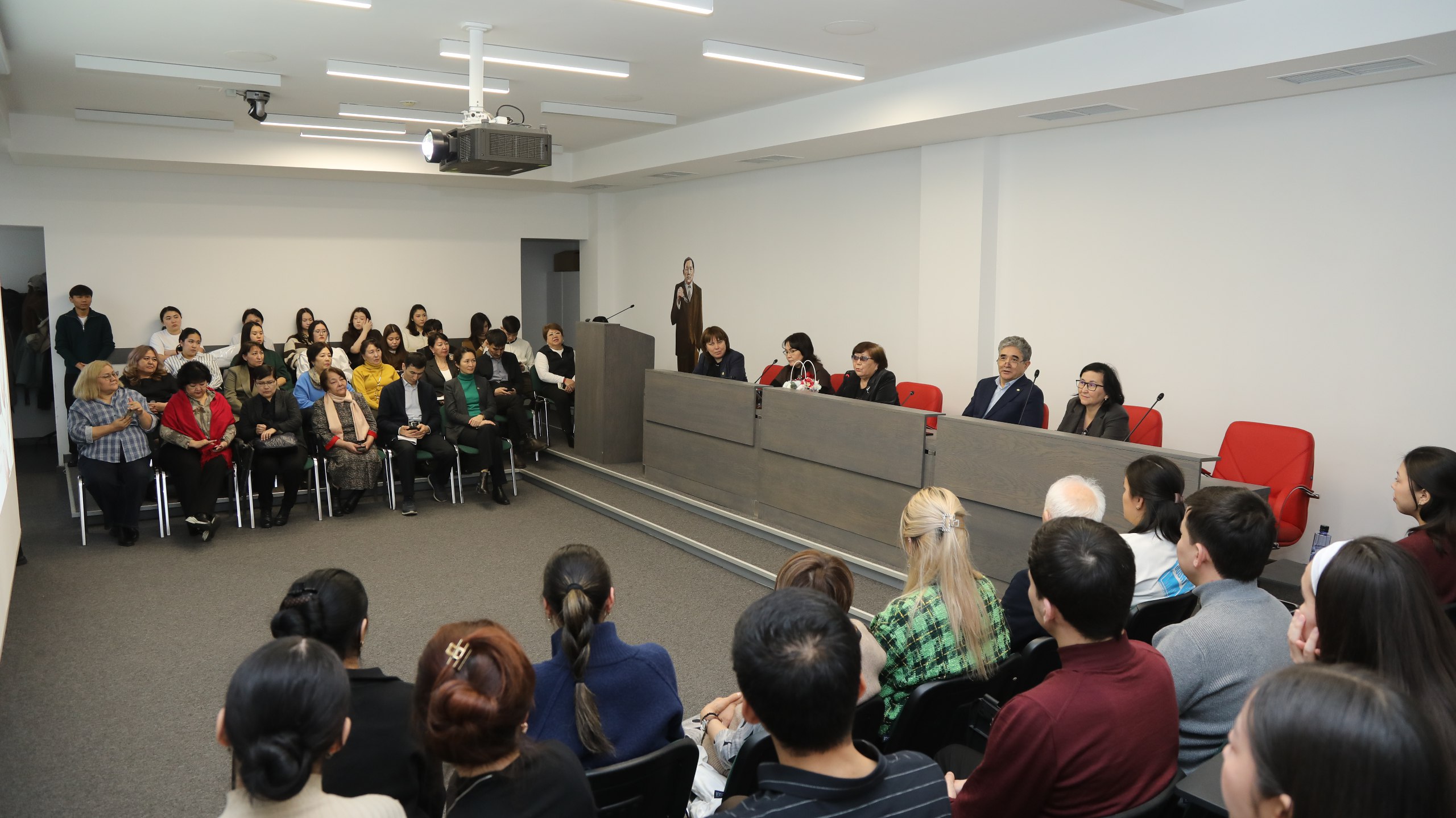
The Sustainable Development Goals (SDGs) aim to establish a responsible approach to environmental and ecological issues. In this context, scientists at Al-Farabi Kazakh National University are actively contributing to ecological security as part of the global ecosystem. A tangible example of this work is the newly established Laboratory for Environmental Safety at the Faculty of Geography and Nature Management. In an interview for the “Qazaq Universiteti” newspaper, Dr. Maulken Askarova, head of the laboratory and professor of Geography, Land Management, and Cadastre, spoke in detail about the laboratory’s activities.
OBJECTIVES AND TASKS OF THE LABORATORY
The Laboratory for Environmental Safety aims to study the ecological status of Kazakhstan’s natural and economic systems comprehensively and to develop scientific and applied approaches to environmental safety management within the framework of sustainable development. To achieve this, the laboratory has set the following objectives:
-
Develop a concept for managing ecological safety in Kazakhstan’s natural and economic systems.
-
Conduct research to identify existing ecological risks and hazards across the country.
-
Classify all types of natural and anthropogenic risks and hazards.
-
Assess ecological safety levels in Kazakhstan’s natural and economic systems.
-
Develop a scientifically grounded, integrated system for implementing measures to manage ecological safety.
RESEARCH RESULTS
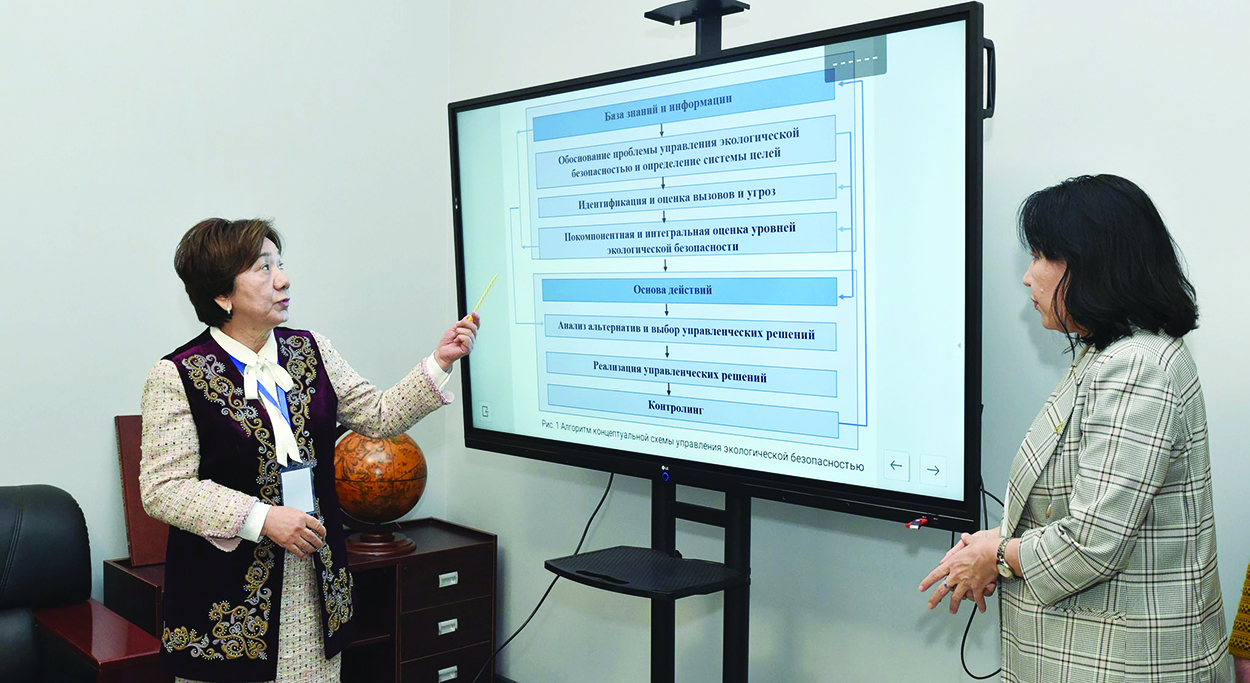
According to Dr. Maulken Askarova, an ecological safety concept consisting of two blocks has been developed. These are the information and data block and the action block. The first block involves creating databases, describing the study areas, and analyzing their natural environments. It also includes identifying, classifying, and systematizing ecological risks and hazards. Regional aspects of global threats are studied, including the impact of climate change on ecological safety, the ecological condition of the transboundary Ural River and its tributaries, and regional biodiversity. Local risks such as hydrocarbon extraction sites and atmospheric pollution are also examined.
The first block also evaluates components of the natural environment: air pollution in the atmosphere, water contamination in rivers and reservoirs, and lithospheric degradation such as soil erosion and desertification in West Kazakhstan. The impact of pollution on the health of local populations is also studied. Based on this assessment, an ecological risk map for residents can be created, and an integrated evaluation of ecological safety can be conducted for four provinces and the entire West Kazakhstan region.
It is noteworthy that author-developed methods and special calculation formulas are used to evaluate environmental safety. Data required for these calculations are provided by partner laboratories as part of a megagrant project, based on field and experimental research in West Kazakhstan. The laboratory follows a modular principle, allowing each partner to contribute data relevant to specific research tasks.
The second block focuses on applied aspects. The conceptual framework developed by the scientists includes actions for different ecological scenarios in natural or anthropogenic conditions. This involves analyzing alternatives, selecting management solutions, implementing them, and monitoring outcomes. The proposed management measures can be applied in four ecological conditions: natural baseline conditions, baseline hazardous conditions, emergency ecological conditions, and extreme ecological conditions.
The next stage is monitoring, which ensures the coordination and effectiveness of management systems. This includes planning, organizing, monitoring activities, and overseeing implementation.
Dr. Askarova emphasizes that this work has significant economic, ecological, and social impacts. Sustainable development represents a balanced combination of these effects.
-
Economic impact: Ensuring sustainable economic activity and mitigating potential internal and external risks through efficient use of available resources.
-
Ecological impact: Identifying, classifying, and evaluating natural and anthropogenic ecological risks, and proposing measures for environmental safety management under various conditions.
-
Social impact: Managing ecological safety during extreme situations to ensure the safety of human life, minimize material damage, and prevent environmental degradation.
According to the scientist, by creating favorable and clean living conditions, we can achieve sustainable development. Protecting natural resources and biodiversity, and preventing anthropogenic disasters and other emergencies, is essential to achieving the Sustainable Development Goals.
Gulzat NURMOLDAKYZY