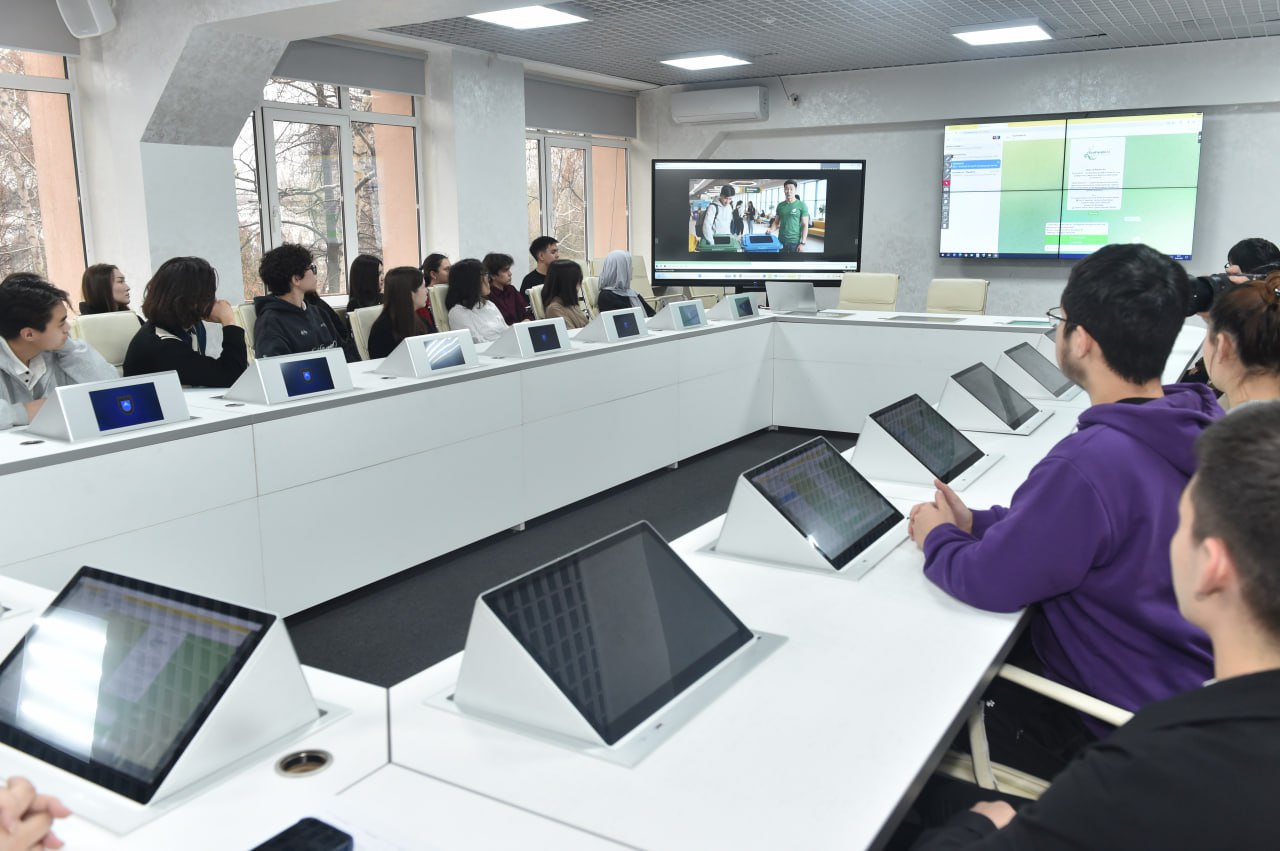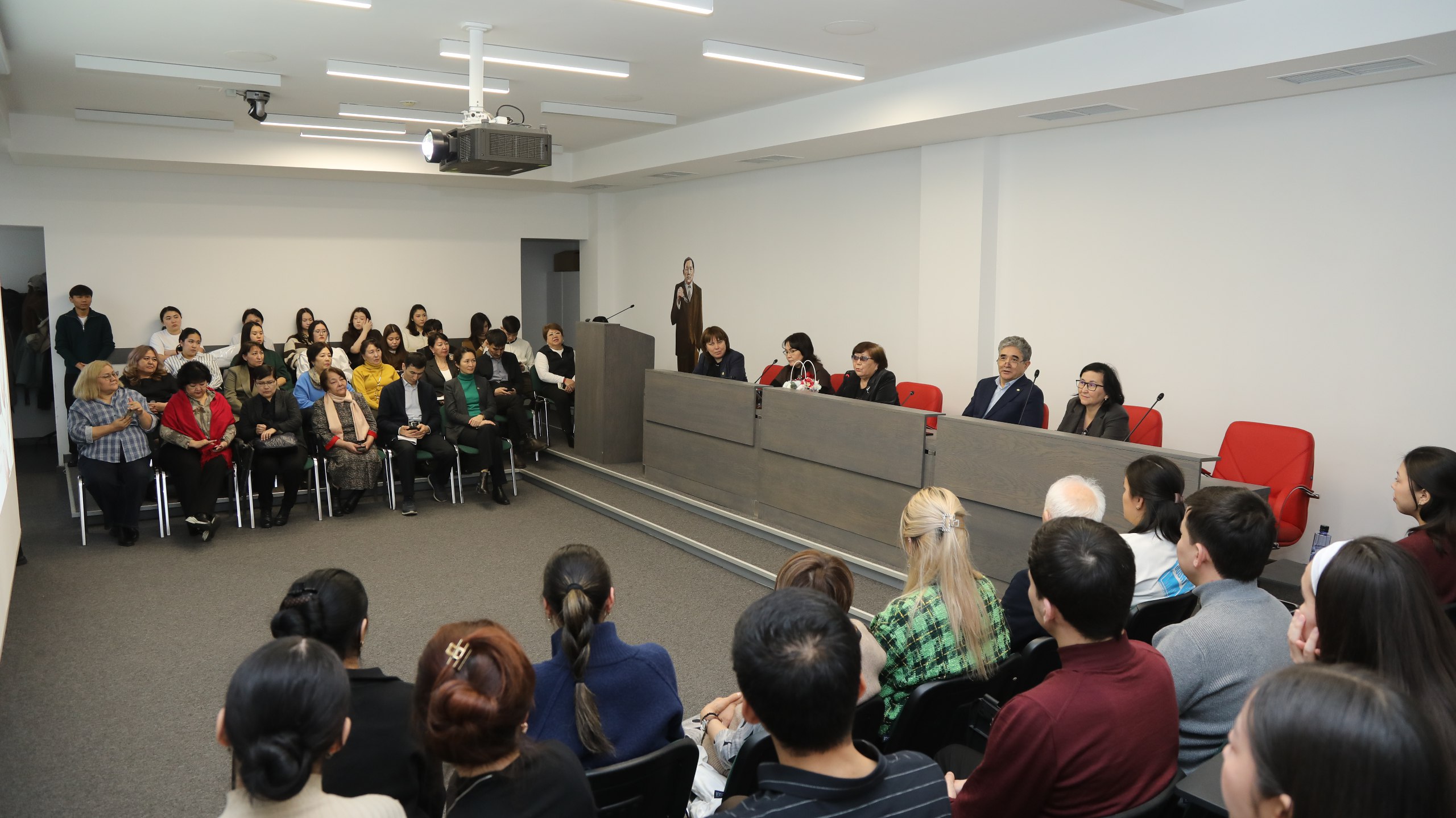

Within the framework of the “Unified Education” program, faculty members from the Department of Civil Law, Civil Procedure, and Labor Law held an “Open Dialogue” session with senior students of School №10 in Almaty. The event focused on “Civil-Legal Protection of Minors”.
The protection of the rights and legal interests of minors is regulated by various branches of law, including civil law, which has its own specific characteristics. During the meeting, students were introduced to the main principles of civil law and its obligations.
Certain age-related restrictions apply to minors. Individuals under 14 do not have full legal capacity, only partial. For example, they can enter into transactions, but only with the consent of their legal representatives. They also have the right to independently manage their own earnings, other income, and intellectual property rights they create, as well as conduct minor everyday transactions. Children under 14 cannot always fully understand the significance of their actions due to their developmental stage. Therefore, legal representatives act on their behalf. If a transaction concerns a minor's interests, such as property ownership, the consent of guardianship authorities is required. Minors’ property rights are also defined in the “Marriage and Family Code”.
A person under 16 may, in some cases, be considered fully competent if they work under an employment contract or engage in entrepreneurial activity with the consent of their legal representative. Emancipated minors possess all rights and responsibilities except those limited by law.
Currently, bullying is widespread in schools and has been linked to children running away from home or school and negative statistics on suicides. One of the main causes is the lack of positive peer relationships. According to UNESCO, one in three students worldwide experiences physical violence at least once a year. Every third student is subjected to bullying monthly. This phenomenon negatively affects both academic performance and the psychological health of students.
During the session, it was emphasized that cases of bullying should be reported to school administration. If mutual understanding is not reached, the police or courts should be involved. Minors who commit offenses can face not only criminal liability but also civil liability for resulting damages.
A minor offender may be held civilly liable by court decision. This means that if the minor and their legal representatives refuse to voluntarily compensate the victim for damages, a lawsuit can be filed. Civil proceedings do not provide for detention or other coercive measures. Victims and their legal representatives may demand the retraction of information harming the minor’s honor, dignity, or business reputation if the disseminator cannot prove its truth. Parents should remember that until a child reaches 14, they are responsible for potential harm caused by the minor.
Overall, the event sparked interest among students eager to engage with law faculty members. Such meetings help foster a positive attitude toward the law and its enforcement, encourage students to analyze situations from legal and moral perspectives, and raise legal awareness. This contributes to the development of minors’ self-awareness and understanding of their rights.
Saida ASANOVA,
PhD, Acting Associate Professor
Arkhat ABIKENOV,
PhD, Associate Professor