New Aspects of the Utopian and Dystopian Genres at the Turn of the 20th–21st Centuries
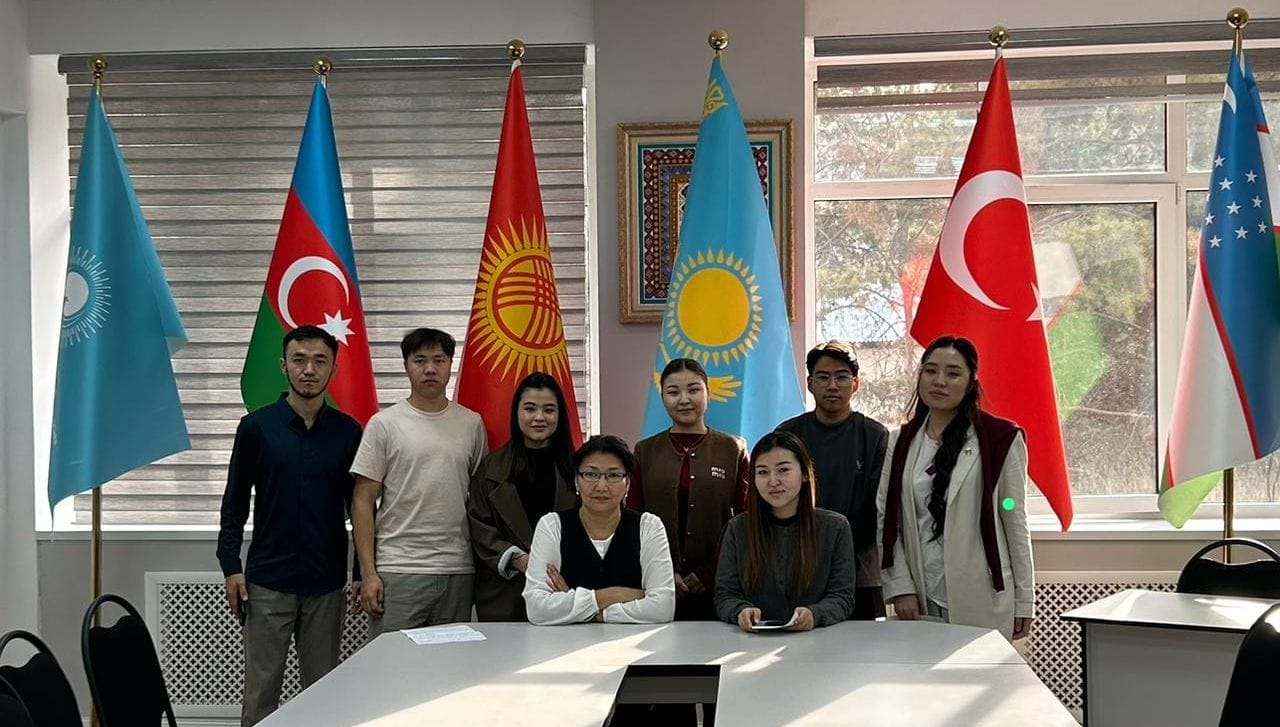
On November 6, 2025, under the guidance of faculty of the Department of Kazakh Literature and Literary Theory Candidate of Philological Sciences, Assistant Professor L.A. Mekebayeva, and PhD Doctor G.T. Ospanova the fourth-year students of the “Literary Studies” major organized and conducted an “New Aspects of the Utopian and Dystopian Genres at the Turn of the 20th–21st Centuries.”
open debate within the framework of the 4 SDG “Quality Education” .
The main objective of the event was to provide students with an in-depth understanding of the developmental vectors of the utopian and dystopian genres in the modern global literary space, to expand their knowledge of their artistic, philosophical, and social characteristics, and to cultivate the scientific and theoretical analysis of genre nature.
During the debate, instructor L.A. Mekebayeva gave a brief overview of the historical formation of the utopian and dystopian genres, highlighting the transformation of utopian thought that originates from Thomas More and its significant changes in the 20th century under the influence of technological progress, world wars, and social crises, which strengthened the dystopian direction. In addition, she analyzed artistic concepts in the works of authors such as George Orwell, Aldous Huxley, Ray Bradbury, Margaret Atwood, and Kazuo Ishiguro.
The students, in turn, examined new trends in 21st-century literature, discussing the features of post-apocalyptic writing, biotechnological dystopias, and utopian projects based on digital environments. Participants exchanged views on how contemporary literature reflects current issues of freedom, power, technological control, human nature, and ecological threats, presenting their own scholarly conclusions.
The debate was conducted in an interactive format: methods of question-and-answer, group analysis, discussion of textual fragments, and comparison of authors’ concepts were used. Throughout the discussion, the high level of students’ literary-theoretical training became evident, as well as their ability to analyze texts deeply and to engage critically with genre phenomena.
Other news