- Main
- News
- Contributing to SDG 15 and SDG 4: an early-career researcher from KazNU engages school students in biodiversity conservation through the study of pollinators.
Contributing to SDG 15 and SDG 4: an early-career researcher from KazNU engages school students in biodiversity conservation through the study of pollinators.
29 december, 2025
Citizen Science Comes to Almaty Schools
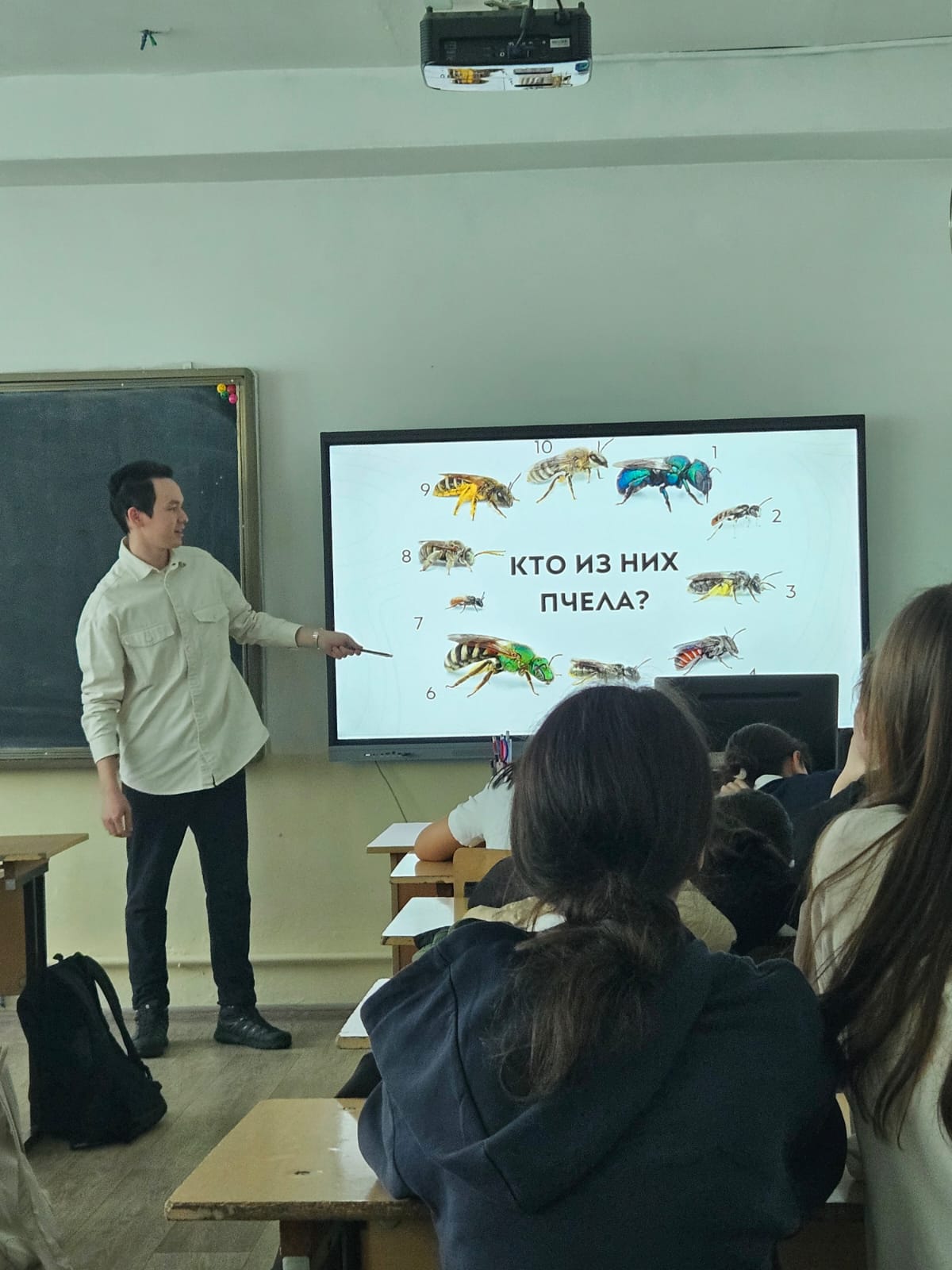
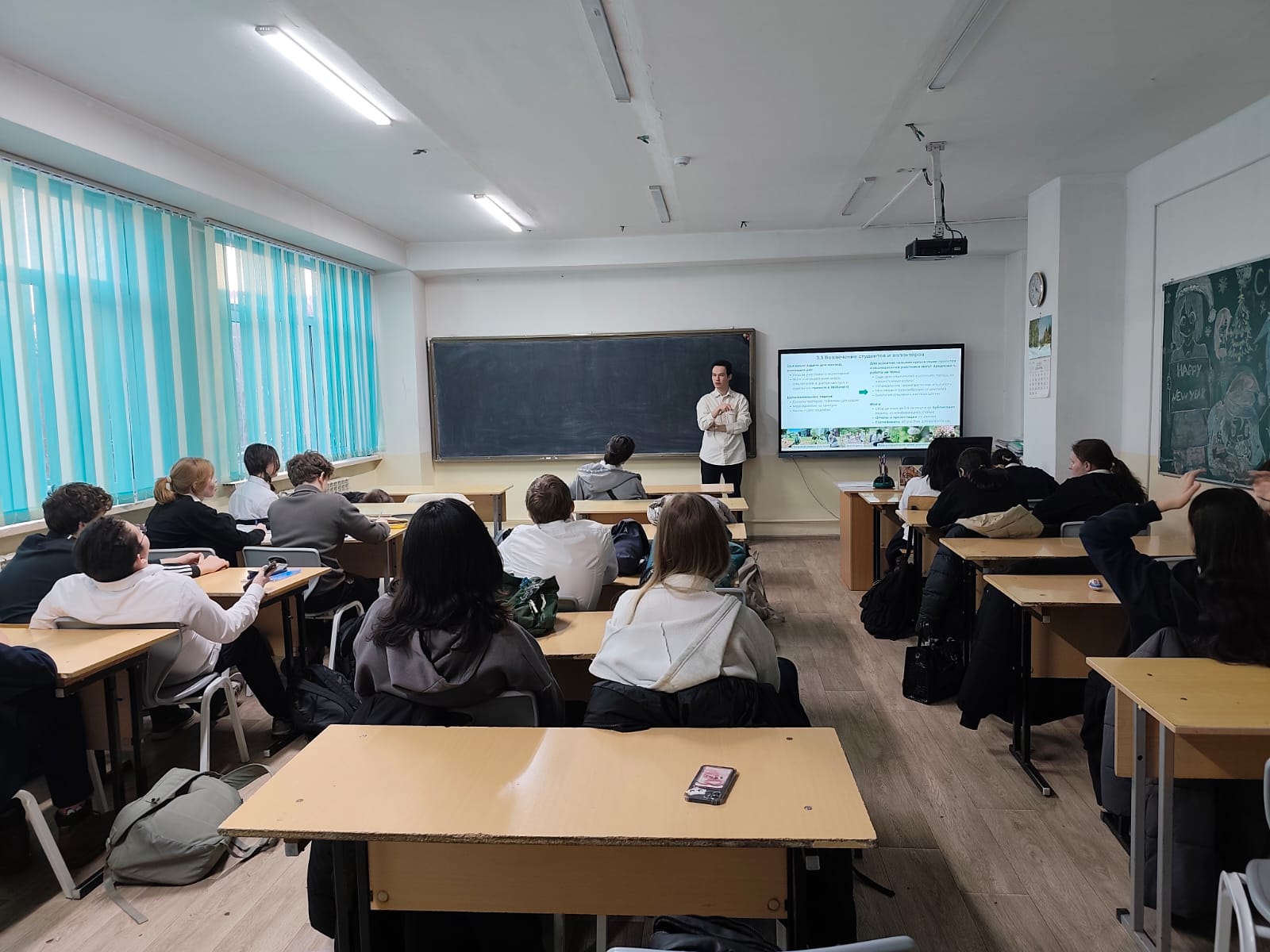
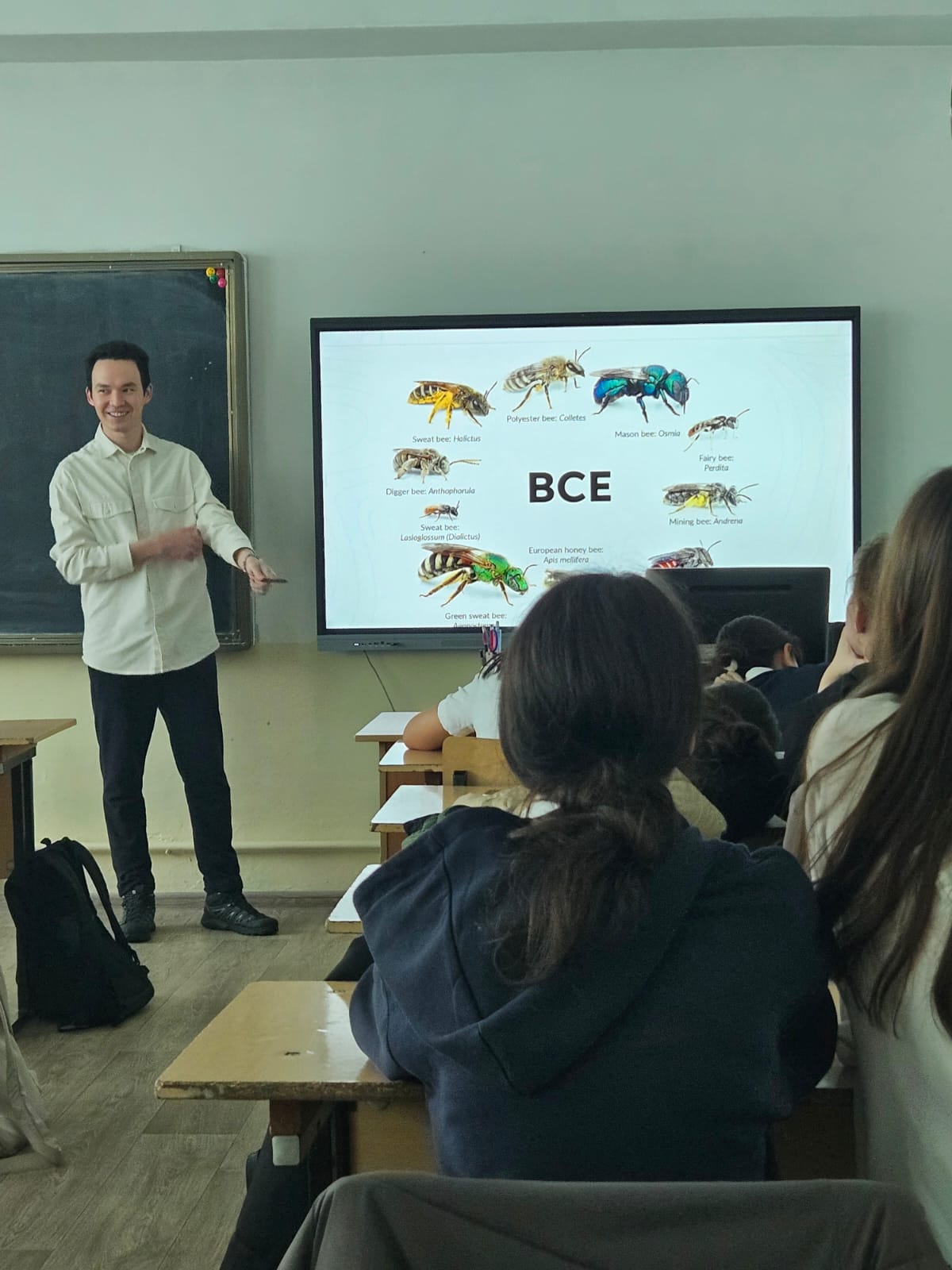
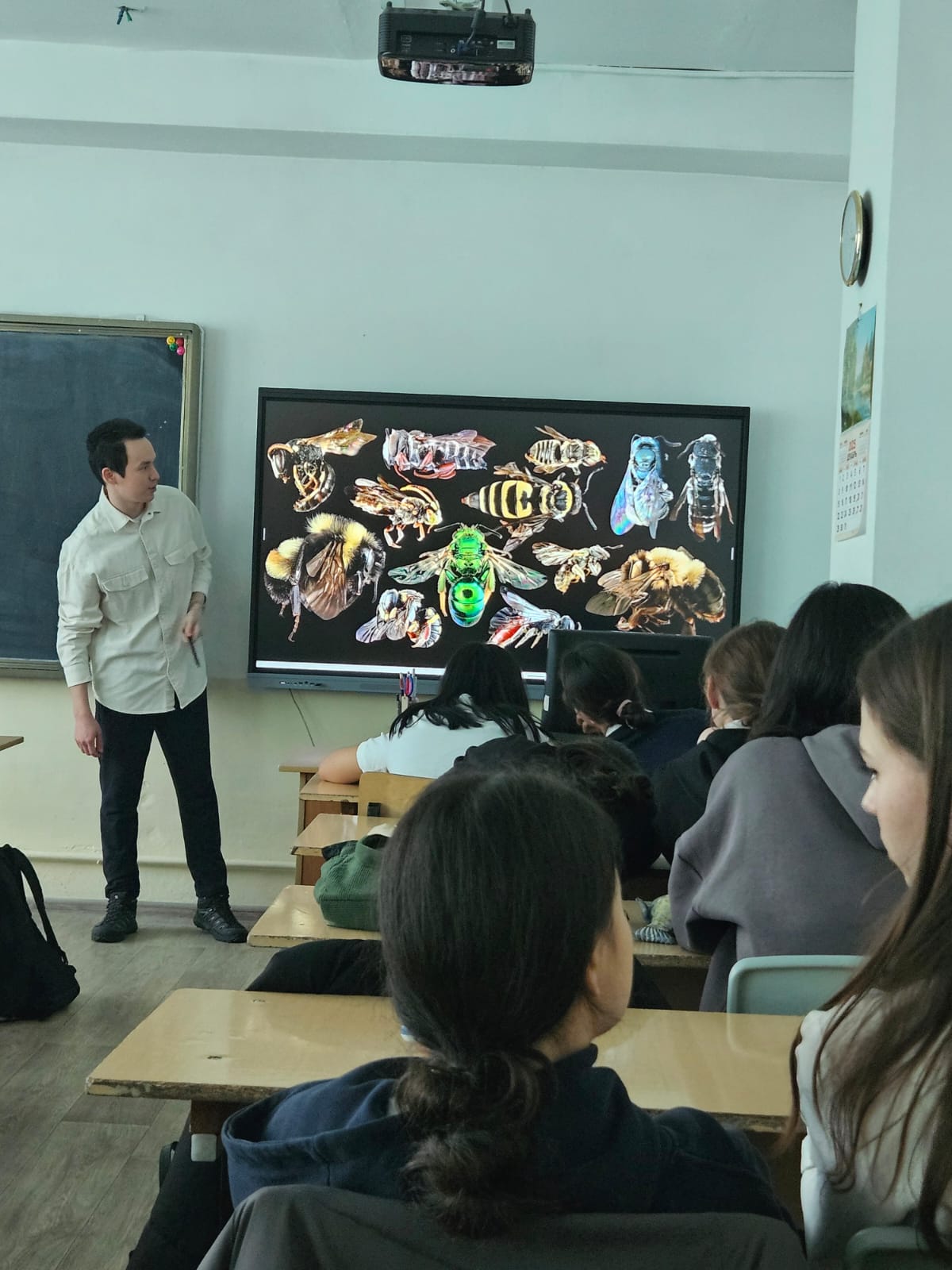
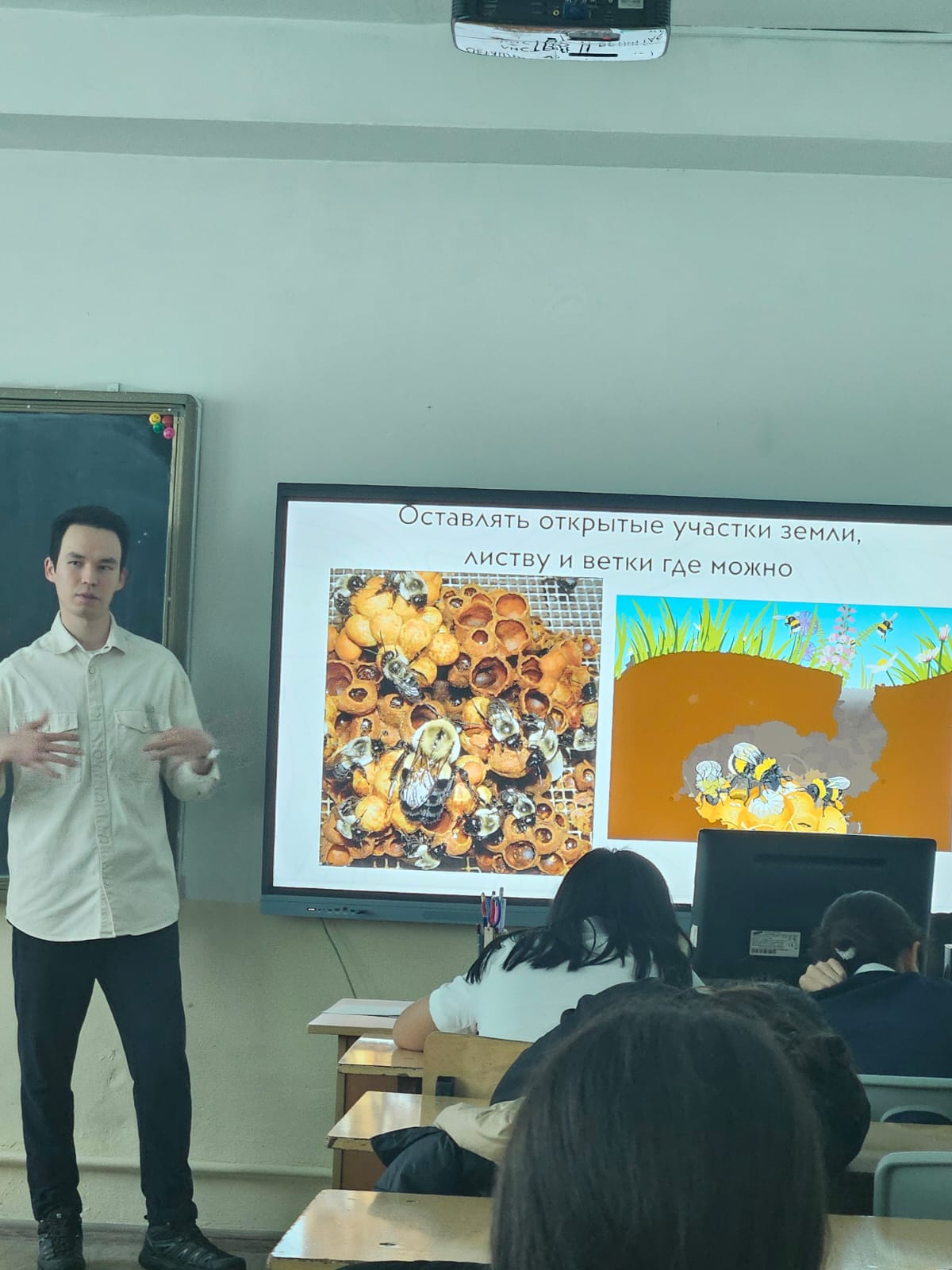
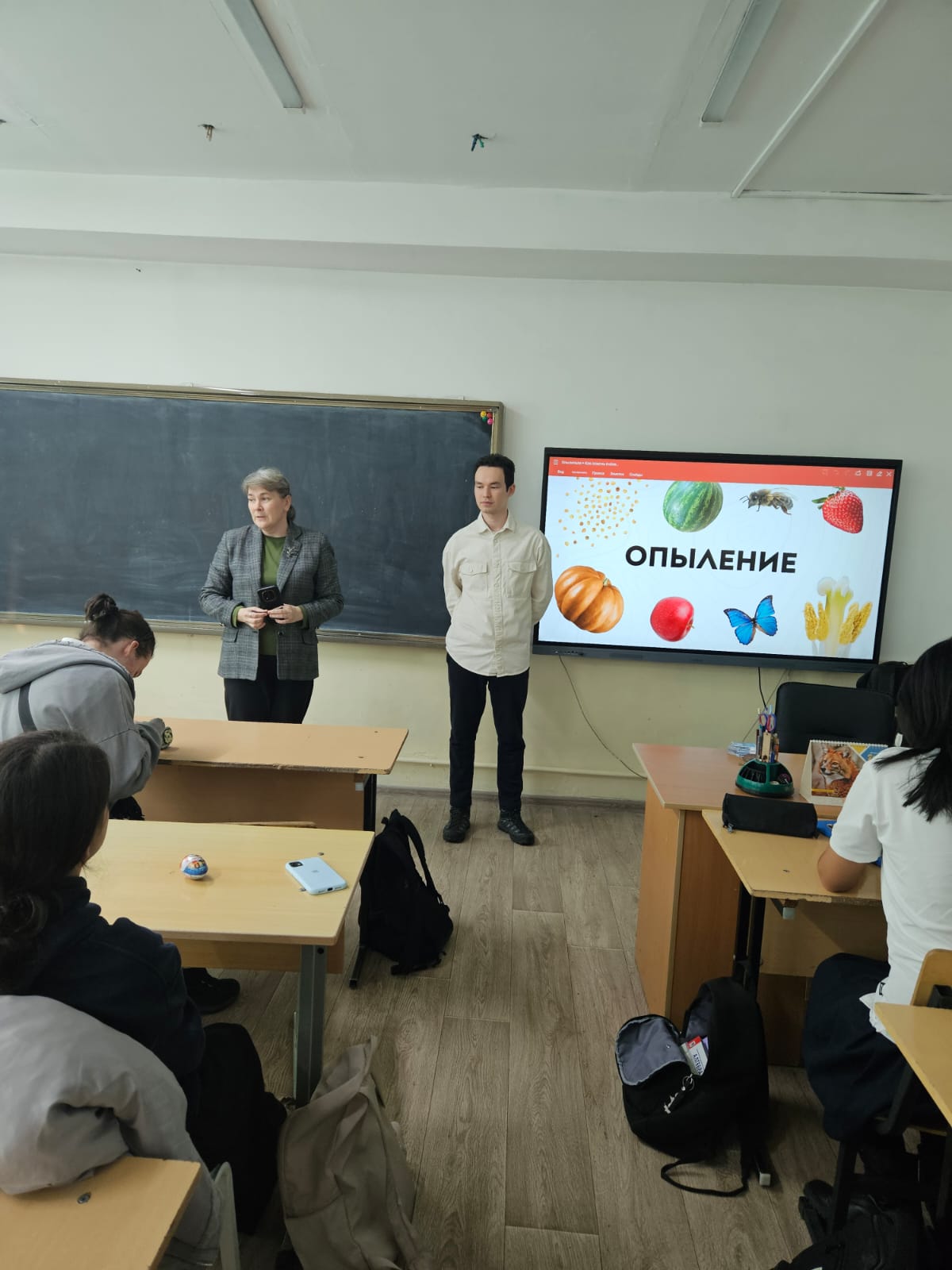
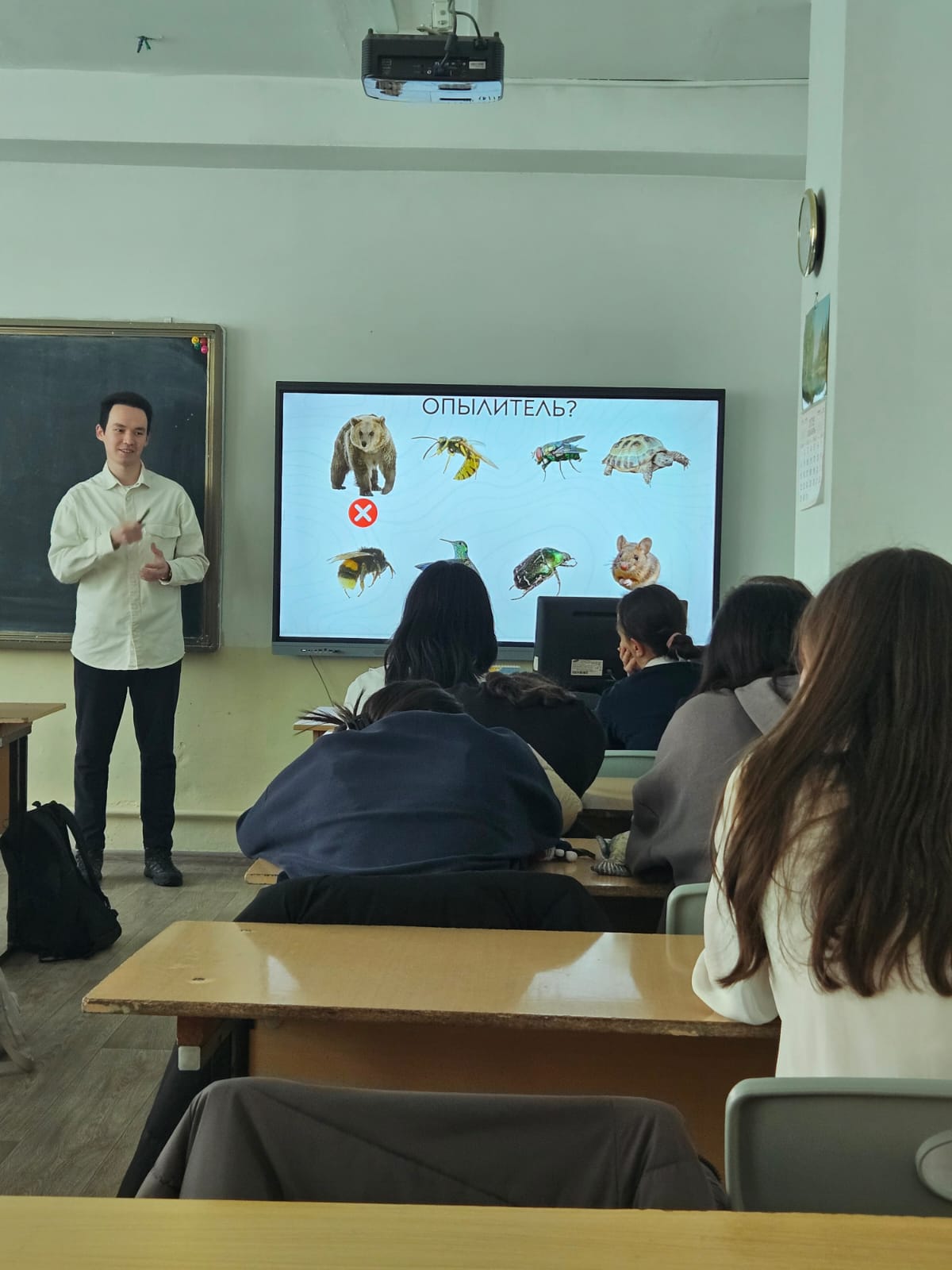
On December 23, 2025, KSU “Lyceum No. 134” in Almaty hosted an environmental lecture for 10th-grade students titled “Insect Pollinators and Bees: Biodiversity, Their Role in Ecosystems, and How We Can Study and Protect Them.” The event was organized in partnership with the citizen science project " Aralap " ( Pollinators.kz ) - a science outreach initiative led by early-career researchers from Al-Farabi Kazakh National University’s Department of Botany and Agroecology, focused on studying and conserving pollinators in Kazakhstan. The event was delivered under SDG 15 (Life on Land) and SDG 4 (Quality Education), aiming to conserve biodiversity by protecting pollinators while also strengthening students’ environmental literacy and fostering a culture of nature stewardship.
The lecturer was Islam Galymzhanov , co-founder and coordinator of the " Aralap " project, an environmental researcher, a doctoral candidate in the Faculty of Biology and Biotechnology at Al- Farabi Kazakh National University specializing in Biology, and a member of the KazNU Young Scientists Club . Three faculty members from the lyceum also actively participated in organizing the event, providing methodological support and interaction with the students.
Interactive format: from knowledge to action
The event was designed as a comprehensive educational program combining theoretical knowledge, practical skills, and career guidance . The lecture was attended by 20 students and three lyceum faculty members.
Educational component
A presentation was presented and discussed in detail, covering basic information about pollinating insects and their critical role in ecosystems:
Pollinator Biodiversity: Students learned about the impressive diversity of pollinating insects—from well-known honeybees to little-studied wild bees, bumblebees, hoverflies, butterflies, and beetles. Particular attention was paid to wild bees —a group of over 20,000 species worldwide and approximately 400 species in Kazakhstan—that often go unnoticed but play a key role in the pollination of wild and cultivated plants.
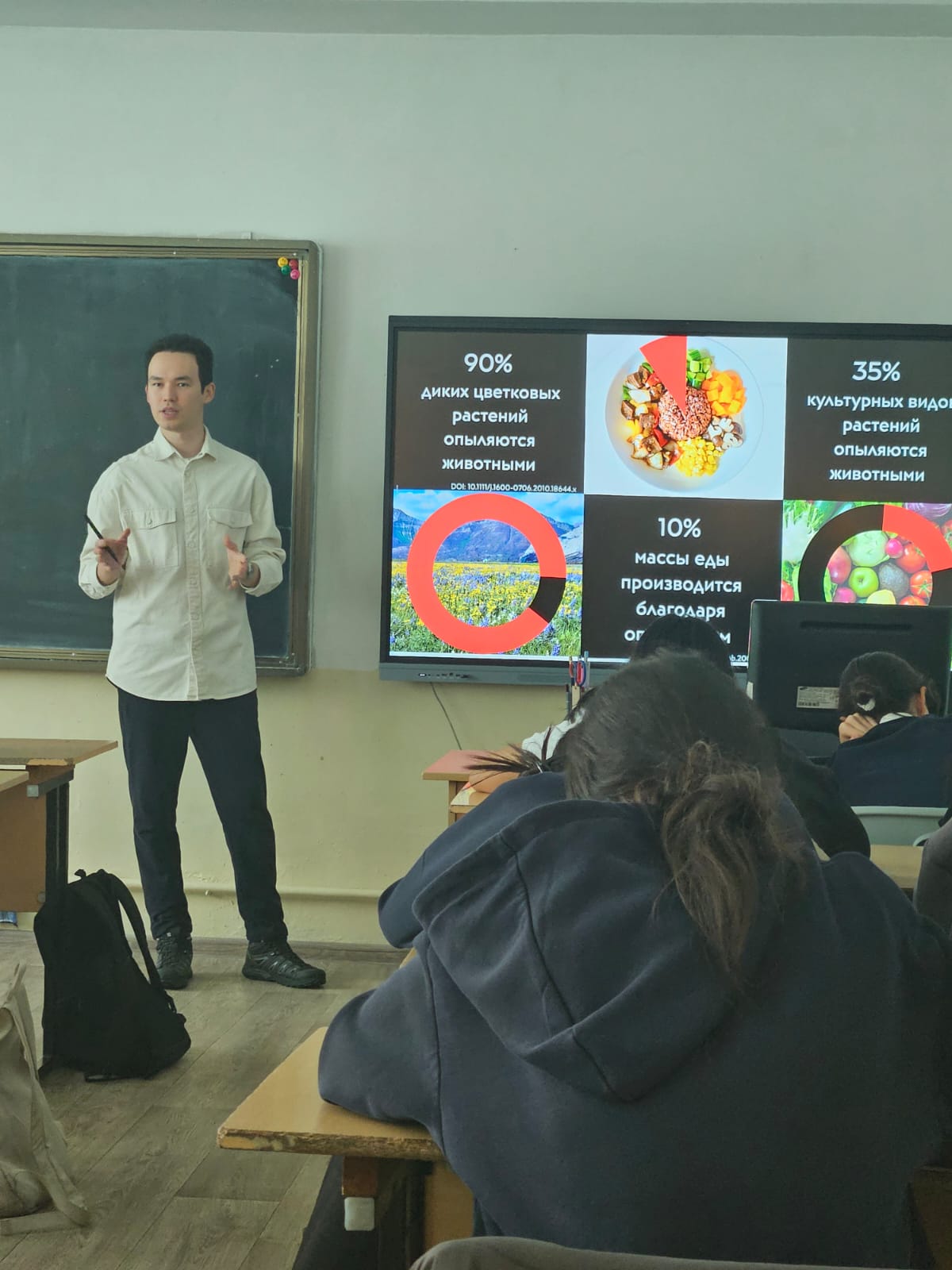
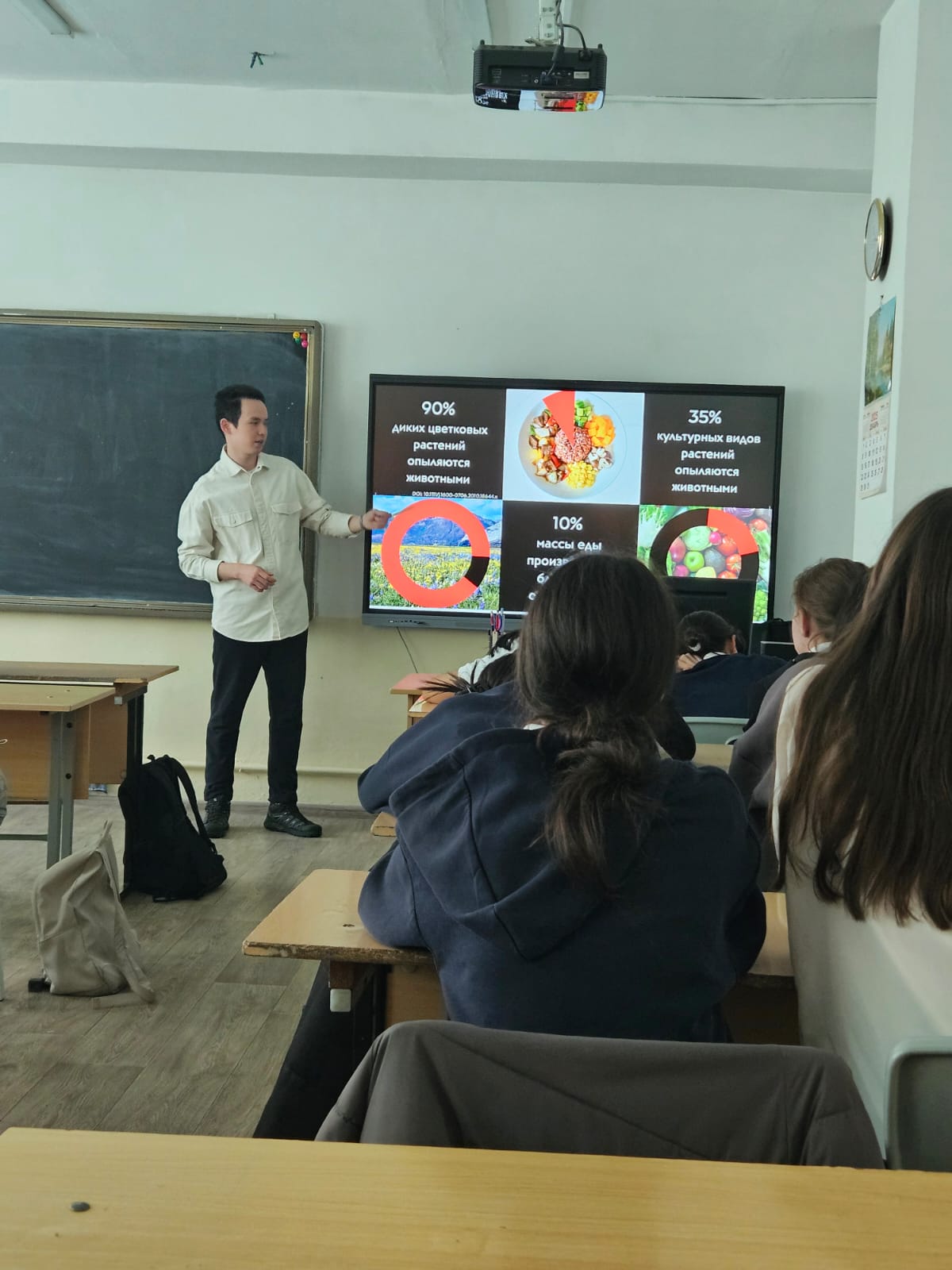
The ecological role of pollinators: Students learned that approximately 75% of the world's food crops rely to some extent on animal pollination, and that pollinators contribute over $577 billion in food production annually. Without pollinators, many of the fruits, vegetables, nuts, and seeds we eat would simply not exist.
Habitat types and lifestyle: Students were surprised to learn that most wild bees do not live in hives, but are solitary species that build nests in the ground, tree hollows, plant stems, and other shelters. Understanding these characteristics is critical for developing conservation measures.
Threats to Pollinators: The main factors threatening pollinator populations were discussed: habitat loss, pesticide use, climate change, diseases and invasive species.
Practical measures to help: A particularly valuable part of the lecture was the discussion of simple practical measures that everyone can take to help pollinators:
- Planting native flowering plants on balconies, courtyards, and gardens
- Creating "insect hotels"—shelter structures made from hollow stems and drilled logs
- Leaving areas with unmown grass and natural vegetation
- Refusal to use pesticides
- Providing access to water for insects
Interactive component
To reinforce knowledge and increase student engagement , a mini-quiz on animal and insect pollinators was held , with prizes given out. This game-like format not only tested student comprehension but also created a friendly, competitive atmosphere, making learning more engaging and memorable.
Career guidance component
A career guidance consultation was held with the students , where Islam Galymzhanov spoke about:
- Opportunities for studying at the Faculty of Biology and Biotechnology of KazNU
- Career prospects in ecology, entomology, and conservation
- Opportunities for future research on pollinators upon admission to the faculty
- Student research projects and international collaborations
- Practice participating in citizen science projects from school
The possibilities of studying the biodiversity and ecology of pollinating insects in Kazakhstan were discussed , including field research, the use of modern identification methods (DNA barcoding , photo identification ), work with digital platforms ( iNaturalist ) and participation in international scientific projects.
Open Door Science: From University to School
KazNU scientist Islam Galymzhanov is a striking example of how modern science extends beyond university laboratories and classrooms to engage the general public, starting with schoolchildren, in solving pressing environmental problems.
Aralap project , of which this lecture was a part, demonstrates a new paradigm of scientific activity – citizen science ( Citizen Science , where professional scientists and ordinary citizens, including schoolchildren, collaborate to collect data, conduct research, and solve scientific problems. This approach not only accelerates scientific research through mass data collection but also improves scientific literacy among the public and fosters a responsible attitude toward the environment.
The event developed the lyceum's students and staff's current knowledge of the biology and ecology of pollinating insects in Kazakhstan, as well as individual and broader conservation measures. This knowledge will help them better care for ecosystems and local biodiversity, making informed decisions in their daily lives and, perhaps, pursuing a career in ecology and conservation.
The initiative's contribution to achieving the UN Sustainable Development Goals
The educational activities of the young KazNU scientist, in partnership with city schools, directly contribute to the achievement of numerous Sustainable Development Goals:
SDG 2 (Zero Hunger)
Pollinators play a critical role in the production of approximately 75% of the world's food crops. Educating schoolchildren about the importance of pollinators and measures to conserve them is directly linked to ensuring food security:
Understanding Food Systems (Task 2.4): Students learned about the direct connection between pollinators and the food on their tables, understanding that sustainable food systems depend on healthy pollinator populations.
Sustainable Agriculture: Understanding the role of wild pollinators creates an understanding of the importance of sustainable agricultural practices that do not harm beneficial insects.
Future specialists in the agricultural sector : Career guidance can lead to careers in agroecology by helping to develop professionals who understand the importance of pollinator conservation for agriculture.
SDG 4 (Quality Education)
The lecture is an example of high-quality, practice-oriented environmental education:
Developing knowledge and skills for sustainable development (Objective 4.7): The activity develops students' knowledge and skills needed to promote sustainable development, including environmental literacy, understanding of the relationship between people and nature, and practical skills in environmental protection.
Interactive learning methods: The use of quizzes, discussions, and practical recommendations makes learning active and engaging, increasing the effectiveness of learning.
Career guidance and STEM education: Consultation on study opportunities in the Faculty of Biology facilitates informed choice of educational trajectory in the field of natural sciences.
Continuous education: The participation of lyceum teachers in the event contributes to their professional development and updating of their knowledge in the field of ecology.
SDG 11 (Sustainable Cities and Communities)
The lecture included practical recommendations for creating a favorable environment for pollinators in urban areas:
Greening Cities (Task 11.7): Recommendations for planting native flowering plants, creating insect hotels, and leaving areas with natural vegetation contribute to a greener urban environment.
Ecological Urban Planning: Understanding pollinator needs can influence future decisions about managing green spaces in cities, parks, and school grounds.
Urban Biodiversity: Understanding the importance of preserving biodiversity in cities helps create more resilient and livable urban ecosystems.
SDG 12 (Responsible Consumption and Production)
Education about the role of pollinators fosters an understanding of the need for responsible consumption:
Conscious Consumer Decisions: By understanding the connection between pollinators and food production, students can make more informed choices about products produced using sustainable practices.
Avoiding Harmful Practices: Information about the dangers of pesticides to pollinators can influence decisions about their use in home gardening.
Sustainable Use of Natural Resources: The lecture develops an understanding of the importance of sustainable use of natural resources and the conservation of ecosystem services.
SDG 13 (Climate Action)
Pollinators are important indicators of climate change:
Understanding Climate Threats: Discussing climate change as a threat to pollinators increases students' awareness of the issue and its implications for biodiversity.
Adaptation and mitigation: Practical measures to create a favorable environment for pollinators (greening, creating shelters) help increase the resilience of ecosystems to climate change.
Climate Change Monitoring: Participation in the Aralap project allows schoolchildren to participate in long-term monitoring of pollinator phenology—an important indicator of climate change.
SDG 15 (Life on Land)
The lecture is directly dedicated to one of the key aspects of SDG 15:
Biodiversity conservation (Target 15.5): Educating schoolchildren about the importance of pollinators and how to conserve them directly contributes to halting biodiversity loss and preventing species extinction.
Ecosystem restoration (Task 15.1): Practical recommendations for creating a favorable environment for pollinators contribute to the restoration of degraded urban and peri-urban ecosystems.
Integrating the Value of Biodiversity (Task 15.9): The lecture promotes the integration of biodiversity values into planning, development processes and poverty alleviation strategies by shaping the ecological worldview of future generations.
Mobilizing resources for biodiversity conservation: Involving schoolchildren and teachers in the Aralap project mobilizes human resources to collect and monitor biodiversity data.
SDG 17 (Partnership for Sustainable Development)
The event demonstrates effective multilateral partnership:
University-School Partnership: The collaboration between KazNU and Lyceum No. 134 creates a direct link between higher and secondary education, ensuring the transfer of relevant scientific knowledge to schoolchildren.
Science and Education Partnership: The Aralap project , which combines scientific research and educational activities, demonstrates the integration of science into the educational process.
Engaging Young Scientists: The active participation of a KazNU doctoral student in educational activities demonstrates the role of the younger generation of scientists in achieving the SDGs and sharing knowledge with society.
Horizontal partnership: Lyceum teachers acted not only as organizers but also as active participants, which facilitated joint learning and exchange of experience between school teachers and university researchers.
A platform for scaling: The successful experience of the lecture at Lyceum No. 134 creates a model that can be scaled to other schools in the city and regions of Kazakhstan.
SDG 1 (No poverty) and SDG 8 (Decent work and economic growth)
Although the connection is less clear, pollinator ecology education also has an economic dimension:
Ecosystem Services: Understanding the economic value of pollination (over $577 billion annually) shapes understanding of ecosystem services and their role in the economy.
Green Professions: Career guidance can lead to career choices in the growing green economy sector—ecology, conservation, sustainable agriculture, ecotourism.
Sustainable Economic Development: Pollinator conservation ensures sustainable agricultural production, which is critical for Kazakhstan's economy and the alleviation of rural poverty.
Young scientists from KazNU are agents of change
The initiative of Islam Galymzhanov and the Aralap project demonstrates how young scientists at KazNU are taking on the role of change agents by actively disseminating scientific knowledge, shaping environmental awareness, and engaging civil society in addressing pressing sustainable development issues.
The visit of scientists to schools is not just a one-time lecture, but a systematic work on:
- Improving scientific literacy of the population
- Popularization of science and the profession of scientist
- Formation of an ecological worldview from an early age
- Involving citizens in scientific research
- Creating a community of like-minded people who care about nature
Such events create a multiplier effect: 20 schoolchildren who attend a lecture can share their knowledge with their families and friends, create projects to protect pollinators in their yards and schools, and some of them will go on to become scientists, continuing their research in the field of ecology and nature conservation.
The three high school teachers who helped organize the event gained updated knowledge that they can integrate into their biology and ecology lessons, extending the lecture's impact far beyond one class and one day.
From Knowledge to Action: Putting Science into Practice
The event's particular value lies in its practical focus . Students not only learned theoretical information about the importance of pollinators but also received concrete tools for action :
- They can plant flowers on their balconies.
- They can create an "insect hotel" in the school yard.
- They can convince parents to stop using pesticides at their dachas.
- They can join the Aralap project and start documenting pollinators through the iNaturalist app.
- They can initiate environmental projects in their schools.
This approach turns passive listeners into active participants in environmental conservation , developing a sense of personal responsibility and the ability to influence the situation.
Prospects for the development of the initiative
The successful lecture experience at Lyceum No. 134 opens up broad prospects for scaling up the initiative:
Reaching other schools in Almaty and other regions of Kazakhstan: The model can be replicated, creating a network of schools involved in pollinator research and conservation.
Developing School Science Projects: Interested students can initiate long-term pollinator monitoring projects on school grounds, laying the groundwork for future research.
Integration into the school curriculum: The experience can be used to develop modules on citizen science and biodiversity conservation as part of the school biology and ecology curriculum.
Preparation of future students of KazNU: Career guidance work can attract motivated and prepared applicants to the Faculty of Biology and Biotechnology.
The event demonstrated how Al- Farabi KazNU , through the activities of its young scientists, fulfills its mission of serving society, making science accessible, understandable, and practically useful for everyone, and thereby making a real contribution to achieving the UN Sustainable Development Goals.
Faculty of Biology and Biotechnology of the Al- Farabi.
Kazakh National University. The Aralap project is citizen science for the conservation of biodiversity in Kazakhstan.
Department of Botany and Agroecology
##SDG #SustainableDevelopment #THEImpact #KazNU #SDG_KazNU #SustainableKazNU
##SDG1 #NoPoverty #SDG2 #ZeroHunger #SDG4 #QualityEducation #SDG8
##DecentWorkAndEconomicGrowth #SDG11 #SustainableCitiesAndCommunities #SDG12
##ResponsibleConsumptionAndProduction #SDG13 #ClimateAction #SDG15 #LifeOnLand
##SDG17 #PartnershipsForTheGoals #Aralap #PollinatorsKZ #CitizenScience #Biodiversity
##EnvironmentalEducation #YouthEngagement #Bees #Pollinators #Conservation
##EcologyEducation #STEMEducation