- Main
- News
- KazNU contributes to the achievement of the Sustainable Development Goals by supporting talented young researchers in the regions. The University as a partner of the regional education system.
KazNU contributes to the achievement of the Sustainable Development Goals by supporting talented young researchers in the regions. The University as a partner of the regional education system.
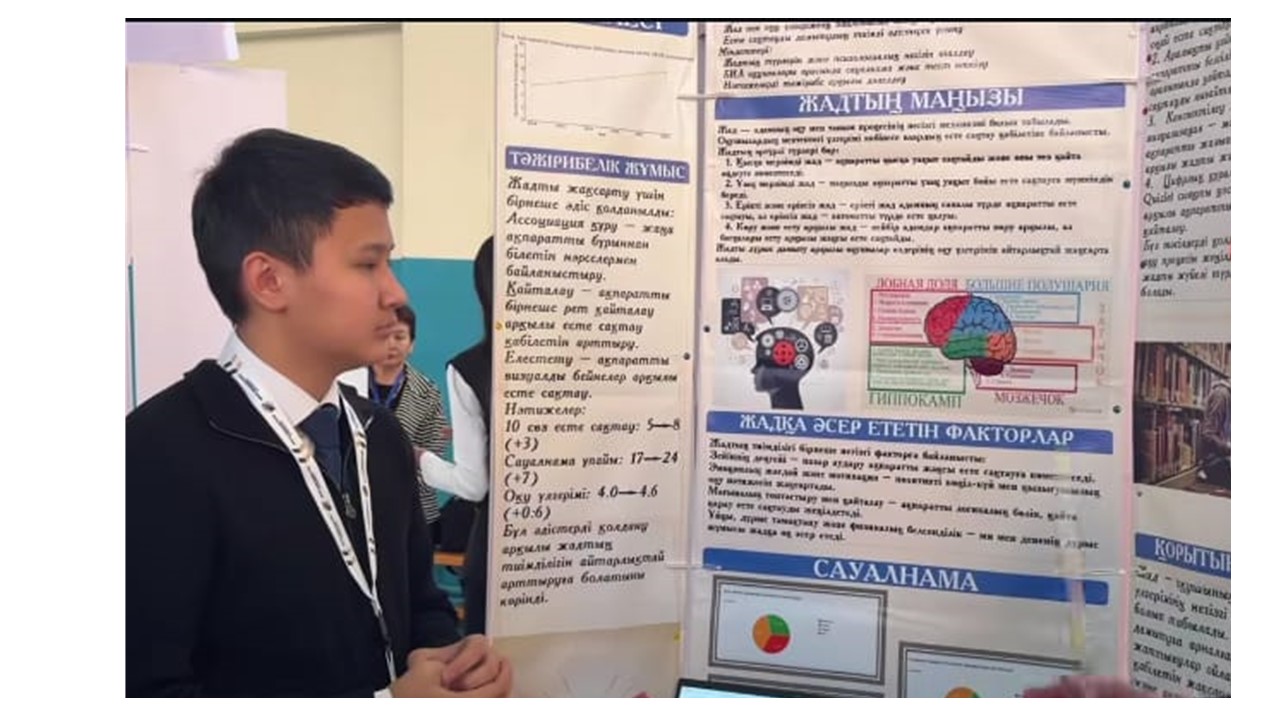
From November 18 to 21, 2025, the regional stage of the Republican competition of scientific projects in general education subjects among students in grades 8-11 was held, organized by the Zhetysu Regional Educational and Methodological Center for the Identification and Support of Gifted Children and Gifted Youth Daryns » state institution «Education Department of Zhetysu region».
The large-scale event brought together 277 students from various schools in the Zhetysu region, who presented 233 research projects in various fields. The competition became an important platform for identifying and supporting talented young people in the region, giving students the opportunity to showcase their research abilities and receive expert evaluation of their work.
World-class expertise for young researchers
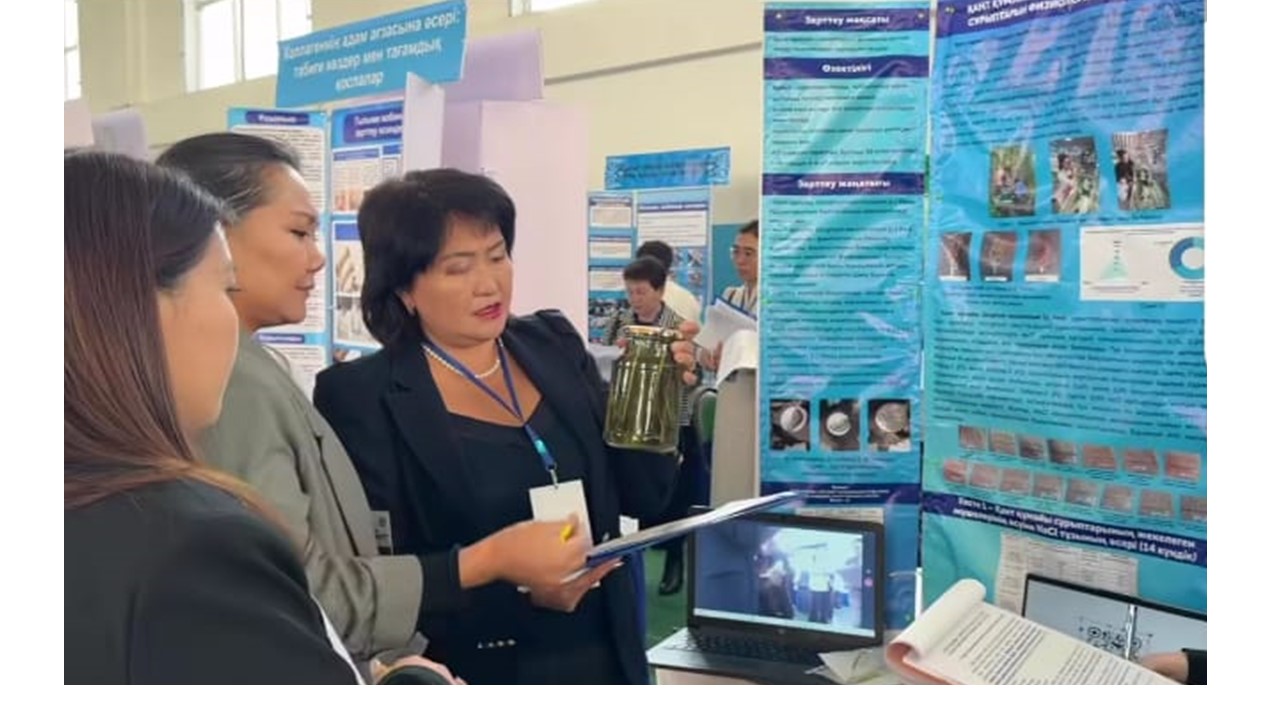
Farabi Kazakh National University acted as a strategic partner for the event, providing highly qualified expert review of the submitted projects. Akmullaeva, PhD in Biology and Associate Professor of the Department of Zoology, Histology, and Cytology of the Faculty of Biology and Biotechnology at KazNU , participated as an expert in the field of Biology. Aigerim Satybaldyevna and Associate Professor of the Department of Biotechnology, PhD Malik Azhar .
In the biology section of the competition, 31 students submitted 18 research projects, covering a wide range of topics—from ecology and zoology to molecular biology and environmental protection. Professor A.S. Akmullaeva , with her deep knowledge of zoology and cell biology, conducted a detailed assessment of each project, evaluating the scientific validity, methodological correctness, relevance, and practical significance of the young scientists' research.
Competition results: recognition of talent
the Zhetysu region's education system's efforts to develop the creative potential of the younger generation, increase motivation for scientific research, and support gifted students have demonstrated the high level of training of young researchers:
· 1st place – 1 student (outstanding research project demonstrating depth of research and innovative approach)
· 2nd place – 5 students (high-quality research with clear methodology and significant results)
· 3rd place – 7 students (high-quality projects demonstrating the potential of young researchers)
A total of 13 out of 18 biology projects submitted were awarded prizes, demonstrating the high level of scientific training of students in the Zhetysu region and the effectiveness of the regional system for working with gifted children.
The event's mission: from school to science
This noble event plays a critical role in the development of the country's scientific potential:
Early Talent Identification: The competition helps identify scientifically gifted children early in their educational journey, when the development of scientific interests and methodological skills is most effective.
Developing research competencies: Participation in research projects develops students' critical thinking, scientific method skills, the ability to formulate hypotheses, plan experiments, and analyze data—fundamental competencies for future scientists.
Motivation for a scientific career: The opportunity to present their work to university-level experts and receive professional evaluation and recognition motivates young researchers to continue their scientific activities and view a career in science as an attractive prospect.
Career guidance and continuity: Contact with faculty from the country's leading university helps students make informed choices about their future specialty and creates continuity between secondary and higher education.
Implementation of new ideas: The event provides a platform for young researchers to present their ideas, which can lead to their further development and implementation, including through student projects at the university.
The initiative's contribution to achieving the UN Sustainable Development Goals
Al- Farabi KazNU's participation in supporting scientific education for schoolchildren in the Zhetysu region is an example of how the university, through partnership with the regional education system, contributes to the achievement of multiple Sustainable Development Goals:
SDG 1 (No Poverty)
Identifying and supporting gifted children from diverse social backgrounds, including those from low-income families, provides them with equal opportunities to develop their talents and receive a quality education. Developing the scientific potential of young people creates pathways for social mobility and economic growth. Schoolchildren who win the competition receive recognition for their abilities, which opens them access to scholarships, grants, and educational programs that help them overcome economic barriers to higher education.
SDG 2 (Zero Hunger)
Many schoolchildren's biology projects focus on agronomy, environmental protection, biodiversity, and sustainable use of natural resources—topics directly related to food security. Developing an interest in biological research among the younger generation helps prepare future specialists in agriculture, agroecology, and food systems, which is critical for ensuring food security in the region and the country.
SDG 3 (Good health and well-being)
Schoolchildren's biological research can cover topics such as human health, ecology, hygiene, nutrition, and the impact of the environment on health. Early involvement of young people in biomedical and healthcare research contributes to the development of future professionals in the medical and biological sciences. Furthermore, participation in scientific activities has a positive impact on adolescents' psychological well-being, enhancing their self-esteem, determination, and life satisfaction.
SDG 4 (Quality Education)
The initiative directly contributes to improving the quality of education through:
Developing research competencies (Task 4.4): Participation in research projects develops 21st- century skills in students—critical thinking, problem solving, creativity, and scientific literacy.
Ensuring equal access to quality education (Task 4.5): The competition is open to all students in grades 8–11 in the region, regardless of their place of residence, social status, or gender, ensuring equal opportunities to participate in scientific activities.
Improving teachers' qualifications (Task 4.c ) : Preparing schoolchildren for scientific competitions encourages teachers to improve their scientific qualifications and apply research methods in teaching.
Career guidance and preparation for higher education: Expertise from university professors helps students understand the requirements of research at the higher education level and make an informed choice of their future specialty.
SDG 5 (Gender Equality)
Engaging girls in scientific research, particularly in STEM fields (science, technology, engineering, and mathematics), which are traditionally dominated by men, helps overcome gender stereotypes and expand opportunities for girls in science. Female scientists like Professor Akmullaeva , who serve as experts and mentors, serve as important role models for young girls, demonstrating that careers in science are also accessible to women.
SDG 8 (Decent Work and Economic Growth)
Developing the scientific potential of young people creates the basis for an innovative economy:
Developing skilled workers (Target 8.6): Young people who participate in scientific research from school are more likely to go on to university and become highly skilled professionals in knowledge-intensive industries.
Promoting Innovation and Entrepreneurship: Research skills and scientific thinking developed through participation in competitions contribute to the development of innovative and entrepreneurial potential in young people.
Youth Employment (Objective 8.b ) : Participation in research projects creates trajectories for future employment in the growing sectors of biotechnology, pharmaceuticals, agritech and other knowledge-intensive industries.
SDG 9 (Industry, Innovation and Infrastructure)
The scientific project competition promotes the development of the region's innovative potential:
Developing research capacity (Task 9.5): Early involvement of young people in research builds future human resources for research and innovation.
Expanding access to information and communication technologies (Task 9.c ) : Modern scientific projects require the use of digital tools for data analysis, information retrieval, and presentation of results, which contributes to the development of digital literacy among schoolchildren.
Innovative Infrastructure: The partnership between the university and the regional education system creates an innovative educational infrastructure that links schools, educational and methodological centers, and universities into a unified system for identifying and developing talent.
SDG 10 (Reduced Inequalities)
The initiative contributes to the reduction of various forms of inequality:
Geographical Inequality: Organizing the competition at the regional level ensures access to high-quality expertise for schoolchildren from various areas of the Zhetysu region, including rural and remote communities that might otherwise have no contact with university scientists.
Socioeconomic inequality: The competition's openness to all students, regardless of social status or family financial situation, ensures equal opportunities to showcase their talents. Winning the competition creates opportunities for scholarships and support for further education.
Educational inequality: Contact with university-level experts improves the educational opportunities of schoolchildren in the regions, bringing the quality of their preparation closer to that of schoolchildren in large cities with developed educational infrastructure.
SDG 11 (Sustainable Cities and Communities)
Many school students' biology projects focus on environmental issues in cities and towns: studying urban flora and fauna, monitoring air and water quality, waste management, and creating green spaces. Engaging young people in researching environmental issues in their towns and villages contributes to:
· Increase ecological consciousness population
· Identifying local environmental problems and finding solutions
· Formation cultures sustainable urban development
· Involving young people in urban planning and environmental management processes
SDG 12 (Responsible Consumption and Production)
Schoolchildren's biology research often touches on topics such as sustainable use of natural resources, waste recycling, composting, and growing plants without chemical fertilizers. Early development of an understanding of sustainable production and responsible consumption principles in young people contributes to behavioral change and the development of a "green" economy of the future.
SDG 13 (Climate Action)
Schoolchildren's research in biology may include studying the impact of climate change on local ecosystems, phenological observations of plants and animals, and research into the adaptation of organisms to changing conditions . young generations in climate research :
· Raises awareness of climate change issues
· Promotes the development of a scientific approach to understanding climate processes
· Forms future specialists in the field of climatology and adaptation to climate change
· Motivates young people to take active steps to mitigate the effects of climate change
SDG 14 (Life below water)
Although the Zhetysu region is landlocked, schoolchildren's research can focus on freshwater ecosystems (lakes, rivers), aquatic organisms, and water pollution—topics related to the broader goal of preserving aquatic ecosystems. Developing an understanding of the importance of water resource conservation among young people fosters a responsible attitude toward aquatic ecosystems.
SDG 15 (Life on Land)
Schoolchildren's biological research is directly linked to the study and conservation of terrestrial ecosystems:
· Studying local flora and fauna
· Monitoring biodiversity
· Research states ecosystems region
· Studying rare and endangered species
· Problems desertification and degradation lands
The participation of young people in such research contributes to:
· Documentation biodiversity region
· Identification threats For local ecosystems
· Formation nature conservation consciousness
· Training future specialists in the field of nature conservation and ecology
SDG 16 (Peace, justice and strong institutions)
Participation in scientific competitions develops important civic competencies in young people:
Transparency and fair evaluation: The competition, which involves independent university experts, ensures objective and fair evaluation of works, building trust in institutions and procedures among young people.
Developing Critical Thinking: The scientific method that competition participants master develops the ability to critically analyze information, which is important for developing informed and responsible citizens.
Ethics and Integrity: Participation in scientific research instills values of honesty, objectivity, and ethics—qualities necessary for building a just society.
SDG 17 (Partnership for Sustainable Development)
The event is a shining example of effective multilateral partnership:
Partnership between the university and the regional education system: Collaboration between Al- Farabi KazNU and the Zhetysu Region Education Department creates synergy for identifying and developing scientifically gifted youth.
Partnership between secondary and higher education: The participation of university professors in the evaluation of school projects creates a bridge between secondary and higher education, ensuring continuity and coherence of educational trajectories.
Science-Society Partnerships: Engaging students, their families, teachers, and local communities in science strengthens the links between science and society, making science more open and understandable.
Regional development through education: Supporting scientific education in the regions promotes sustainable development, the creation of scientific and educational hubs , and the reduction of talent outflow to large cities.
Sharing experiences and best practices: The participation of experts from the country's leading university in regional educational initiatives promotes the dissemination of advanced educational practices and improves the quality of regional education.
From talent identification to sustainable development
Al- Farabi KazNU's participation in the regional stage of the National Scientific Project Competition demonstrates the university's comprehensive approach to fulfilling its social mission. By providing expert support for schoolchildren's scientific education, the university is not simply evaluating projects—it is investing in the future of science and the sustainable development of Kazakhstan.
Professor A.S. Akmullaeva , representing KazNU at this event, not only evaluated the students' research projects but also fulfilled the important role of mentoring, motivating, and providing career guidance to young researchers. Her participation as a female scientist also serves as an important role model for schoolgirls, demonstrating the accessibility of scientific careers for women.
This noble event excites young researchers about science, enables them to implement new ideas, and creates pathways for achieving great success in science and education in the future. Many of today's schoolchildren participating in the competition will become students at KazNU tomorrow , and the day after, scientists, doctors, engineers, and ecologists, contributing to the achievement of the Sustainable Development Goals at the national and global levels.
Systematic efforts to identify and support gifted children, implemented through partnerships between the university, regional educational centers, and schools, create a sustainable ecosystem for talent development—the foundation for an innovative economy and sustainable development.
Faculty of Biology and Biotechnology of Al- Farabi Kazakh National University
#SDG # SustainableDevelopment # THEImpact # KazNU # SDG_KazNU # SustainableKazNU #SDG1 # NoPoverty #SDG2 # ZeroHunger #SDG3 # GoodHealthAndWellBeing #SDG4 # QualityEducation #SDG5 # GenderEquality #SDG8 # DecentWorkAndEconomicGrowth #SDG9 # IndustryInnovationAndInfrastructure #SDG10 # ReducedInequalities #SDG11 # SustainableCitiesAndCommunities #SDG12 # ResponsibleConsumptionAndProduction #SDG13 # ClimateAction #SDG14 # LifeBelowWater #SDG15 # LifeOnLand #SDG16 # PeaceJusticeAndStrongInstitutions #SDG17 # PartnershipsForTheGoals # TalentDevelopment # ScienceEducation # YouthScience # GiftedChildren # RegionalDevelopment # STEM # BiologyEducation