- Main
- News
- ICON 2025: KazNU Contributes to the Achievement of the Sustainable Development Goals Through Research to Combat Depression in Adolescents. Kazakhstani science in the international arena of cognitive neuroscience.
ICON 2025: KazNU Contributes to the Achievement of the Sustainable Development Goals Through Research to Combat Depression in Adolescents. Kazakhstani science in the international arena of cognitive neuroscience.
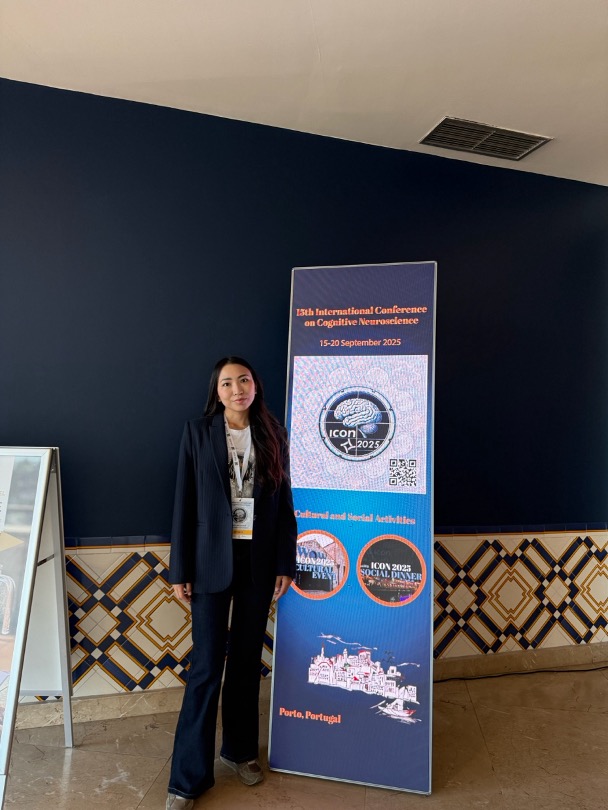
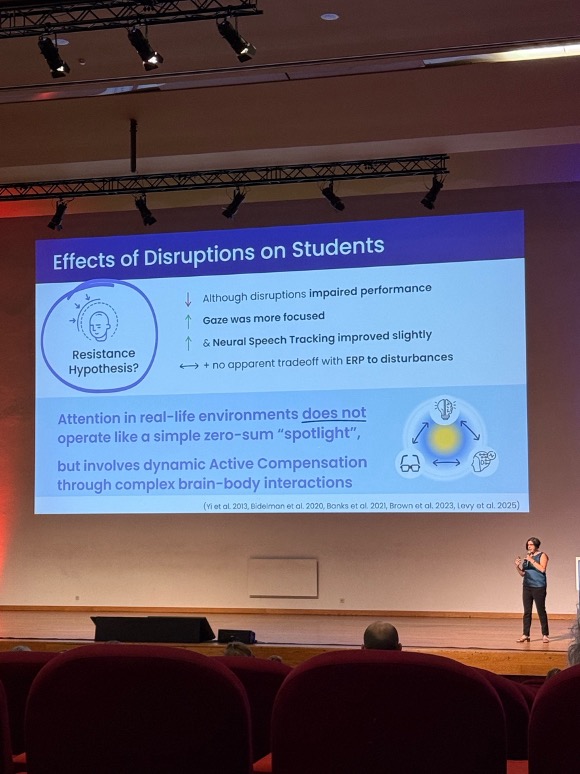
On September 15–20, 2025, Dina Maratovna Iskakova, a lecturer at the Department of Biophysics, Biomedicine and Neuroscience at Al-Farabi Kazakh National University , took part in the prestigious international scientific conference “ ICON 2025 – International Conference on Cognitive Neuroscience » , held in the city of Porto (Portugal).
The conference brought together leading researchers in cognitive neuroscience, clinical psychology, and neuroimaging from dozens of countries to discuss modern approaches to studying brain function and mental health. The participation of a KazNU representative in this significant scientific forum demonstrates the integration of Kazakhstani science into the global research space and the university's contribution to addressing pressing public health issues.
The Neurobiology of Depression: A Look Through the Lens of the Adolescent Brain
As part of the conference, Dina Maratovna presented a poster report on the topic “ ERP Study of Brain Activity During Emotional Conflict Task Performance in Depressed Adolescents » (A study of brain activity using the evoked potential method during the performance of a task on emotional conflict in adolescents with depression).
The work is devoted to the study of the features of neural processing of emotional conflict in adolescents with depressive disorders using the method of evoked potentials ( Event - Related Potentials ( ERP ) is a high-precision neurophysiological technique that allows real-time monitoring of the brain's electrical activity in response to certain stimuli.
Why is this important?
Depression in adolescents is one of the leading causes of disability and mortality in this age group worldwide. According to the World Health Organization, depression is the fourth leading cause of illness and disability in adolescents aged 15-19. Adolescence is a critical period of brain development, and understanding how depression affects neural processes during this period is crucial for developing effective early diagnosis and intervention strategies.
The presented work reflects current scientific data on functional changes in brain activity in depression in adolescence and emphasizes the importance of neurophysiological markers for:
· Early diagnosis of depressive disorders before the manifestation of pronounced clinical symptoms
· Understanding the mechanisms of development of mental disorders at the level of neural networks
· Development of personalized approaches to therapy based on objective biomarkers
· Monitoring the effectiveness of treatment by tracking changes in brain activity
Science diplomacy and international cooperation
Participation in ICON 2025 provided Dina Maratovna with a unique opportunity:
Present the results of Kazakhstani research at one of the world's leading venues in the field of cognitive neuroscience, increasing the visibility of KazNU's scientific research internationally.
Obtain expert feedback from leading experts in the field of mental health neuroscience, which contributes to improving the quality of research and its compliance with international standards.
Establish professional contacts with scientists from leading research centers around the world, opening up prospects for future collaborations, joint projects, and exchange of experience.
To become familiar with advanced methodologies and technologies used in modern cognitive neuroscience for their subsequent implementation in research and educational practices at KazNU.
This participation facilitates the integration of KazNU's scientific developments into the global research space and strengthens Kazakhstan's position on the global neuroscience map.
The contribution of the study to achieving the UN Sustainable Development Goals
The participation of a professor from Al-Farabi KazNU in the international conference ICON 2025 and the presented research directly contribute to the achievement of several Sustainable Development Goals:
SDG 3 (Good health and well-being)
The study is directly aimed at improving the mental health of adolescents, one of the most vulnerable groups in the population. SDG target 3.4 aims to reduce premature mortality from noncommunicable diseases by one-third and improve mental health. Target 3.5 calls for the prevention and treatment of substance abuse, which is often associated with untreated depression in adolescents.
The development of neurophysiological markers for the early diagnosis of depression allows:
· Identify mental disorders early, when intervention is most effective
· Reduce the risk of suicide among adolescents (depression is a leading risk factor for adolescent suicide)
· Improving the quality of life of young people through timely and adequate treatment
· To develop evidence-based approaches to the prevention of mental disorders
SDG 4 (Quality Education)
The mental health of adolescents directly impacts their ability to learn and develop. Depression significantly impairs cognitive function, concentration, memory, and academic performance. Early diagnosis and treatment of depressive disorders contribute to:
· Improving student achievement and their ability to complete education
· Reducing the dropout rate from schools and universities
· Creating a healthy educational environment that takes into account mental health needs
Furthermore, training specialists in the field of mental health neuroscience at KazNU contributes to the development of high-quality higher education and scientific research in Kazakhstan.
SDG 5 (Gender Equality)
Depression disproportionately affects adolescent girls—they are twice as likely to suffer from depressive disorders as boys. Understanding the neurobiological mechanisms behind these differences and developing effective diagnostic and treatment methods contributes to:
· Reducing gender inequality in access to mental health care
· Improving the mental health of girls and young women
· Expanding opportunities for women's full participation in education, work and public life
SDG 8 (Decent Work and Economic Growth)
Mental disorders that begin in adolescence have long-term consequences for work ability and economic productivity in adulthood. Depression is one of the leading causes of disability worldwide. Early diagnosis and effective treatment of depression in adolescents:
· Increases their chances of successful professional self-realization in the future
· Reduces economic losses associated with disability and loss of ability to work
· Promotes the development of a healthy and productive workforce for the nation
SDG 9 (Industry, Innovation and Infrastructure)
The use of advanced neurotechnologies, such as evoked potentials ( ERP ), and modern methods of brain activity data analysis represent an innovative approach to healthcare. The development of such research at KazNU:
· Strengthens Kazakhstan's scientific and innovative infrastructure in the field of neuroscience
· Promotes the introduction of high-tech diagnostic methods into clinical practice
· Creates the preconditions for the development of the neurotechnology industry in the country
SDG 10 (Reduced Inequalities)
Mental disorders often remain undiagnosed and untreated, especially in vulnerable populations and regions with limited access to specialized care. The development of objective, neurophysiologically based diagnostic methods:
· Reduces reliance on subjective assessment and cultural barriers in diagnosis
· Makes high-quality diagnostics accessible in regions where there is a shortage of experienced psychiatrists
· Promotes early detection of mental disorders in socially vulnerable adolescents
· Reduces inequalities in access to quality mental health care
SDG 17 (Partnership for Sustainable Development)
The participation of a KazNU representative in the international conference ICON 2025 is an example of an effective global partnership in the field of science:
International Knowledge Exchange: The conference provides a platform for the exchange of cutting-edge research approaches and results between scientists from different countries, promoting the dissemination of best practices in the field of mental health neuroscience.
Strengthening scientific potential: Participation of Kazakhstani scientists in international scientific forums contributes to the development of research qualifications, access to modern methodologies, and the establishment of collaborative relationships with leading global centers.
A global solution to global problems: Depression and mental disorders are a global health problem requiring international cooperation. Joint research and data sharing between countries accelerate scientific progress and the development of effective solutions.
Increasing the visibility of developing country science: Presenting research from Kazakhstan at international venues promotes recognition of the contributions of scientists from developing countries to global science and strengthens their position in the global research community.
Building Research Networks: Professional contacts established at the conference provide the basis for future joint projects, grant applications, and scientific publications, strengthening international collaboration in cognitive neuroscience.
Scientific research as an investment in the future
Dina Maratovna's presented work contributes to the developing evidence base in the field of cognitive neuroscience and adolescent mental health—a critically important but understudied area, particularly in the context of non-Western populations.
Such studies form the scientific foundation for:
· Development of national programs for prevention and early intervention in the field of youth mental health
· Improving school and student health care systems
· Training of specialists in the field of clinical neuroscience and neuropsychology
· Informing public policy in the field of youth mental health protection
Al-Farabi KazNU's participation in international research initiatives in the field of mental health neuroscience demonstrates the university's commitment to scientific excellence, international collaboration, and active contribution to achieving the Sustainable Development Goals through cutting-edge scientific research aimed at improving the health and well-being of the population of Kazakhstan and beyond.
Brain Institute, Faculty of Biology and Biotechnology of al-Farabi Kazakh National University
#SDG #SustainableDevelopment #THEImpact #KazNU #SDG_KazNU #SustainableKazNU #SDG3 #GoodHealthAndWellBeing #SDG4 #QualityEducation #SDG5 #GenderEquality #SDG8 #DecentWorkAndEconomicGrowth #SDG9 #IndustryInnovationAndInfrastructure #SDG10 #ReducedInequalities #SDG17 #PartnershipsForTheGoals #MentalHealth #AdolescentHealth #CognitiveNeuroscience #Depression #BrainResearch #ICON2025 #Neuroscience #YouthMentalHealth
Other news