- Main
- News
- The Editorial Board of the Eurasian Journal of Religious Studies took part in the scientific and methodological seminar entitled “Professional Standards for Publishing Scholarly Articles: Research Methods and Editorial Requirements.”
The Editorial Board of the Eurasian Journal of Religious Studies took part in the scientific and methodological seminar entitled “Professional Standards for Publishing Scholarly Articles: Research Methods and Editorial Requirements.”
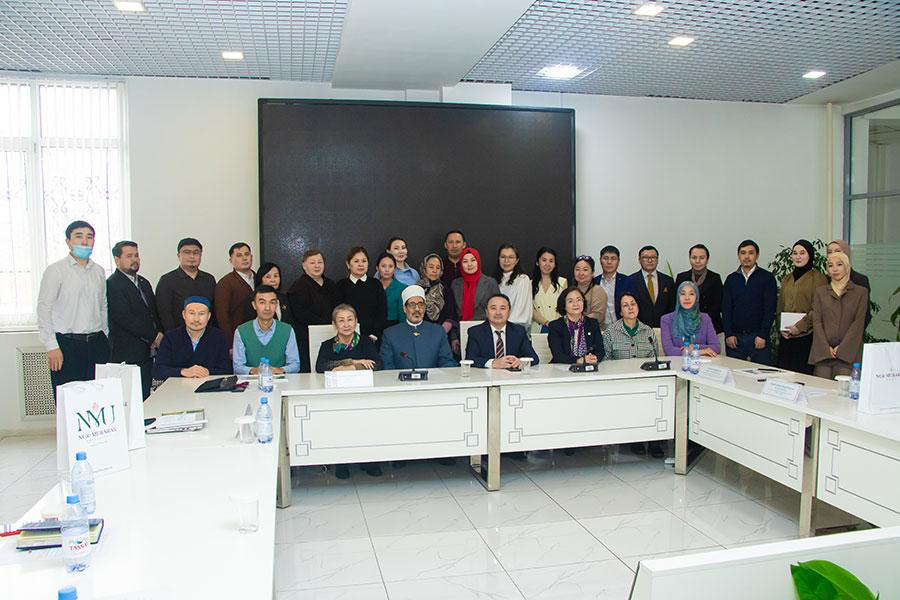
On December 9, 2025, the Department of Science of Egyptian University of Islamic Culture Nur-Mubarak organized a scientific and methodological seminar on the topic “Professional Standards for Publishing Scholarly Articles: Research Methods and Editorial Requirements.”
Within the framework of the Sustainable Development Goals 4: Quality Education, the event was attended by the Editor-in-Chief of the Eurasian Journal of Religious Studies Nağima Zh. Baitenova, the Deputy Editor-in-Chief for the Religious Studies research area Karlygash M. Borbassova, and the Executive Editor Samet Baizhuma.
The seminar was conducted in three languages, which enabled participants to freely exchange ideas in a multilingual and scholarly environment and brought together the experiences of different academic schools. Master’s students, doctoral candidates, and early-career lecturers who took part in the event shared experiences with one another and received recommendations and methodological guidance aimed at improving the quality of future research.
At the conclusion of the event, participants highly appreciated the content and practical value of the seminar and expressed their gratitude to the organizers for their contribution to the development of research culture. They noted that the seminar would serve as an important guide for their future scholarly work and expressed hope that such professional meetings would continue on a regular basis.
Thus, the scientific and methodological meeting held at Nur-Mubarak University was assessed as one of the important steps toward supporting young researchers, expanding professional connections within the academic community, and forming internationally competitive scholarly content.