- Main
- News
- Ethnocultural Practice within the Framework of Cooperation between KazNU and Sofia University: The Cultural Space of Almaty and Contemporary Identity
Ethnocultural Practice within the Framework of Cooperation between KazNU and Sofia University: The Cultural Space of Almaty and Contemporary Identity
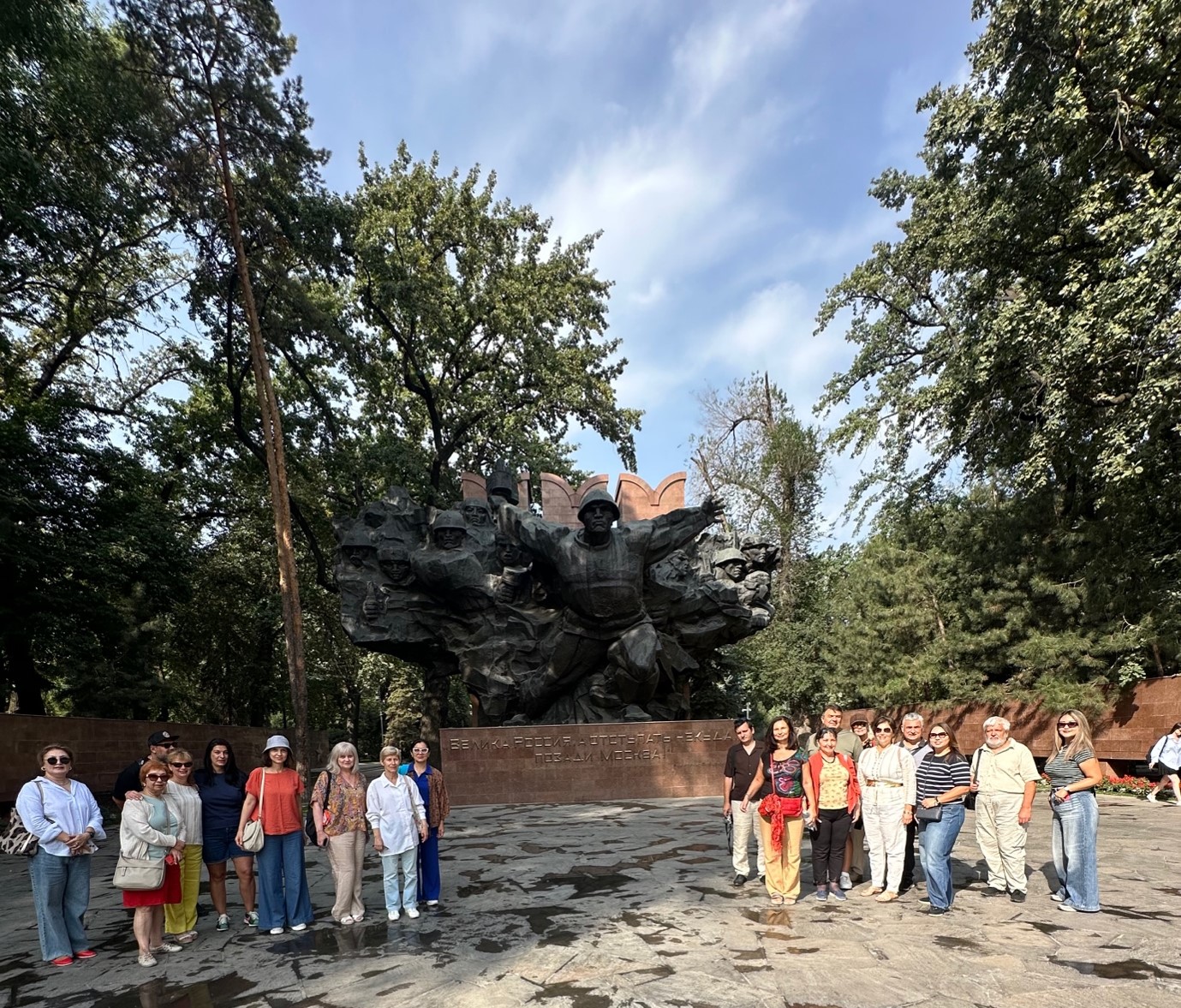
The Faculty of Philosophy and Political Science, the Department of Religious Studies and Cultural Studies, and the Department of General and Applied Psychology at Al-Farabi Kazakh National University developed and implemented courses for the general public outside the campus. Ethnocultural practice was organised within the framework of a bilateral agreement between Al-Farabi KazNU and Sofia University St. Kliment Ohridski (Bulgaria), and within the framework of the implementation of SDG 4 – Quality Education (off-site educational programmes) and SDG 17 – Partnerships for sustainable development (institutional and multilateral partnerships, partnerships between universities).
8 September 2025 in this day of the ethnocultural practice entitled «Almaty: Cultural Diversity and Contemporary Identity» was devoted to the study of urban culture, cultural diversity and contemporary forms of identity. The educational programme for the day was aimed at fostering tolerance, intercultural competence and civic responsibility among participants through educational practices and interaction with the city's cultural space.
As part of the ethnocultural programme, participants visited religious, historical and museum sites representing the cultural diversity of Almaty: the Ascension Cathedral, where participants learned about the architectural features of religious buildings and studied the role of spiritual traditions in shaping urban identity. Park 28 Panfilovtsy, a symbol of the city's heroism and historical memory, where attention was paid to issues of cultural heritage preservation and the formation of civic responsibility. The Central Museum of the Republic of Kazakhstan, which provided an opportunity to study ethnographic, historical and art collections, contributing to the development of analytical and comparative thinking. Arbat and the TSUM Shopping Centre, where participants could observe the modern urban space, the development of commercial and cultural infrastructure, as well as manifestations of urban identity through the everyday life of city dwellers.
Visiting these sites allowed participants to trace the interaction between historical, religious and contemporary cultural practices, as well as to see how traditional values are transformed in an urbanised society. This approach was fully in line with the objectives of SDG 4, providing interdisciplinary learning, broadening cultural horizons and shaping value-oriented humanitarian thinking.
The ethnocultural practice «Kazakhstan: History and Culture» became a significant platform for promoting national traditions, strengthening cultural diplomacy and developing international humanitarian cooperation. The project demonstrated that ethnoculture and traditions are an important resource for building dialogue between peoples and sustainable development in the context of globalisation.