- Main
- News
- The New Constitution of Kazakhstan: A Rare Case of Political Modernization in the Age of Artificial Intelligence
The New Constitution of Kazakhstan: A Rare Case of Political Modernization in the Age of Artificial Intelligence
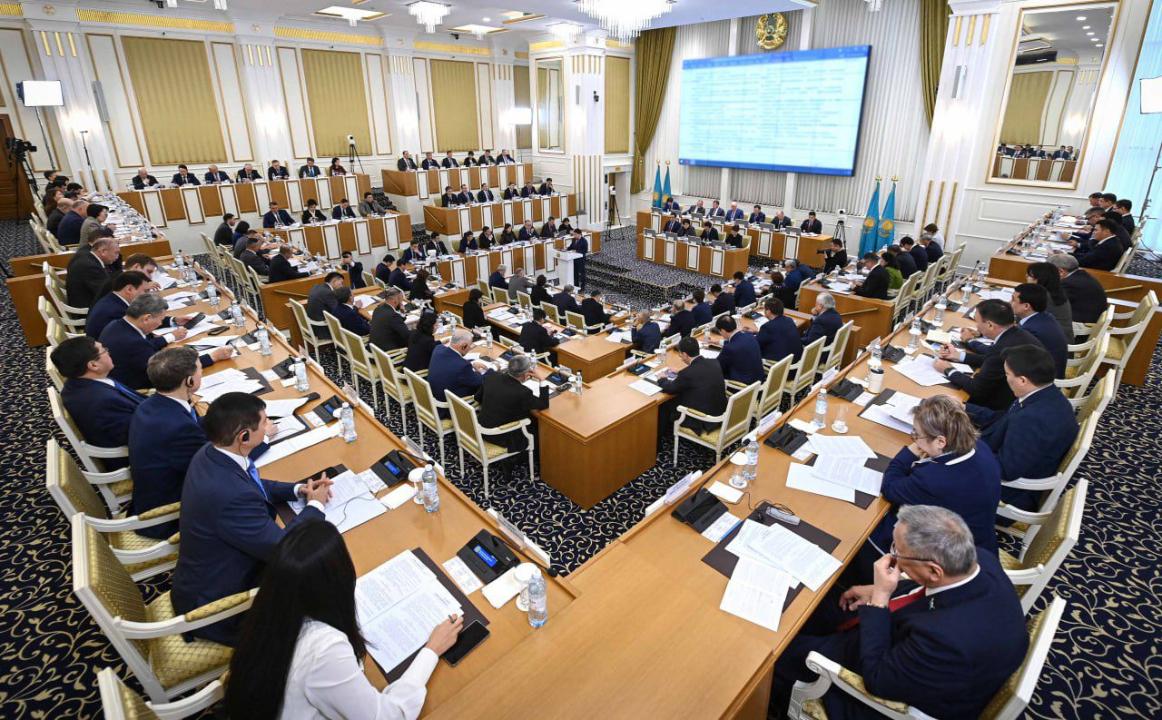
The publication of the draft Constitution of the Republic of Kazakhstan marks more than the beginning of a legal reform. It opens a new space for serious academic discussion. The document presented by the Commission on Constitutional Reform is the result of an extensive consultative process that incorporated the views of citizens, political parties, civil society actors, and experts.
But what, exactly, makes this reform significant for scholars of international relations, political science, and modern diplomacy?
Although examples of broad public participation in constitution-making exist worldwide, the Kazakhstani case stands out for several reasons:
- state institutions, experts, and political parties were directly involved;
- citizen participation was institutionalized through digital platforms;
- the Commission’s meetings were fully open and publicly broadcast.
This creates a model that can be described as a hybrid form of deliberative constitutionalism—a synthesis of expert knowledge, digital transparency, and institutionalized civic engagement. For the academic community across the post-Soviet space, this represents a noteworthy departure from traditional constitutional processes.
It is important to recall that the turning point of the reform was the initiative, announced by President Tokayev on 8 September 2025, to establish a unicameral Parliament. From a comparative politics perspective, this decision is interesting because Kazakhstan deliberately opts for a simplified structure while simultaneously expanding the functional role of the new institution. The proposed chamber receives substantial powers related to legislation, national security, and international activity.
The draft Constitution also includes expanded provisions on freedom of speech, information access, creative activity, and—critically—protection of intellectual property. Particularly important are norms related to:
- the right to access information;
- limitations on censorship;
- protection of online communications;
- the prohibition of propaganda of violence, hatred, and threats to national security.
For researchers in diplomacy and international relations, these provisions introduce new avenues for studying digital sovereignty, data governance, and the regulation of online space—areas that now lie at the heart of global politics.
The draft Constitution introduces two notable institutional innovations:
1) Vice President. The proposed office is tied to internal political coordination and aspects of international representation. This adds an additional layer of stability to the system, making it valuable for comparative analysis of presidential governance models.
2) Qazaqstan Khalyq Keñesi (People’s Council of Kazakhstan). A representative body endowed with the right of legislative initiative, while not being a classical parliament. This design may become a unique institutional precedent not only in Central Asia, but across the broader post-Soviet region.
The new Preamble is equally significant. It places strong emphasis on:
- statehood and historical continuity,
- human capital,
- education, science, and innovation,
- interethnic harmony,
- environmental responsibility.
Together, these elements signal a shift in the national development paradigm: from an industrial-era model to a knowledge- and innovation-based trajectory.
Within political theory, this may be interpreted as the constitutional embedding of a “human-centered development model”—a rare move for transitional states.
Overall, an analysis of Kazakhstan’s new Constitution demonstrates that this is not a routine legal update. It reflects a comprehensive transformation of the political system, in which:
- civic participation is strengthened,
- state institutions are modernized,
- digital rights receive constitutional protection,
- and the ideological foundation of the state is meaningfully rearticulated.
For the research community in international relations and diplomacy, the importance lies in the fact that Kazakhstan showcases a new type of reform—one aligned with the logic of digital modernization. It is a model that invites study, comparison, and use in forecasting the political evolution of the region.
Author:
Arsen Askaruly Maltabarov
Lecturer, Department of International Relations and World Economy
Faculty of International Relations
Al-Farabi Kazakh National University
Photo source: https://www.gov.kz/memleket/entities/ksrk/press/news/details/1152063?lang=ru