
- Main
- News
- Research internship at the university of Malaya: academic experience and professional development
Research internship at the university of Malaya: academic experience and professional development
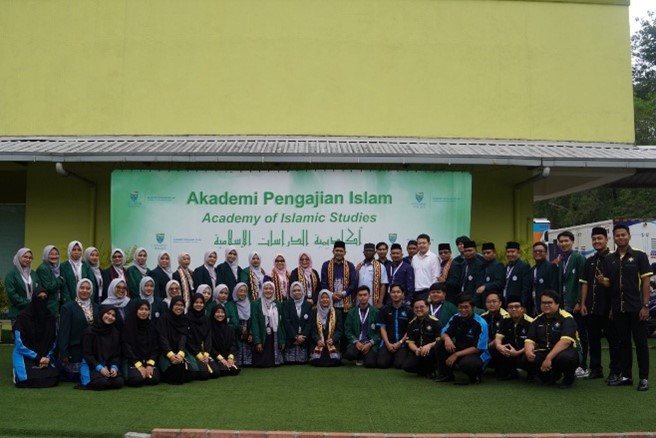
An international research internship serves as an important platform for enhancing a researcher’s professional competencies, mastering new research methods, and establishing connections with the international academic community. The one-month internship conducted within the academic environment of the University of Malaya not only deepened ongoing research endeavors but also provided new perspectives on research culture and academic practice.
Academic Environment and Scholarly Interaction
During the internship, regular academic meetings were organized with scholars and faculty members. These meetings focused on the особенностей studying sources in Islamic history, stages of civilizational development, and the processes of dissemination of Islamic culture in Southeast Asia. Scholarly discussions contributed to refining research topics, re-evaluating theoretical concepts, and broadening academic perspectives.
Seminars and scientific colloquia held at the academy addressed contemporary methodological approaches in religious studies, new strategies for interpreting historical data, and interdisciplinary research models. In addition, practical skills were developed in working with digital archives, utilizing electronic academic databases, and applying modern methods of data systematization.
Research Activities and Practical Work
A significant part of the internship was devoted to research activities. Access to the university library’s extensive resources and international electronic databases enabled engagement with scholarly materials related to Islamic history, religious studies, and Islamic studies. These resources strengthened the theoretical foundation of ongoing research and improved the quality of comparative analysis.
Consultations with academic supervisors covered issues such as research design, requirements for academic article writing, international publication standards, and academic ethics. Furthermore, skills in bibliographic management, academic referencing, and citation standards were enhanced.
International Academic Networking and Cultural Experience
The internship offered opportunities to establish professional connections with researchers from various countries. The multicultural academic environment contributed to the development of scholarly communication skills, deeper understanding of different methodological traditions, and expansion of international cooperation prospects.
Exposure to Malaysia’s Islamic educational traditions, regional academic ерекшеліктер, and intercultural dialogue practices enriched the practical understanding of religious studies research.
Outcomes and Academic Significance of the Internship
As a result of the internship:
· methodological approaches to scientific research were improved;
· practical experience in preparing articles according to international academic standards was gained;
· academic networks and professional collaborations were expanded;
· new research directions in religious and civilization studies were identified.
Overall, the research internship at the University of Malaya became a meaningful academic stage that contributed significantly to professional development and enabled the integration of theoretical knowledge with practical research experience. This experience shaped new perspectives for future academic projects and strengthened readiness for research activity at the international level.
Yerimbet Ramzan Yedilbekuly
PhD Doctoral Student, Department of Religious Studies and Cultural Studies, Faculty of Philosophy and Political Science, Al-Farabi Kazakh National University